


[!tip] Author’s Note:
This piece is part of a curated series to help you experience Portugal like you actually know somebody here (me).
View the complete visitor’s guide for my personal advice and a few free lessons that will teach you enough Portuguese to order your food and navigate your way around more confidently.
Porto is its own thing. People will tell you it’s “like Lisbon but smaller,” but they’re wrong.
[!tip] Going to Lisbon too? If you plan to visit the capital on this trip, check out my Lisbon Orientation Guide for everything you need to know down south.
The food is different, the wine is unique, the hills are somehow steeper, and the weather can flip on you in the span of one afternoon. This is a guide to eating, drinking, and getting around without burning a day figuring out the basics.
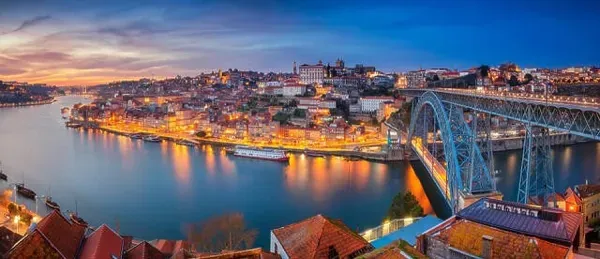
The Weather
Porto is in the north, which means it’s noticeably cooler and rainier than Lisbon. Even in summer, expect a few cool evenings and the occasional cloudy stretch. From October through March, rain is a real possibility on any given day.
Pack a light jacket and a small umbrella regardless of when you visit. You probably won’t use either every day, but you’ll be glad you have them when you do.
Navigating a Very Steep City
Porto, and the neighboring ‘Vila Nova de Gaia’ are two cities separated by the river Douro and built into the side of the Douro river valley, which means walking the city is a workout.
Lisbon has hills. Porto and Gaia have hills. Some of the streets are practically staircases. Bring shoes with good traction.
A few specific things worth knowing:
The Dom Luís I Bridge
Porto’s most iconic bridge has two decks, and they serve different purposes.
The top deck is for public transportation and pedestrians. The views from up here are the best in the city. Walking across the top is something you should do at least once, ideally around sunset.
The bottom deck is for cars and pedestrians. It’s not as nice to walk across but it is often more practical.
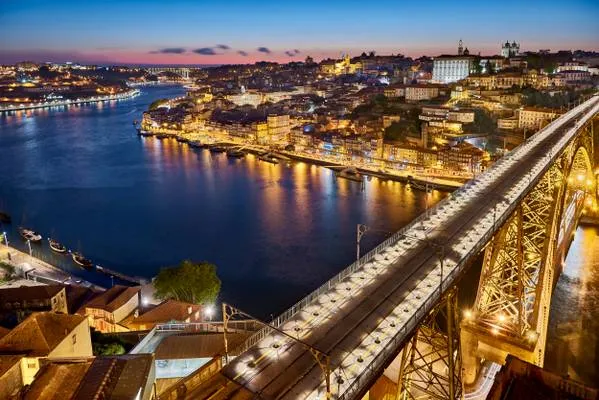
[!tip] Walk one way, take the other back
A nice move is to walk over on the top deck, work your way down the hill for food and drinks, and then come back on the other. This way, you get both perspectives. The top deck at night is genuinely beautiful.
The Funicular and the Cable Car
You don’t have to walk every hill. There are two shortcuts worth knowing about.
The Funicular dos Guindais runs from the riverside in Porto up to the Batalha area near the top deck of the bridge. It’s a short ride, costs a few euros, and saves you a serious climb.
The Teleférico de Gaia is a cable car on the Gaia side of the river that runs between the upper level near Jardim do Morro and the lower riverside where most of the port cellars are.
Use these. There’s no prize for grinding up every hill on foot.
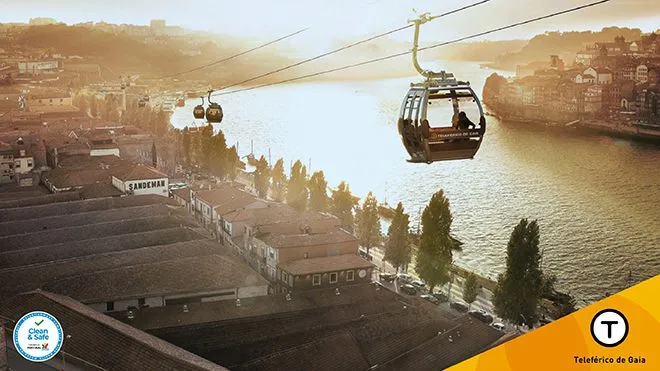 It’s pricier than the funicular but the views are great, it’s a fun thing to do, and your legs will thank you.
Port Wine and the Gaia Distinction
Something a lot of visitors don’t realize until they get there is that the famous port wine cellars are not actually in Porto.
They’re across the river in a separate city called Vila Nova de Gaia, usually just called “Gaia” (Guy-uh). When you see photos of the wine lodges with their big logos painted on the rooftops along the river, that’s Gaia, not Porto.
Getting there is easy. Walk across either deck of the Dom Luís I bridge and you’re there. Take the metro, take an Uber (read my logistics guide for why I prefer Uber over local taxis), doesn’t matter.
The whole riverside on the Gaia side is lined with cellars within walking distance of each other.
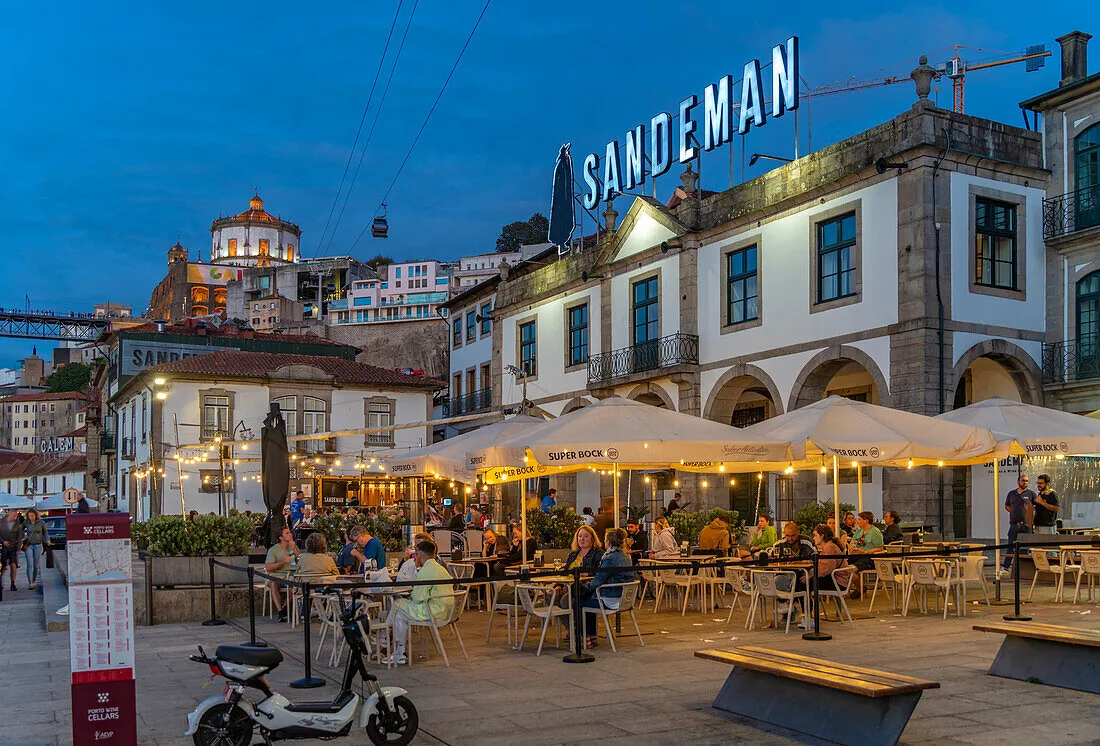 Sandeman is just one of many Port wine cellars (and restaurants) along the riverfront in Vila Nova de Gaia
Which Cellars to Visit
The big-name cellars almost all offer tours and tastings, and they’re all genuinely good. A few that come up consistently as worth your time:
-
Graham’s is up the hill a bit (not on the riverfront) and gets praised for not feeling rushed. The walk up is worth it and the views from the cellar are part of the appeal.
-
Taylor’s is another classic up the hill with a beautiful old-house feel. They have a great peacock-filled garden where you can sit and drink.
-
Sandeman is the most famous, with the man-in-the-cape logo you’ll recognize from every airport gift shop. Touristy but solid, and right on the water.
-
Cálem is the easiest to walk to (right on the riverside) and a popular pick for first-timers.
-
Ramos Pinto and Ferreira are smaller and feel a bit less like a tourist factory if that’s what you’re after.
If you want the maximalist experience, there’s also a place called World of Wine which is a whole complex of wine-themed museums, restaurants, and tasting rooms. It’s more theme-park than authentic cellar, but it’s well done and genuinely fun if you’re traveling with a group that has mixed interests.
[!tip] Pay for the better tasting tier
Most cellars offer two or three tasting levels. The price jump between the basic tier and the next one up is usually only a few euros, and the wines you get to try are meaningfully better. Spring for one of each and see if you can taste the difference.
The Douro Valley
The Douro Valley is where the grapes for port wine are actually grown, and it’s about 90 minutes east of Porto by car.
It is genuinely one of the most beautiful wine regions in the world. Terraced vineyards along the river, tiny villages, family-run quintas (estates) where you can taste wines made by the people who grew the grapes.
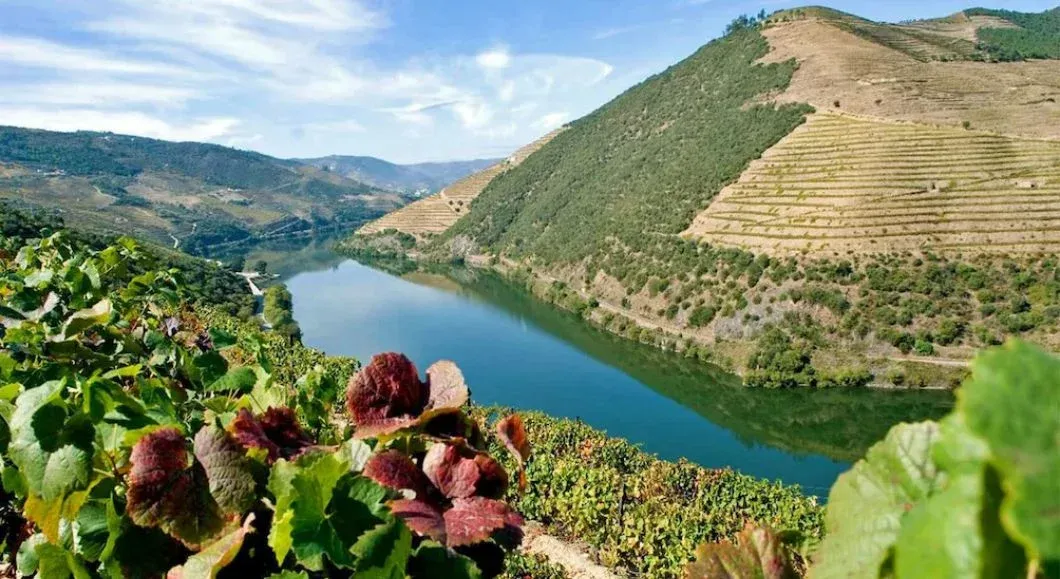
Almost every visitor I’ve had who went said it was a highlight of their trip.
You have two options for this:
-
You can rent a car and drive yourself, which gives you flexibility but means someone has to stay sober (and willing to drive sometimes-treacherous paths)
-
Or you can book a small-group tour from Porto, which usually includes transportation, two or three winery visits, lunch, and sometimes a boat ride on the river.
Cooltour Porto and Living Tours are two of the more commonly recommended operators, but there are dozens of small operators on GetYourGuide and Viator with strong reviews. Just read recent reviews and pick one with a good ratio of price to what’s included.
The train from Porto to Pinhão (a town in the valley) is also a famously scenic ride if you want to do it on your own.
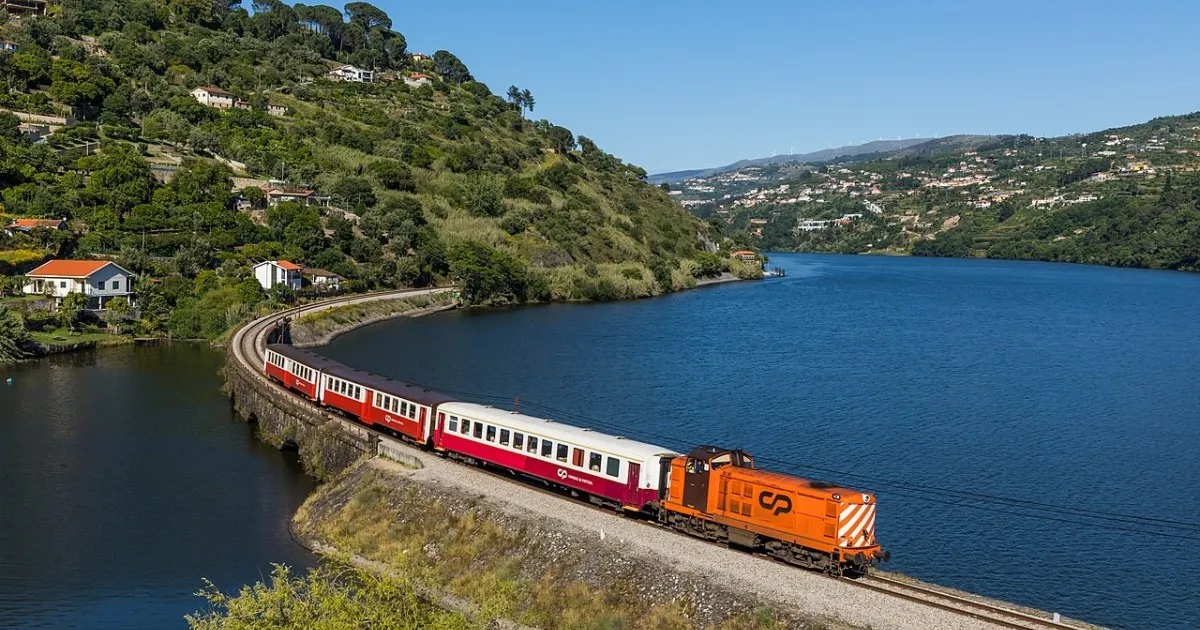 It’s a few hours each way along the Douro river.
What to Eat
Porto’s food is distinct from Lisbon and the south. A few things you really need to try.
[!tip] Craving the national staples? While Porto has its own unique food scene, you can still find amazing national dishes here. Read my Guide to My Favorite Portuguese Dishes to learn about the broader classics.
Francesinha
The francesinha is Porto’s signature dish. It’s a sandwich, technically, but calling it a sandwich the way a Big Mac is a sandwich.
Layers of steak, ham, AND linguiça sausage, between two slices of bread, covered in melted cheese, drowned in a hot tomato and beer sauce, and topped with a fried egg. Fries on the side, often piled into the sauce. It’s a lot. It’s heavy, salty, and you probably won’t be able to finish it.
But it’s an experience.
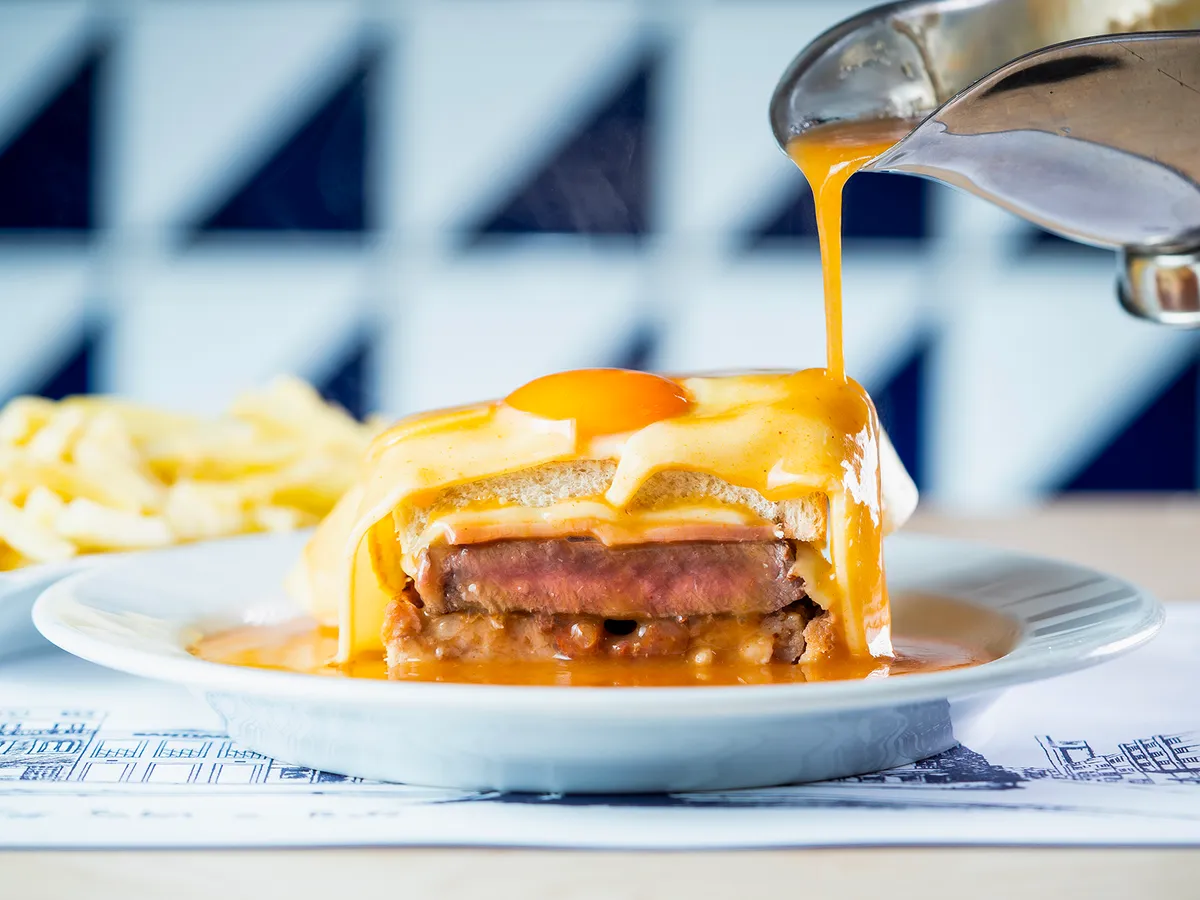
It is also delicious in a way that’s hard to describe until you’ve had a good one.
You can get these all over Porto, but here’s a few spots worth knowing about.
-
Café Santiago is the most famous and the consensus first-timer pick. It’s near Rua Passos Manuel. Expect a line at peak hours but it’s worth it.
-
Brasão Aliados is a more polished, modern take. They do an oven-baked version and have a broader menu, which makes it a good pick if you’re with people who want options. This is easy to find near Avenida dos Aliados, where you’ll likely end up anyways without even meaning to.
-
Bufete Fase is the small, no-frills, locals-love-it option. Cash-only, small dining room, expect a wait, expect a great sandwich.
[!tip] Pace your day
A francesinha is a 3,000-calorie commitment. Either split it or don’t plan anything physically ambitious for the afternoon after eating one. You’re gonna want a nap.
Seafood
Porto sits right on the Atlantic, and the seafood is extraordinary.
Of course, you CAN find good seafood in the city itself (at expensive restaurants), but locals know that the best seafood isn’t really in central Porto. It’s in Matosinhos, a coastal suburb about 15 minutes northwest of the center, connected by metro (Blue Line, the “Matosinhos Sul” stop) or a quick Uber.
Matosinhos has a great street, Rua Heróis de França (good starting spot here), lined with seafood restaurants grilling fresh fish on the sidewalk. You can smell the charcoal a block away. Walk the street, look at what’s grilling, pick a place.
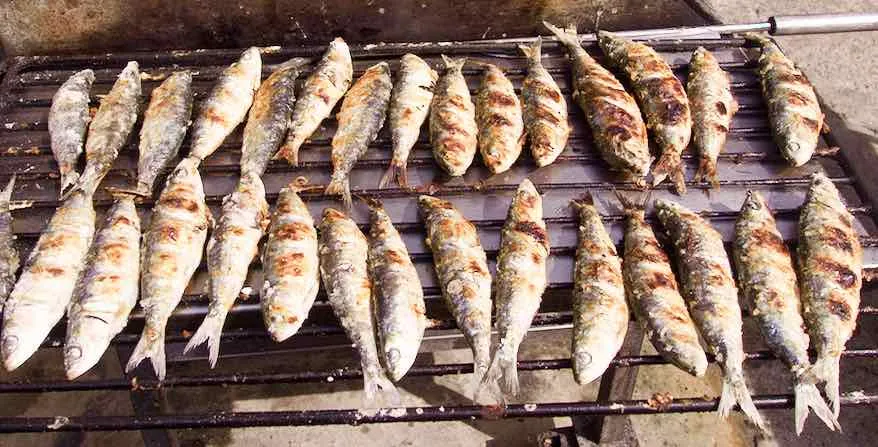
A few standouts:
-
Tito 2 is an institution. Tiger prawns, gooseneck barnacles, monkfish rice. It’s not cheap but the quality is consistent.
-
Os Lusíadas is upscale, beautiful, and pricier. Worth it for a nicer meal.
-
A Marisqueira de Matosinhos is a good middle-ground option with great shellfish and a more casual feel.
[!tip] Pro Tip
If you don’t want to leave central Porto, [Meia-Nau] has a city-center location near Cedofeita that serves the same kind of fresh seafood as Matosinhos in a more convenient spot.
Porto Style Bifana
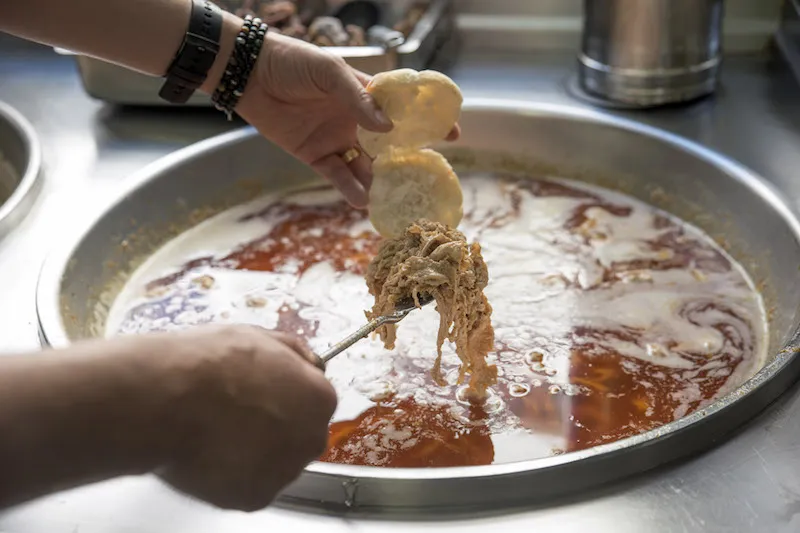
If you eat bifanas all the time in Lisbon like I do, you will find the Porto version is a completely different experience. It is the same general idea (thin-sliced marinated pork on a soft roll) but the execution is distinct, fueling a fierce regional rivalry that locals get very passionate about.
In Lisbon, the bifana is on the drier side and usually served with hot sauce and mustard. In Porto, it is apparently swimming in sauce. The pork is simmered in a spicy, garlicky, slightly piri-piri broth, and the bread soaks it all up.
Full disclosure, although I visit Porto frequently, I have not actually eaten a Porto-style bifana yet. I really want to try one, and when I finally do, I will be heading straight to the spots below which come highly recommended by a foodie friend whose opinion I trust.
-
Conga on Rua do Bonjardim is the famous spot. It’s been doing one thing for 50 years and doing it well. Order a bifana with a beer, stand at the counter or grab a table upstairs. Done.
-
If Conga has a line, a good backup is Tasca Casa Louro is another spot locals will point you toward for an arguably even juicier version.
Other Solid Restaurants
Beyond the regional classics, a few places worth knowing:
-
Cervejaria Gazela for one of the best “cachorrinhos” (small, crispy hot dogs with cheese and spicy sauce) in the city. Tiny spot, line out the door at peak hours.
-
Casa Guedes is famous for pernil (roast pork sandwiches). Order the one with cheese.
-
Flow is a trendier, modern Portuguese spot in central Porto if you want a nice dinner.
-
Tapabento near São Bento station is excellent and creative, but small. Reserve well in advance.
What to See
São Bento Station
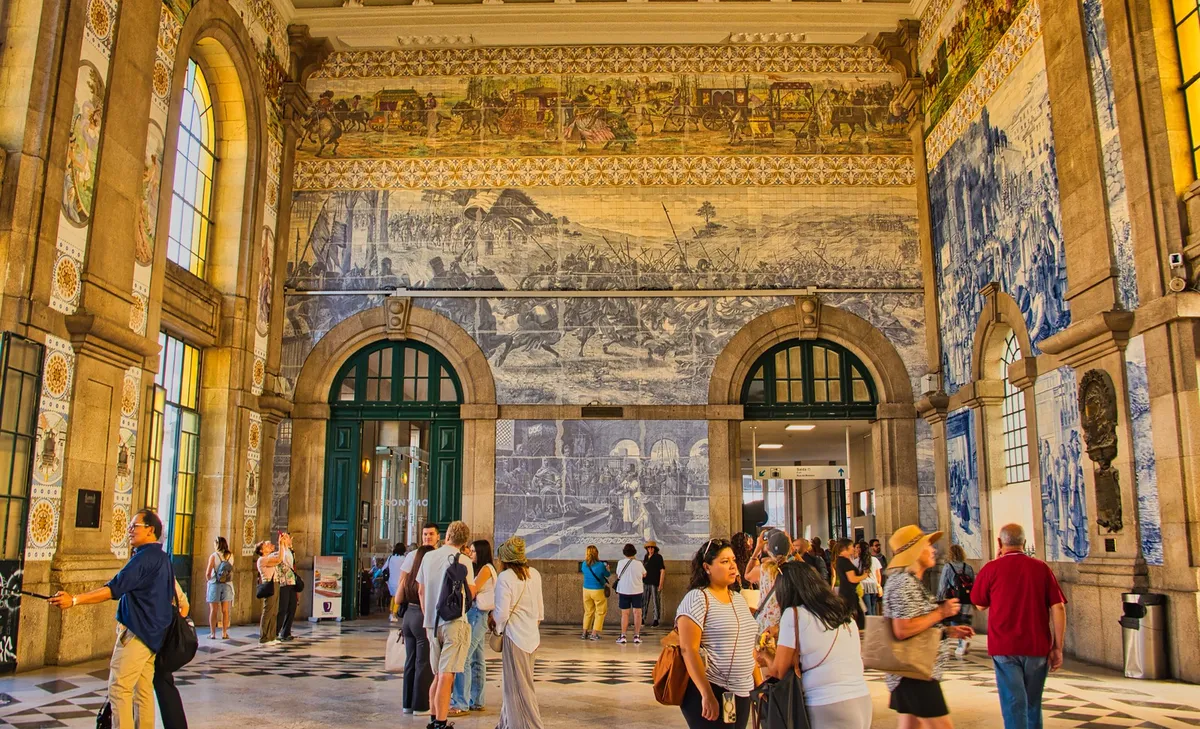
Even if you’re not catching a train, be sure to walk into São Bento Station. The main hall is covered floor to ceiling in massive blue-and-white azulejo tile murals depicting scenes from Portuguese history. It’s free, it takes 10 minutes, and it’s one of the most beautiful train stations in the world. Don’t skip it.
Livraria Lello
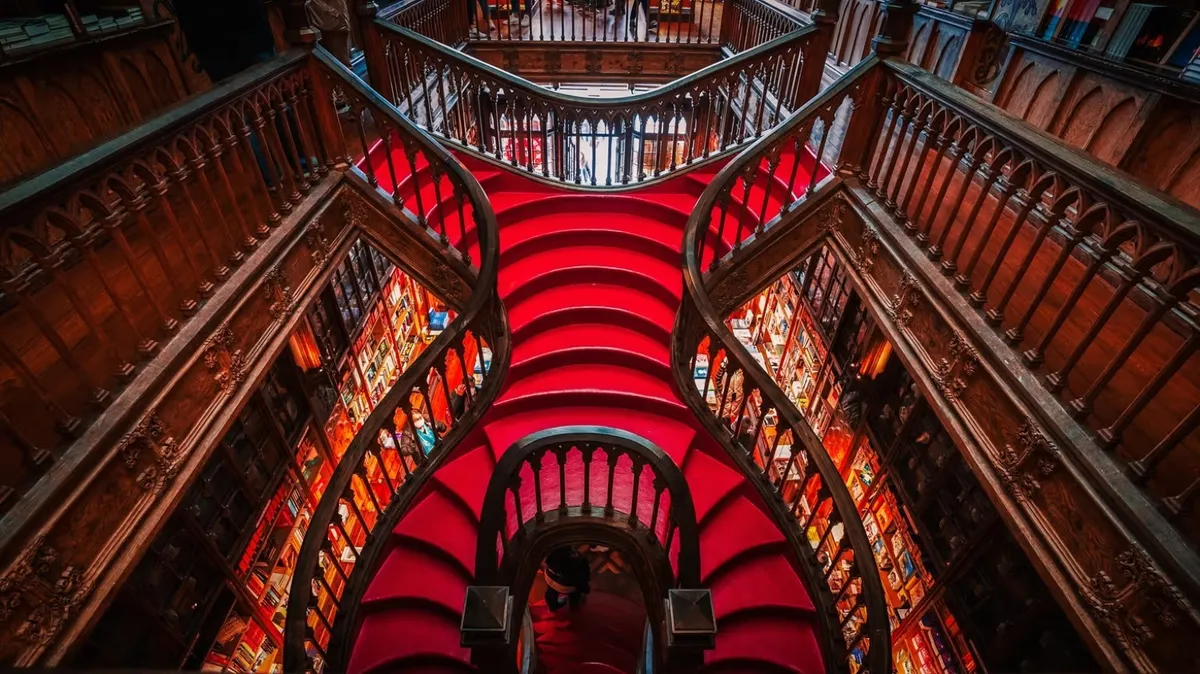
Livraria Lello is a tiny, ornate bookstore from 1906 with a famous red staircase that allegedly inspired the design of Hogwarts in Harry Potter. It’s stunning. It’s also one of the most visited spots in Porto, which means lines that wrap around the block.
Honestly… it’s a fun thing to do but the lines can be unbearable, and once you’re inside you’re just fighting with other people to take this photo with a million people around. I’d recommend it for Potterheads but everyone else can skip it.
Buy your tickets online in advance.*
If you’re a planner and really want to do this, the Livraria Lello website lets you reserve a timed entry, and the cost of the ticket is partially redeemable against a book purchase if you buy one. Showing up without a ticket and hoping for the best will eat hours of your day. Highly recommended.
The Most Beautiful McDonald’s in the World
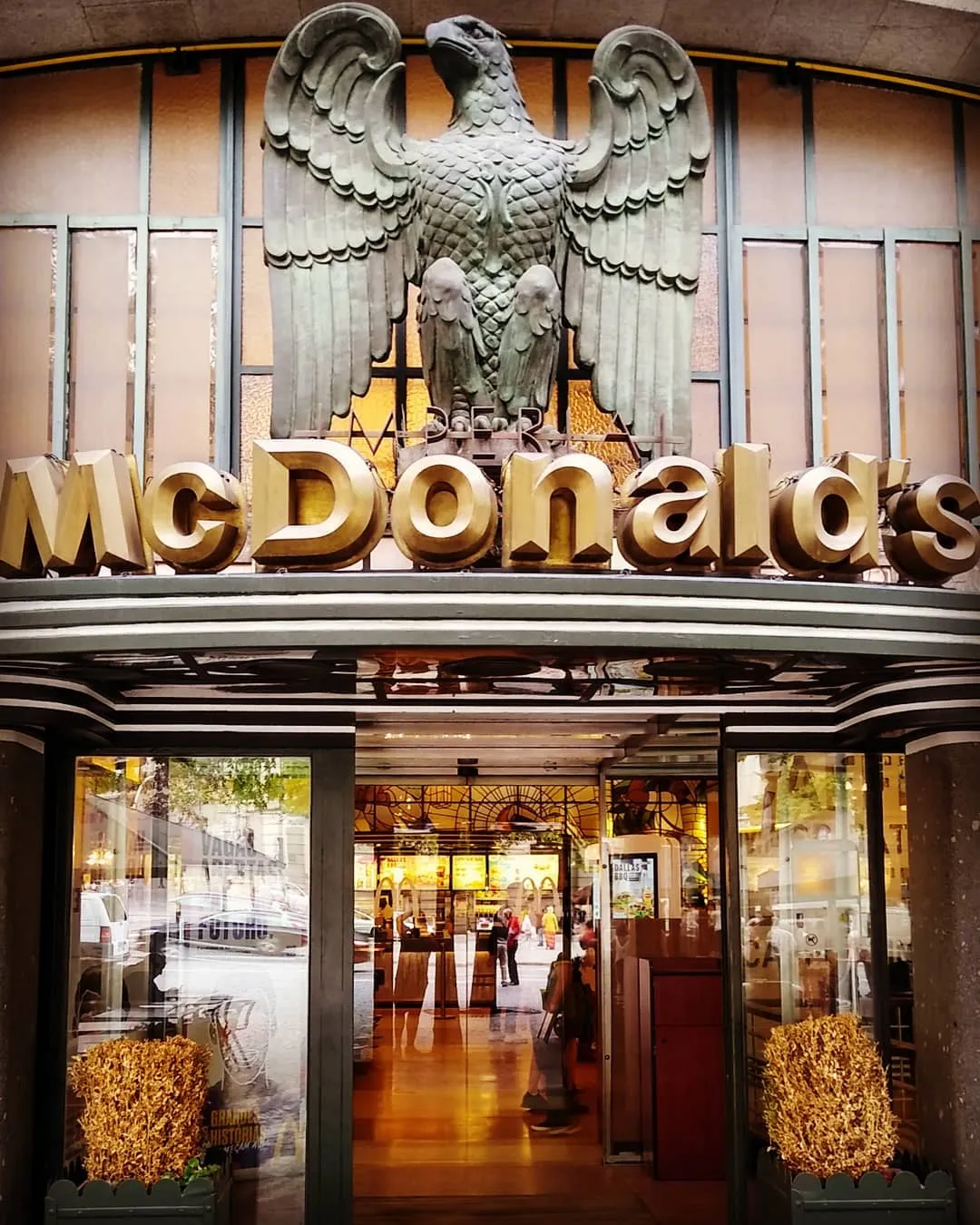
This sounds like a joke but I’m totally serious. On Praça da Liberdade, right at the bottom of Avenida dos Aliados, there’s a McDonald’s housed in a former 1930s Art Deco café called Café Imperial. The interior still has the original stained glass windows, chandeliers, ornate ceilings, and a giant eagle out front.
You don’t have to eat anything. Walk in, look up, take a photo, walk out. It’s a 5-minute detour and it’s genuinely worth it. It’s often called the most beautiful McDonald’s in the world and the title is fair.
Museums
A few worth your time:
-
Serralves is a modern art museum with extensive gardens on the western edge of the city. The art is good, but the grounds (with a famous pink Art Deco villa and contemporary architecture pavilions) are the real draw. Easy half-day visit that my wife and I had a great time at.
-
Museu Nacional Soares dos Reis is housed in a beautiful old palace and has the city’s main collection of Portuguese painting, sculpture, and decorative arts.
-
Centro Português de Fotografia is set inside a former prison and is free. The building alone is worth the visit, and the photography exhibits rotate regularly.
Outdoors and Sunsets
Where to Walk
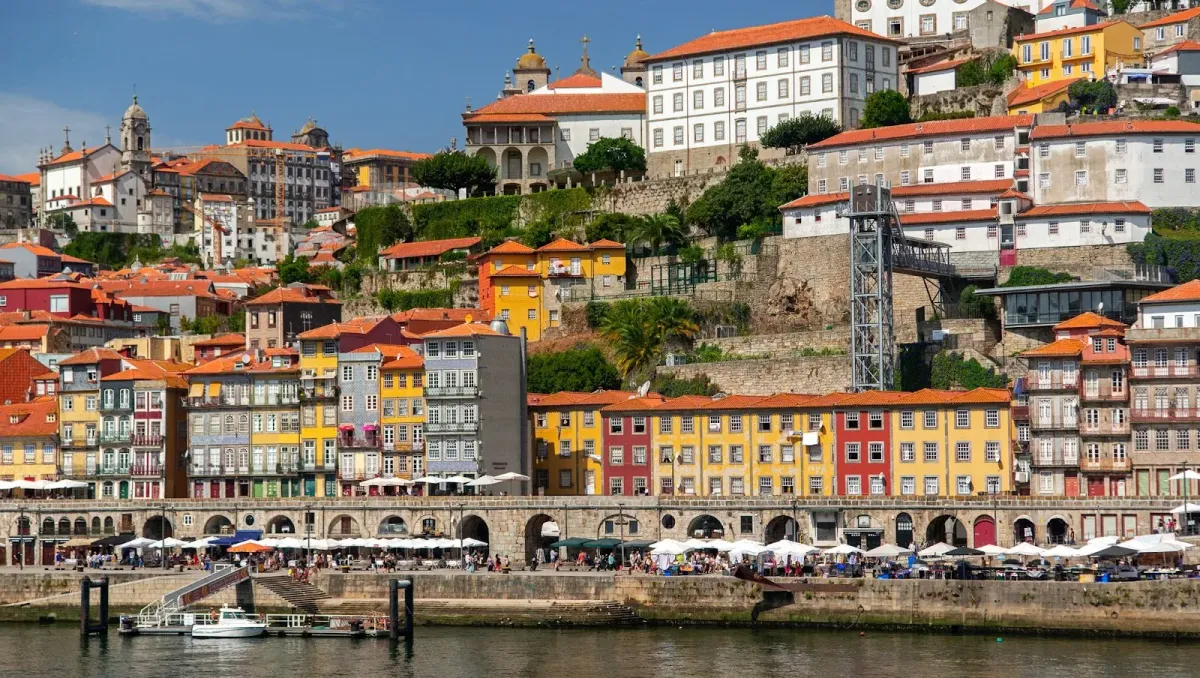
The Ribeira is the colorful riverside district in central Porto and the postcard image of the city. Walk along the river, have a drink at one of the restaurants, watch the boats. Touristy, yes, but one moment there and you’ll quickly understand why it’s touristy.
The Foz do Douro area is where the river meets the Atlantic, about 30 minutes from central Porto by tram (the historic Line 1) or bus. The walk along the ocean promenade out to the lighthouse at Foz is beautiful and flat, a welcome break from the hills.
When we visited, the beachfront was beautiful and foggy, while the city center just a few miles in was sunny. A very San Franciscan contrast that made us happy.
A Park
The Jardins do Palácio de Cristal (Crystal Palace Gardens) is one of the city’s nicest parks. Beautiful winding paths, a pavilion, peacocks wandering around, and several quiet viewpoints over the Douro and the Arrábida Bridge. Free to enter, easy to spend an hour or two wandering.
Sunset
The number-one sunset spot in Porto is Jardim do Morro, a hilltop park on the Gaia side of the river right at the top deck of the Dom Luís I bridge.
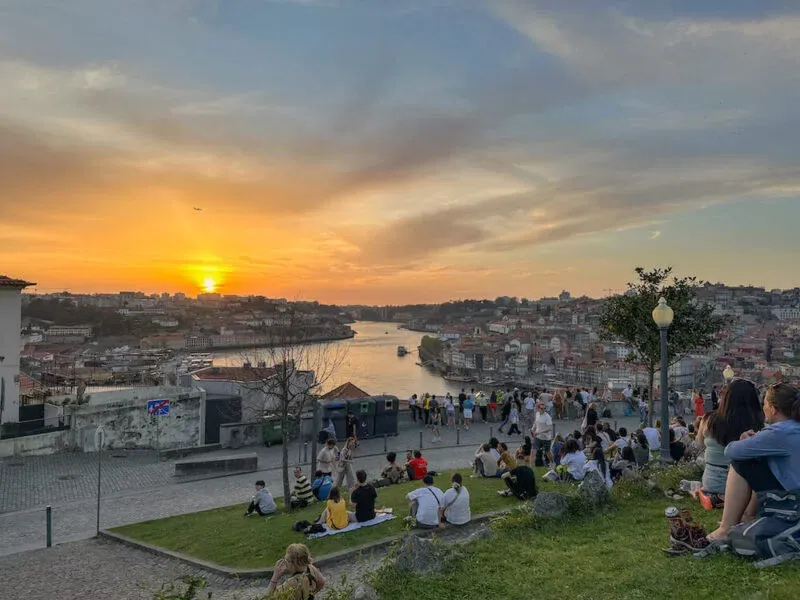
The views back across the river toward Porto at golden hour are the city at its best. Get there 30 minutes before sunset on a clear evening, bring something to drink, find a spot on the grass. It gets crowded, deservedly so.
If you want a slightly less crowded alternative with an even wider view, the Mosteiro da Serra do Pilar viewpoint is right above Jardim do Morro and offers a more elevated angle (slightly more hills to walk up, too).
For a quieter spot, head back to the Crystal Palace Gardens mentioned above. The viewpoints over the river from inside the park are beautiful at sunset and far less crowded than Gaia.
A Beach Day
If the weather cooperates and you want to swim, head to Matosinhos Beach. It’s the largest beach in the Porto area, with a long stretch of sand, a lively promenade, and powerful Atlantic waves (the water is cold, fair warning). Easy to reach by metro. Pair it with lunch at one of the Matosinhos seafood spots above.
Foz do Douro (mentioned above for the nice promenade) also has beaches closer to the city, but they’re smaller and the water is just as cold.
That’s the framework. Porto rewards visitors who slow down and let the city be its own place. Eat the heavy food, drink the strange wine, walk the steep streets, and watch one sunset from across the river. You’ll get it.
[!question] Looking to explore the rest of the country?
If you want to see what else Portugal has to offer outside the major cities, read my guide on Exploring Portugal Beyond Lisbon and Porto.
Boa viagem!
