


[!tip] Author’s Note:
This piece is part of a curated series to help you experience Portugal like you actually know somebody here (me).
View the complete visitor’s guide for my personal advice and a few free lessons that will teach you enough Portuguese to order your food and navigate your way around more confidently.
My wife and I have lived in Lisbon since 2022, and we host a lot of visitors.
Friends, family, friends of friends who got my contact info from someone. Most of them are great. A few have made me wince.
This is the conversation I wish I could have with every fellow American before they land, so they have a good time and the people who actually live here don’t roll their eyes when they hear the accent.
None of this is about being perfect. It’s just about not being the person locals talk poorly about after you leave.
Tipping
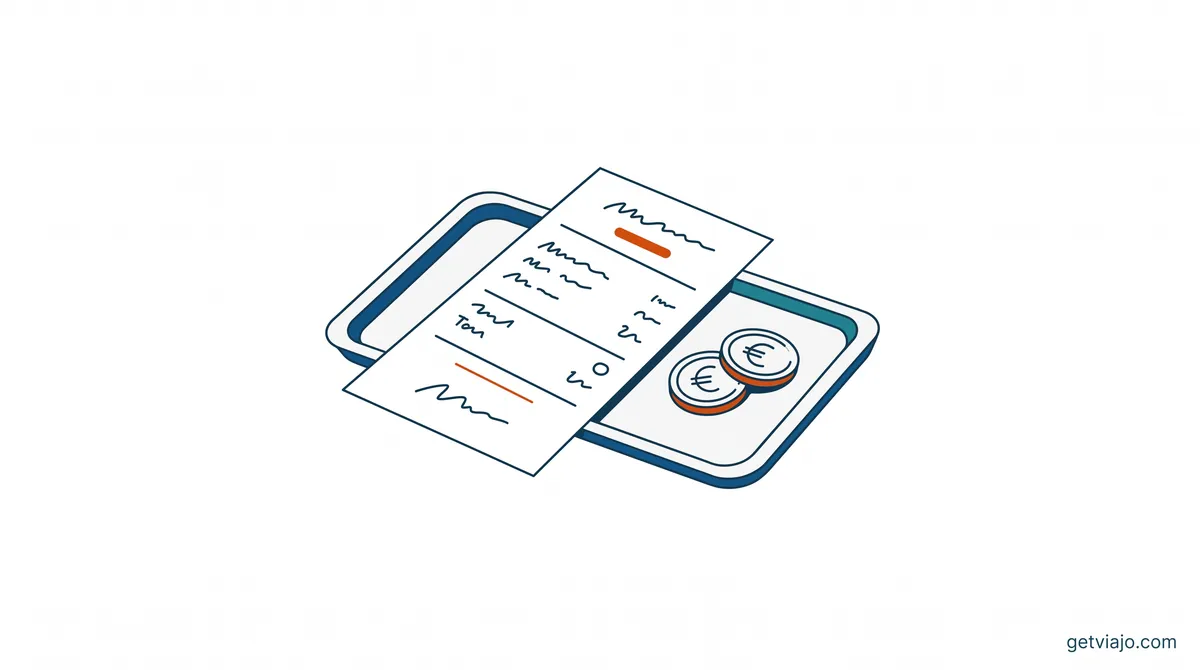 Rounding up the bill with a few coins is perfectly acceptable.
Servers in Portugal earn a monthly salary. Tipping is not how they pay their rent. Leaving zero is completely normal and common.
In particularly touristy parts of Lisbon, Porto and the Algarve, servers have, of course learned that Americans often DO tip, and as a result some will ask you outright once they hear your accent (“oh by the way, I’ve heard you people like to leave extra… just letting you know I wouldn’t say no if you reeeally wanted to”).
It feels uncomfortable to say no when someone is standing at your table looking at you. Say no anyway. It’s fine. You’re not being rude, you’re being normal by local standards.
Something sometimes confusing or difficult for American-brains to comprehend is that I’ve heard many good arguments AGAINST tipping.
While you might think you’re just being generous, nice, etc., Portuguese friends and acquaintances have actively expressed they do NOT want visitors to tip at all. The idea being that tipping only encourages more tipping, and other restaurants eventually DO begin expecting them, asking for them, and catering to cultures that do it (ours).
Think of it like, if you’re opening a new restaurant in Portugal, who would you rather host as guests? Americans who always leave tips or local Portuguese who don’t (or can’t because of their lower salaries)
Tipping financially motivates places to want to cater to Americans, and pretty soon all restaurants become for Americans because, well, money talks.
Next thing you know every new restaurant here starts to look and feel like the ones in the US, with prices and a tipping culture that match, where a majority of locals won’t ever be able to afford step in the building.
Not tipping is, in a real sense, the more considerate move.
If you really can’t bring yourself to leave nothing, cap it at 5%. Round up the bill, leave a couple of euro coins on the table after a 40-euro dinner, done. The American 10-20% does not belong here. Leave it at home.
Language
A few rules of thumb, in order of importance.
Don’t speak Spanish.
I know it’s tempting if you know some, and I know the two languages look similar on paper. They are not the same language, and the Iberian Peninsula has several centuries of history that makes defaulting to Spanish in Portugal often land badly.
Portuguese people aren’t Spanish. Portugal spent a long stretch resisting Spanish rule. The assumption that the languages are interchangeable is a quiet insult even when nobody calls it out.
No one will outwardly say this but (in my opinion) it’s a bit of little brother syndrome. Spain is bigger, more financially successful, and Portugal in many ways lives in its shadow.
When people visit and assume they can “just speak Spanish”, it can signify that you didn’t even know there was a Portuguese language of its own in the first place, causing the hair on people’s necks to prickle.
Furthermore, the Portuguese learn English in school, and tourism is their #1 industry, which means they’re VERY used to dealing with visitors speaking English, and they’re often very good at it (especially compared to their Spanish neighbors).
If you don’t speak Portuguese, just speak English. Almost everyone in Lisbon and Porto, and most people in areas with tourists elsewhere speak enough English to help you. Defaulting to English is preferred over attempting Spanish. By a lot.
[!tip] Better still
Even if you’re only here for 24 hours and don’t plan on ever speaking Portuguese again, these pleasantries will make you seem a lot more respectful. 👇
You know how everyone tells you that you need to say “bonjour” before every interaction when visiting France or else you’ll be seen as rude?
It’s the same here.
Even if it feels awkward, think of it as doing your due diligence to be seen as someone who’s at least trying to be polite. In the eyes of someone who deals with new tourists coming in and out of their shop all day every day, that goes a lot further than you think.
| Phrase | When to use it |
|---|---|
| Bom dia | Good morning (until noon) |
| Boa tarde | Good afternoon (Noon until roughly 8pm) |
| Boa noite | Good evening, (8pm onward) |
| Obrigado / Obrigada | Thank you (male/female) |
Walk into a café, say “Bom dia,” and then switch to English. That small gesture makes you seem so much more polite than 50% of the other people who walked in before you and can change the entire interaction.
You’ve shown you know where you are.
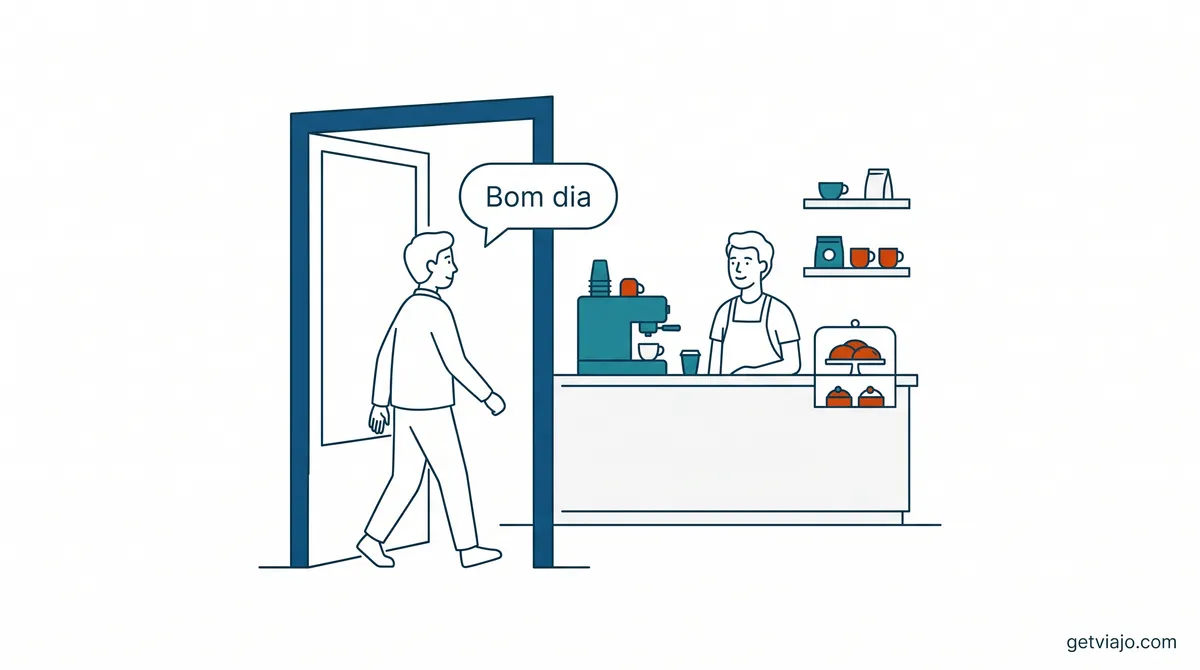 A simple greeting goes a long way before switching to English.
[!tip] Regarding Obrigado/Obrigada
it’s not about who you’re talking to, it’s about how you yourself identify. Men say obrigado and women say obrigada.
Restaurant Etiquette and Expectations
Culturally, sitdown restaurant meals here are events.
Lunch can take 90 minutes. Dinner can run multiple hours or the entire night. In the US you’ll be rushed out the moment it’s obvious you’re no longer spending money. Here, they’ll let you sit there until closing if you don’t speak up.
Of course, you can leave whenever you want, but you won’t be prompted to.
The server isn’t ignoring you, but rather they’re letting you enjoy the table. The check never comes automatically. You have to ask.
To wave the server over, make eye contact, stick your hand up and say “A conta, por favor” doing that universal “signing a check” air-motion hand squiggle. That’s it. Once you’ve asked, they’ll bring it within a few minutes.
If you sit there for 40 minutes wondering why no one is bringing the bill, that’s why. They’re being polite.
Also, don’t be surprised to walk into an empty restaurant and be told they have no free tables.
That means they’re reserved for other guests later, and, precisely because they don’t like to rush people through a meal, they often really don’t feel comfortable letting more than one person lay claim to a table until the person with the reservation has already paid and left.
It’s best to make reservations yourself whenever possible. I’ve found this is much more common in Portugal than the US. You can easily do this online via Google Maps (just click into the restaurants’ listing and they often have dates/times available, or via an app called “The Fork” that’s commonly used here).
Alternatively you can call (the Portuguese seemingly much prefer actual phone calls). I understand with the language barrier I 100% understand why that can be intimidating, but just start the call with “bom dia/boa tarde” (depending on the time of day you call), and just ask, “sorry, do you speak English?” and the person on the other end almost certainly will.
Showing up without a reservation can work, but they’ll always expect you to have one, and without one, there’s a very real chance you’re not eating there tonight.
The “Couvert” Concept
When you sit down at a restaurant, a basket of bread, a small dish of olives, sometimes cheese or a spread or sardine paté will often appear on the table. This is called the “couvert”. It is not free, even if it looks like it might be.
Each individual item has a price (ie. bread = €1.50, olives = €1, butter = €0.50c, etc), and anything you touch gets added to the bill at the end. Open the bread, pay for the bread. Eat one olive, pay for the entire cup of olives.
You have two options. If you don’t want it, the polite move is to tell the server when they bring it. A simple “Não, obrigado/a” works, or even just a head shake and “no, thank you.” If it’s sitting on the table when you arrive, simply tell them, “we don’t need these, thank you” in English and they’ll take it away without any fuss.
The other option is to leave it untouched and they’ll remove it when they clear the table, but depending on the size of your table, it might just be in the way the whole meal.
[!tip] This isn’t a scam
I’ve seen some travel blogs frame the couvert as a tourist trap. It isn’t. It’s a normal part of Portuguese dining that locals also pay for if they want it. The only “trap” is not knowing it exists.
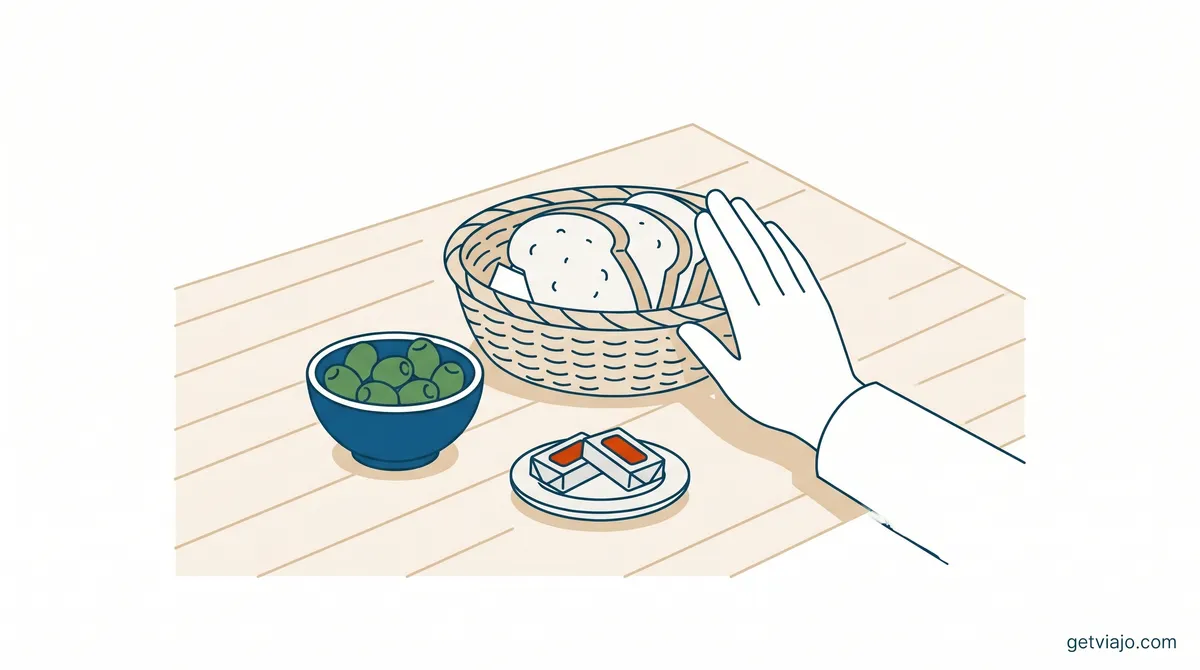 It’s completely okay to say “não obrigado” if you don’t wish for the table snacks.
Public Volume
Portuguese public spaces run quieter than American ones. Restaurants, trains, cafés, busses. People talk, but the conversation stays more quiet than you might think, meant only for the person you’re speaking with to hear it.
I say this as an American… but American voices (and accents) CARRY. Most Americans don’t realize how loud they are because everyone around them at home is operating at the same volume. Here, your normal speaking voice can be the loudest thing in a 30-seat restaurant. People on the next subway car can hear you laughing.
Culturally, a lot of Europeans hate that about us, not just the Portuguese.
Pull it down a couple of notches. Not whisper-quiet, just aware. If you can hear yourself over the room, the room can definitely hear you. The goal is for the person you’re talking with to hear you, not anyone else.
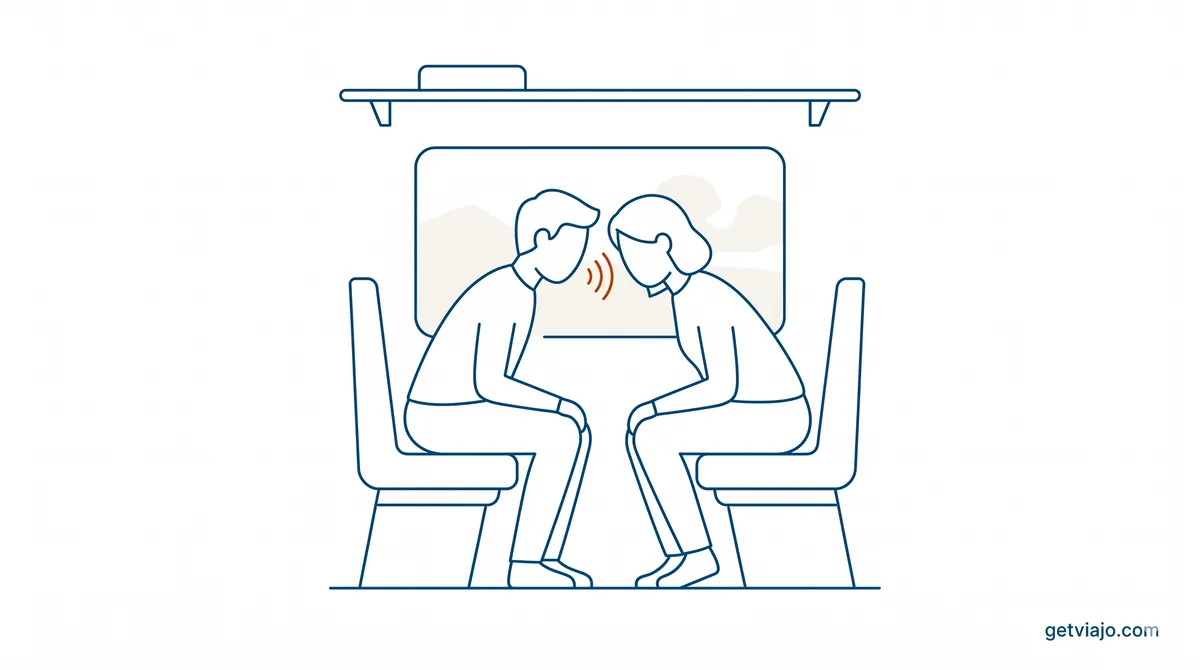 Keep your voice contained to just your table or immediate area.
Talking About Money
This is the section I wish more visitors were more aware of, or took more seriously, because it does the most quiet damage.
Americans talk about money a lot. We seemingly can’t help it. It’s the first thing our brains go to. We’re conditioned and often don’t even realize that it’s unusual.
The cost of stuff, what people earn, what we/they pay in taxes, what our rent is, what our house is worth, our 401k’s, the economy, whatever. It’s woven into how we make small talk and most of us don’t even notice we’re doing it.
As a tourist visiting Portugal, the people around you don’t want to hear this. You don’t ask, you don’t volunteer, and you definitely don’t compare.
Some context that makes this less abstract
Portugal is in the middle of a very real cost-of-living crisis. Salaries are genuinely extremely low (even compared to other parts of Europe), the median monthly take-home is well under what most Americans can fathom (ie: people with phD’s earning less than €1,000 per month). Meanwhile prices, especially rent, have gone up substantially over the past few years.
This isn’t the only reason, but a big reason for this is that people with much higher buying power, like Americans and Canadians, French, Germans, etc, have moved to Lisbon and Porto in large numbers and can pay rents that Portuguese workers (even highly qualified, well-educated ones) just simply cannot.
Whole neighborhoods have changed. This is a live, highly-charged current political issue and it directly affects the lives of the people you’re interacting with.
If your server is living in an apartment with a dozen roommates, stressed about how to pay his bills, and then has to hear tourists saying “gosh it’s so cheap here!” all day every day, you can imagine how that lands.
A few hard rules
Never tell a Portuguese person how cheap something is, or let them overhear you talking about it with your friends. Your 12-euro lunch, your 1,000-euro Airbnb for the week, the wine that costs a quarter of what it does in the US. To you it’s a positive observation. To the person serving you, who may be paying half their salary in rent on an apartment a quarter the size of yours, it reads as oblivious at best.
And on the flip side: don’t complain about prices either.
Saying something is expensive sounds, on the surface, like the safer move. It isn’t. Portuguese friends have told me directly that when Americans complain about prices, the message lands as “if you think this is bad, what do you think that means for us?” It’s a lose-lose.
The simplest rule. Just don’t discuss money in public.
Not what things cost, not what you paid, not what you earn, not how affordable/expensive Portugal is compared to anywhere else you’ve been. Save it for private conversations behind closed doors. The server, the cab driver, the person at the next table, the shopkeeper, they didn’t sign up to hear an American’s take on their economy, and I promise you, they hear it all the time.
Don’t be that person.
The Short Version
Be quieter than you think you need to be. Greet people in Portuguese, then switch to English. Don’t tip, or tip very little. Ask for the check. Send the bread back if you don’t want it. Don’t talk about money.
That’s most of it. The rest you’ll pick up by paying attention and being a polite, respectful, courteous human being, which is honestly the whole game here. People notice the visitors who are watching and adjusting, and they notice the ones who aren’t.
Boa viagem.
