


[!tip] Author’s Note:
This piece is part of a curated series to help you experience Portugal like you actually know somebody here (me).
View the complete visitor’s guide for my personal advice and a few free lessons that will teach you enough Portuguese to order your food and navigate your way around more confidently.
This is the boring stuff. Trains, ATMs, taxis, SIM cards, etc. The questions visitors text me that they probably should’ve sorted out a week earlier. None of it is hard, but they’re the kind of tips designed to save you a few potential headaches.
Trains
Portugal has a national rail company called CP (Comboios de Portugal), and most of the routes you’ll care about are run on two types of trains.
The “Alfa Pendular” is the modern one. Wifi that mostly works, smooth ride, comfortable seats, the kind of train you can actually get work done on.
This is what runs the main Lisbon to Porto corridor and a few other long-distance routes if you are exploring beyond Lisbon and Porto.
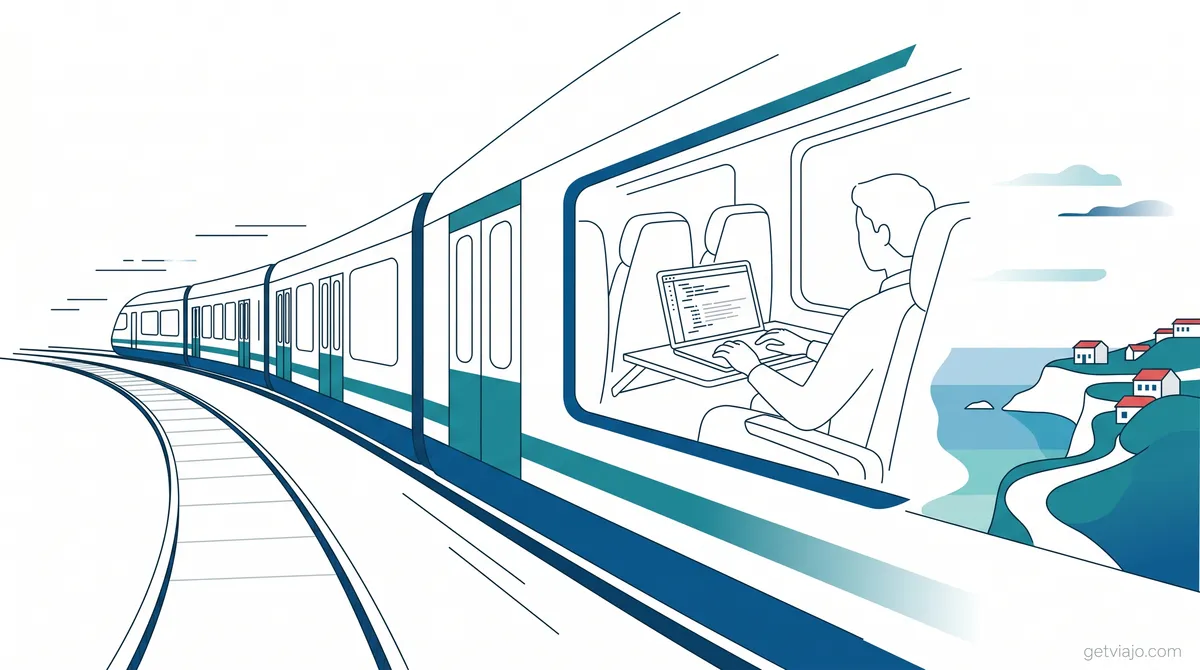 The Alfa Pendular is the fastest and most comfortable way to travel between major Portuguese cities.
The “Intercidades” is the older option. It’s cheaper and still gets you there, but the ride is bumpier, the seats are dated, and it has the rickety “chugga-chugga-choo-choo” feel of a train from the 1940’s. Fine for shorter hops, less ideal for a 3-hour journey.
When a route offers both, I highly recommend you take the Alfa Pendular. The price difference is negligible and the experience is noticeably better.
You can buy tickets three ways. The CP website, the CP app, or in person at the station, either at a manned booth or a ticket machine. The machines have English options and are pretty straightforward, accept credit cards, etc.
[!tip] Check for strikes before travel days
Transportation strikes happen often in Portugal, and they’re usually announced a few days ahead. A quick Google search for “Portugal train strike” before any major travel day is worth the 30 seconds. If there’s one planned, you’ll know.
Busses
Busses are a totally valid option and significantly cheaper than the trains. Most visitors don’t even consider them, which is a mistake.
Portugal is roughly the size of Indiana. You’re almost never on a bus for more than 3 to 4 hours. For a lot of routes, a bus gets you there for a third of the price of the train and only takes 30 to 60 minutes longer.
The easiest way to check bus schedules is Rome2Rio. Plug in your start and end points and it’ll show you the bus options alongside trains and other modes, with prices and times. Genuinely useful tool.
Local Public Transit
For getting around Lisbon and Porto, the local metro, bus, a ticket onboard from a driver in Lisbon costs €2.10 for buses and €3.10 for trams.
The Zapping transfer window lasts and tram networks are excellent. Paying for rides is straightforward and you have a couple of great options.
The easiest way to ride is by tapping your contactless credit card, debit card exactly 60 minutes and is valid for continuous onward travel, meaning a round trip requires a second fare., or smartphone directly on the fare gates at metro stations or the readers when boarding buses and trams.
If you prefer to use a dedicated transit pass, go into any metro station and buy a reusable paper card from the machines. In Lisbon, this is called a Navegante card (formerly the Viva Viagem card), and in Porto, it is the Andante card. Load it with 5 to 10 euros. Lisbon uses a pay-as-you-go “zapping” option, while Porto requires you to load zone-specific trips. You can then simply tap this card to board any metro, bus, or tram.
Each ride is roughly 2 euros. Both cities offer a window of free transfers (typically 1 to 1.5 hours) if you need to go there and back kinda thing.
[!tip] Pro Tip
Look for the British Flag icon to change the language to English on these metro ticket machines. It’ll make your life a lot easier.
Regarding the famous Tram 28 in Lisbon It is beautiful but in my opinion, it operates more like a crowded tourist ride than practical transit.
 A typically long queue for catching the 28 tram at the main downtown location.
If you really want to ride it, no shame, I get it. It is famous for a reason.
The absolute easiest way is to tap your contactless payment method directly on the reader when you board. Since the transit networks rolled out contactless payments, you do not strictly need a pre-loaded transit card, though that works perfectly well.
If you only have cash, you can buy a ticket from the driver, but exact change in euro coins is highly preferred over asking the busy driver to break a bill for a small transaction.
[!tip] REAL Pro Tip
To skip the massive lines and avoid being packed like sardines, I’d recommend taking an Uber to this location, which is a kiosk outside of a cemetary on the other side of town. This is the “final stop” on the tram (called ‘Prazeres’). The idea being if you treat it like your first stop, you’ll have the best chance at getting a seat, and not have to wait in a long line.
Then just ride back and exit where most other people begin. You’ll have a lot more enjoyable, less cramped experience, and the route is the exact same.
Tap Water and Safety
Two other quick things visitors always ask. Yes, the tap water is perfectly safe to drink everywhere in Portugal. Save your money and just ask for a glass of tap water (“água da torneira”) at restaurants.
Second, Portugal is incredibly safe regarding violent crime, but pickpockets are active in the main tourist areas of Lisbon and Porto. Keep your wallet in a front pocket and hold your bag closely when on crowded public transit.
Rideshare Apps
Uber and Bolt are everywhere in Portugal and both are perfectly reliable. (Lyft doesn’t exist here) Bolt is usually slightly cheaper, but the difference is small and either is fine.
The reason to use them over a regular taxi is that the price is agreed upon in writing before the ride starts. No meter games, no “the credit card machine is broken,” no surprises.
Do not take the local green and black taxis. They’re famously shady with tourists. I’ve heard enough stories from visitors who got charged €40 euros for ride that otherwise would’ve cost them €5. I won’t recommend them under any circumstance. Just always use Uber or Bolt, seriously.
Driving and Tolls
If you’re thinking about renting a car, know two things upfront. Gas is very expensive (literally double what you pay in the US), and the toll roads will hit you harder than you expect.
The drive from Lisbon to Porto, for example, costs around 30 euros in tolls alone. Each direction. That’s on top of the gas.
If you do rent, ask the rental company for a Via Verde transponder. It’s the electronic toll device that sits on your windshield and charges you automatically. Without it, the toll system in Portugal is confusing (some tolls have no booths and read your license plate, which means foreign rentals get billed weeks later with fees). The transponder is only a few euros extra and worth every cent.
It also allows you to zoom through the special reserved “Via Verde” lanes on the freeway toll booths rather than waiting in line.
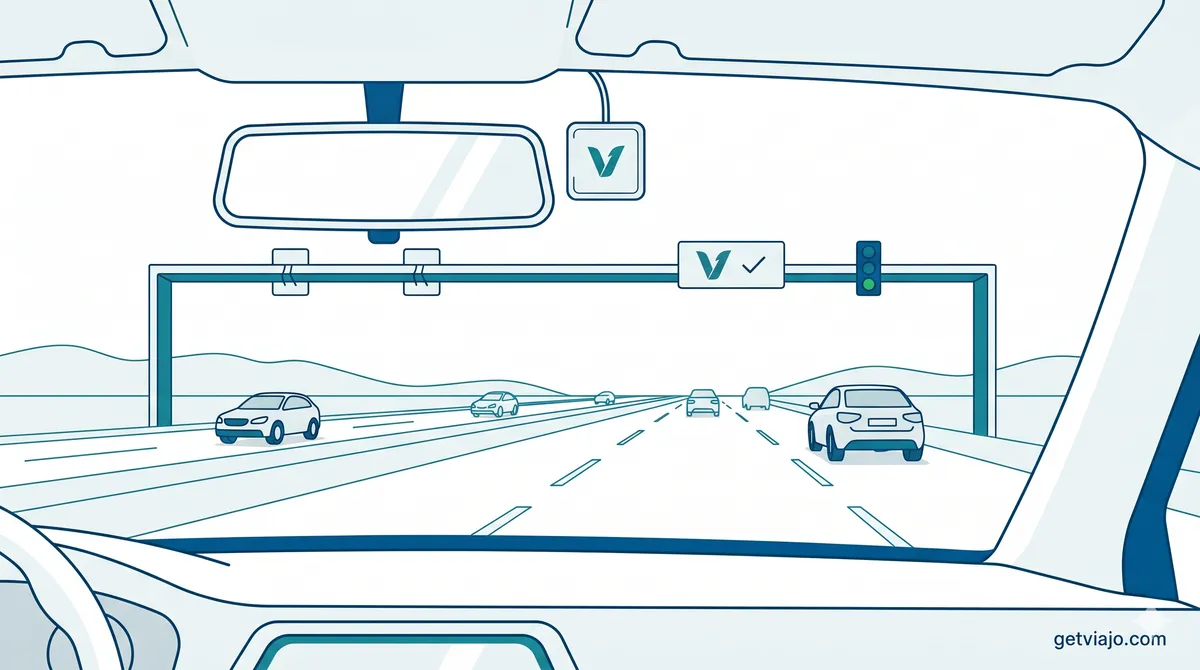 A Via Verde transponder will save you from major headaches on Portugal’s electronic toll roads.
Money
A few terms to learn first.
“Multibanco” is the Portuguese word for the bank card and ATM network, and locals often use it as shorthand for “card payment” in general. If a server asks “multibanco?” they’re asking if you’re paying by card.
“Dinheiro” means cash.
I always recommend you carry some physical euros. A lot of traditional restaurants, small shops, cafes and older spots are either cash-only or just much happier with cash. You won’t need a ton, but having some small bills equalling €20-€30 euros on you at any time covers most situations.
ATMs
Use ATMs attached to actual banks. Millennium, CGD, Santander, and Novo Banco are a few of the main ones, but in general just look for a place that has an actual walk-in bank experience and you can generally trust the ATM attached. They charge normal, reasonable fees and give you a fair exchange rate.
Avoid the standalone Euronet ATMs you’ll see everywhere in tourist areas. They’re the bright blue ones in the middle of streets and inside small shops. The fees are bad and the conversion rates are on top of it.
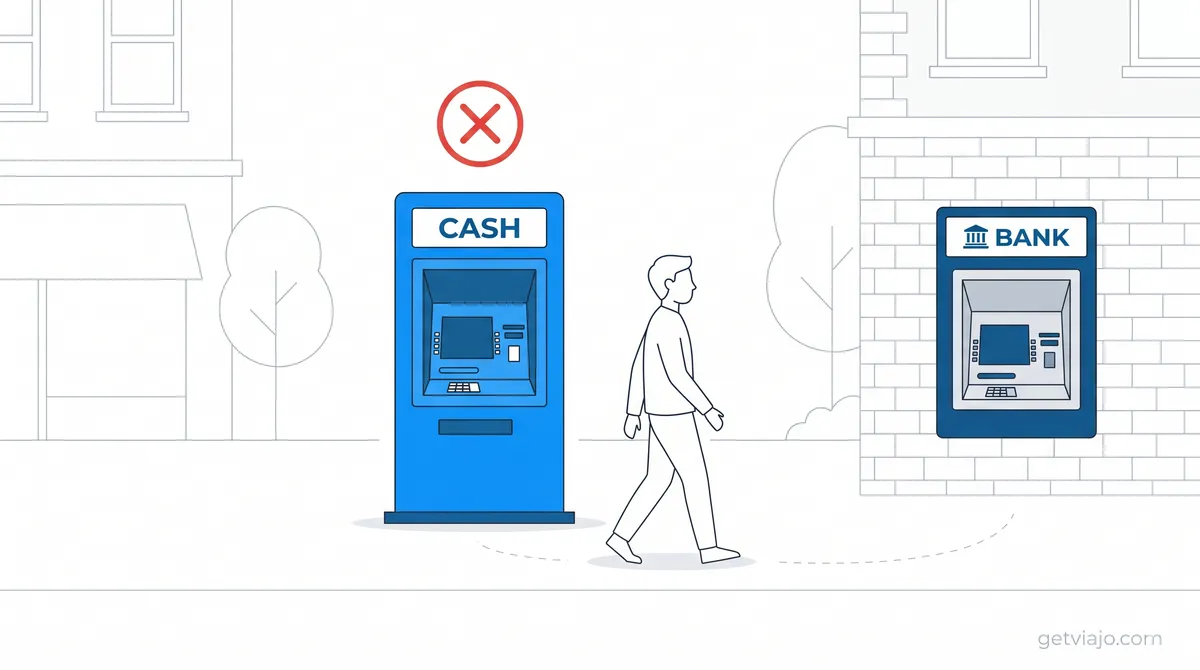 Stick to ATMs attached to actual banks to avoid exorbitant withdrawal fees.
The Golden Rule of Paying with a Card
Always reject the currency conversion on card machines and ATMs.
When you pay with a foreign card, the machine will ask if you want to be charged in euros or in your home currency. It will look like a helpful option. It isn’t. The conversion rate the machine offers is significantly worse than what your own bank will give you.
Always choose euros. Let your bank handle the conversion.
On most Portuguese card machines, the easiest way to do this is to push the number 2 twice. The first push selects euros (the local currency), and the second push confirms you’re rejecting the conversion. Get used to that motion, you’ll do it for every single card transaction.
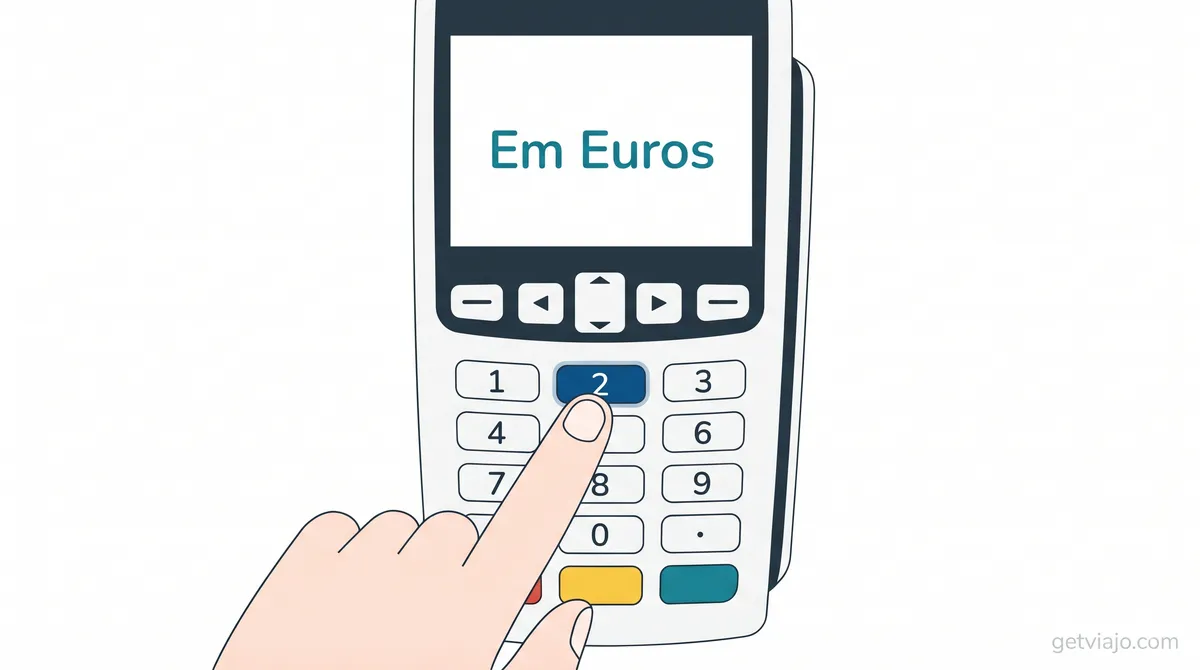 Always reject the machine’s conversion rate and choose to pay in euros.
Sending Money Between People
Locals use an app called MBWay for sending money to friends, splitting bills, and so on. It’s like Venmo. You need a Portuguese bank account to use it, so it’s not really an option for visitors.
For splitting things between you and other people you’re traveling with, Revolut and PayPal both work well and don’t require a Portuguese bank.
Mobile Internet
It might be worth looking into your American phone plan’s travel options, but just be aware that you can always get an eSIM before you fly. Airalo is the one my wife and I have used the most, and you can have a Portugal data plan active on your phone the moment you land. No SIM-card swap, no airport stop, no roaming charges from your home carrier. A week of data is usually under 10 dollars.
If your phone doesn’t support eSIMs (older iPhones, some Android models), you can buy a physical SIM at the airport fromVodafone or MEO, the two main Portuguese carriers. They have kiosks right after baggage claim as well as physical locations around the cities.
Download WhatsApp
If you don’t already have it, download WhatsApp before you come. Every local business, tour guide, Airbnb host, restaurant, and tuk-tuk driver uses it for communication. You’ll book reservations through it, get confirmations through it, and message your driver through it. It’s the default messaging app in Portugal. Don’t be stubborn.
That covers the practical stuff. Most of this is a 10-minute fix before you leave home (eSIM, WhatsApp, maybe Revolut) and the rest you just want to know once you’re here.
Any other questions? Reach out and I’ll do my best to answer it!
Boa viagem!
