


English makes it easy to be lazy with compliments. You throw out a “cool,” “cute,” or “awesome,” and one word covers everything from a puppy to a pair of shoes. Portuguese forces you to be specific. If you translate directly from English without knowing the nuance, you blur the lines natives hear clearly.
This is a common stumbling block for learners. You might think you are calling someone’s shirt “cool,” but you accidentally tell them they are physically attractive. Or you try to call a guy “nice,” but the word you choose sounds like you want to pinch his cheeks.
Here is how you separate the visual, the emotional, and the general vibes so you say exactly what you mean.
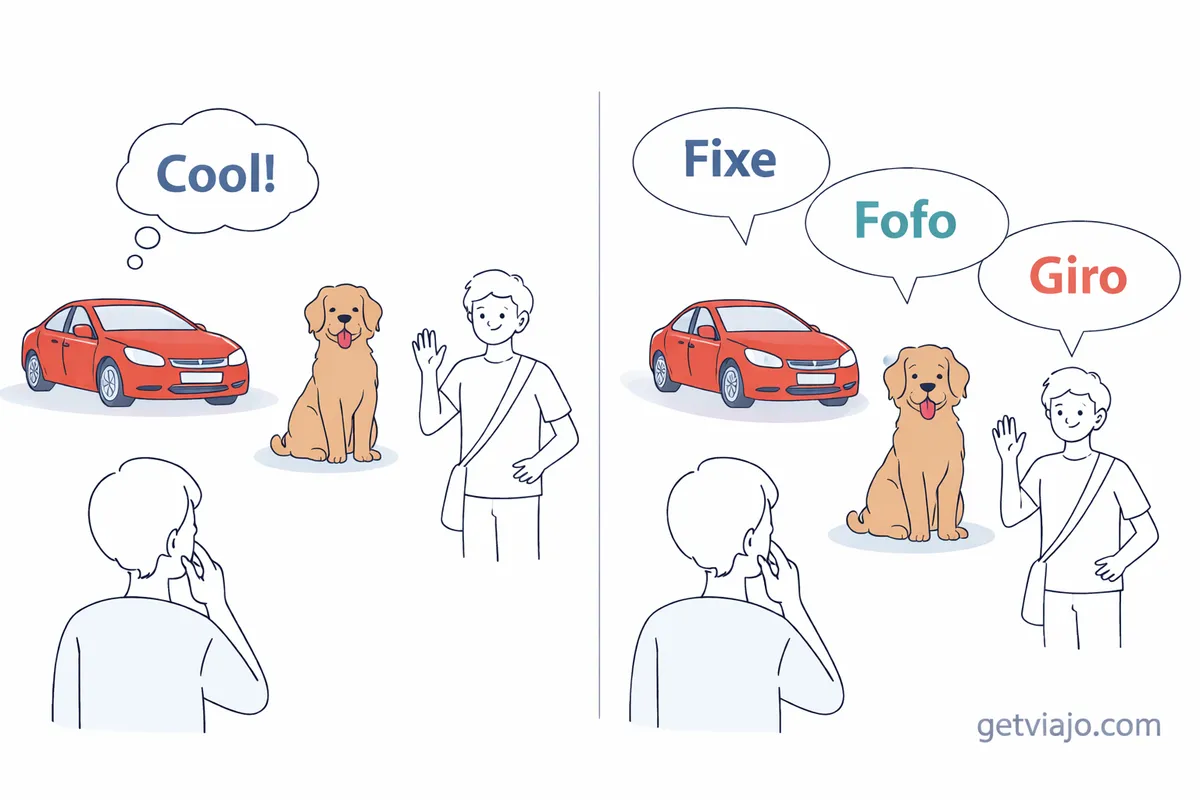 English groups these concepts together, but Portuguese gives each context its own specific word.
Using Giro for Visual Appeal
You use giro (masculine) and gira (feminine) when something simply looks good. The core idea here is visual appeal and charm.
Think of “nice-looking” or “stylish” rather than just “cool.”
| English Context | Portuguese |
|---|---|
| Nice-looking jacket | Casaco giro |
| He is good-looking | Ele é giro |
| She is pretty | Ela é gira |
When you apply this to objects, it is safe and complimentary. O teu casaco é giro (Your jacket is nice-looking) focuses the praise entirely on the item.
When you apply this to people, the temperature rises.
- Ele é giro means “He is good-looking.”
- Ela é gira means “She is pretty.”
This can be a friendly observation, but it often carries a tone of mild attraction. Context is everything here. If you tell a friend their cousin is giro, you are acknowledging they are attractive.
[!tip] Watch the Object If you want to compliment a person without hitting on them, compliment something they possess.
Tu és gira (You are pretty) = Flirty. A tua camisola é gira (Your sweater is nice) = Friendly.
Using Fixe for General Vibes
Fixe is the Swiss Army knife of casual Portuguese approval. It means “cool,” “great,” or “nice” in the broadest sense possible.
It evaluates the overall impression or the “vibe,” rather than the specific visual aesthetics.
| English Context | Portuguese |
|---|---|
| Cool car | Carro fixe |
| Cool idea | Ideia fixe |
| Cool restaurant | Restaurante fixe |
When you want to express approval without getting specific about looks, this is your word.
- Que carro fixe (What a cool car).
- Que ideia fixe (What a cool idea).
Unlike giro, fixe stays neutral regarding attraction. You can call a person fixe (Ele é fixe), and it simply means they are a cool guy or a good person to be around. It comments on their personality or vibe, not their face.
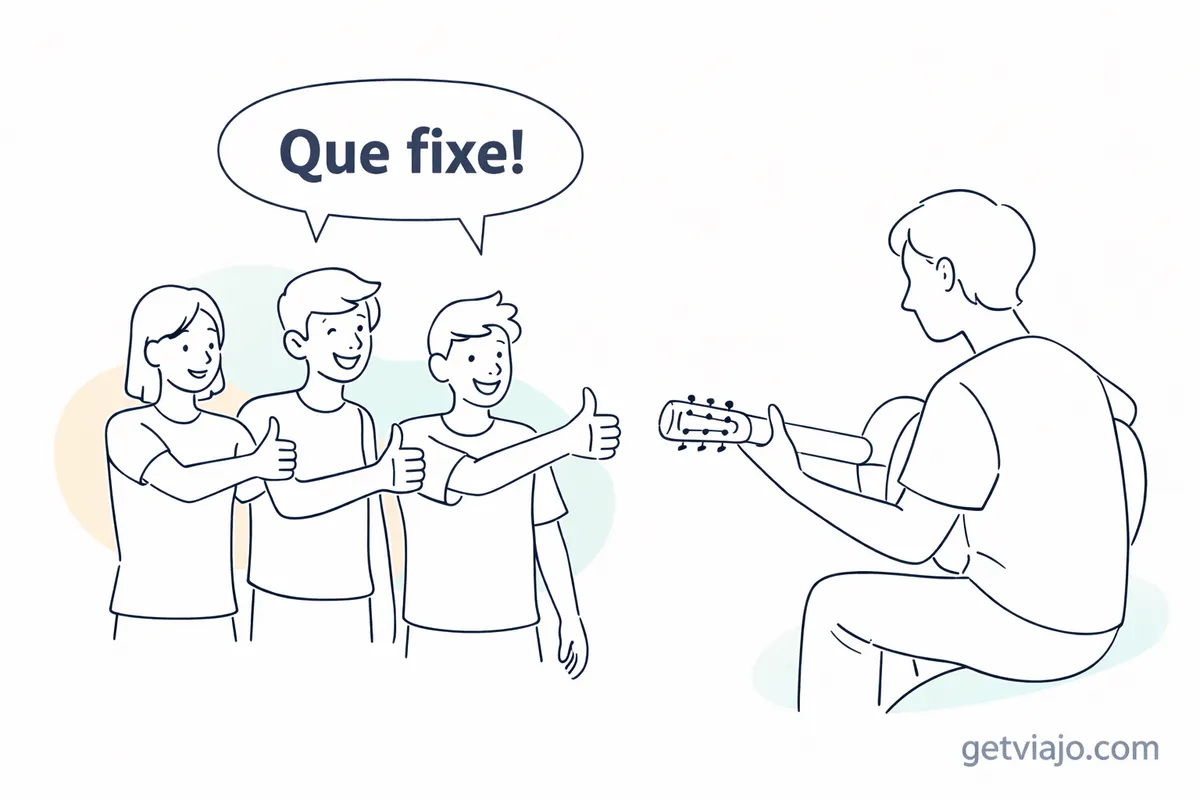 Use fixe when you approve of the vibe, the idea, or the personality.
Using Fofo for Affection
Fofo translates to “cute,” but specifically in a soft, squishy, affectionate way. Fofinho is the diminutive version, which dials the sweetness up to eleven.
You use this exactly where you would expect: babies, small animals, and romantic partners.
| English Context | Portuguese |
|---|---|
| Cute dog | Cão fofo |
| Very cute baby | Bebé fofinho |
| Sweet gesture | Gesto fofo |
The confusing part for English speakers is using this with adults.
If you say Ele é fofo (He is sweet/cute), you are usually describing personality. It means someone is kind, gentle, or did something sentimental. However, be careful with the diminutive fofinho toward grown men you do not know well. It can sound patronizing or overly intimate.
[!warning] Know Your Audience Calling a male stranger or acquaintance fofinho is risky. It can sound like you are talking to a child. Stick to simpático (nice/friendly) for general interactions.
Audio lessons and PDF study guides to accompany every lesson
Get In on the Ground Floor!
This is a new website!
As such, I'm starting the price for premium at just $2.99/mo, increasing to $11.99/mo after my first 100 members.
The Difference Between Bonito and Lindo
You will often hear bonito and lindo used interchangeably by beginners, but there is a clear hierarchy of intensity.
Bonito (Neutral Pretty)
Bonito is your standard “pretty” or “good-looking.” It describes appearance without heavy emotional weight.
- Vestido bonito (Pretty dress).
- Casa bonita (Good-looking house).
It occupies the same space as “nice-looking” in English. It is a safe, polite compliment for almost anything visual.
Lindo (Beautiful)
Lindo means “beautiful” or “gorgeous.” This word carries emotion and strong admiration.
- Vista linda (Beautiful view).
- Ela é linda (She is beautiful).
If bonito is a polite nod, lindo is a wide-eyed stare. Saying Ela é linda is a strong statement of beauty.
 Reserve lindo for things that truly impress you with their beauty.
Practical Scenarios to Test Your Instincts
Let’s look at how changing the word changes the meaning in real situations.
Scenario 1: The Jacket
- Que casaco fixe: You like the style, the brand, or the fact that it has cool pockets. It’s a “cool” jacket.
- Que casaco giro: You think it looks visually pleasing. It’s a “pretty” jacket.
Scenario 2: The Dog
- Que cão fofo: The dog is adorable, fluffy, or doing something sweet.
- Que cão bonito: The dog is physically well-proportioned or handsome.
- Que cão fixe: The dog can do a backflip or catch a frisbee.
Scenario 3: The Person
- Tu és gira: You are physically attractive. (Flirty/Complimentary).
- Tu és fixe: You are a cool person. (Friendly/Platonic).
- Tu és fofa: You are sweet/kind. (Affectionate).
A Mental Shortcut
If you are worried about mixing these up, memorize this simple association list.
| Portuguese Word | Core English Concept | Primary Focus |
|---|---|---|
| Fixe | Cool | The Vibe / Idea |
| Giro | Nice-looking | The Visuals |
| Fofo | Cute / Sweet | The Softness / Kindness |
| Bonito | Pretty | Neutral Appearance |
| Lindo | Beautiful | Intense Beauty |
The safest bet for casual conversation is usually fixe. It approves of the object or idea without accidentally commenting on someone’s physical appearance.
Frequently Asked Questions
[!faq]- Can I use ‘fixe’ in a formal meeting? generally, no. Fixe is very colloquial. In a business meeting or formal setting, you should use interessante (interesting), excelente (excellent), or muito bom (very good) to approve of an idea.
[!faq]- Is ‘giro’ used for men and women? Yes. Giro is masculine and gira is feminine. You can use it for men, women, and objects of either grammatical gender. Just make sure you match the ending: o carro giro (the nice-looking car), a casa gira (the nice-looking house).
[!faq]- What about ‘engraçado’? I hear that a lot. Engraçado usually means “funny,” but it can also mean “interesting” or “cute” in a quirky way depending on tone. If someone says “Ele é engraçado,” they usually mean he has a sense of humor. If they say a building is engraçado, they might mean it’s interesting or unique rather than classically beautiful.
[!faq]- Is ‘lindo’ too strong for a casual compliment? It depends on what you are complimenting. Calling a sandwich lindo sounds sarcastic or overdramatic (unless it’s the best sandwich of your life). Calling a view or a baby lindo is perfectly normal. Using it on a person you just met is definitely coming on strong.
[!faq]- Do Brazilians use these words differently? Yes, very differently. For example, giro is rarely used in Brazil; they might use legal or bonito instead. Fixe is also distinctly European; Brazilians use legal for “cool.” Since you are focusing on Portugal, stick to giro and fixe to sound like a local.
