


My first few months in Portugal, I kept saying things like “Eu gosto café” (I like coffee) or “Eu preciso ajuda” (I need help).
People understood me, but I could tell something was off. It didn’t feel right, and sometimes you’d see this look of “oh that’s cute” come across a person’s eye when I wasn’t even trying to be funny.
A friend eventually pointed out that I was frequently missing a small but important word, de.
I’ve learned that forgetting to use the “de” in these instances is an obvious giveaway that you’re an English speaker learning Portuguese.
And it’s easy to understand why. The rules for which verbs pair with which prepositions don’t line up neatly between the two languages. In English, you “listen to” music or “dream of” something.
Portuguese has its own set of verb-preposition pairings, and many of them rely on de. This list is the cheat sheet I wish I had when I started.
📚 Complete Guide: For a deeper explanation of how and when to use not just de, but others prepositions as well, see my guide to Portuguese prepositions.
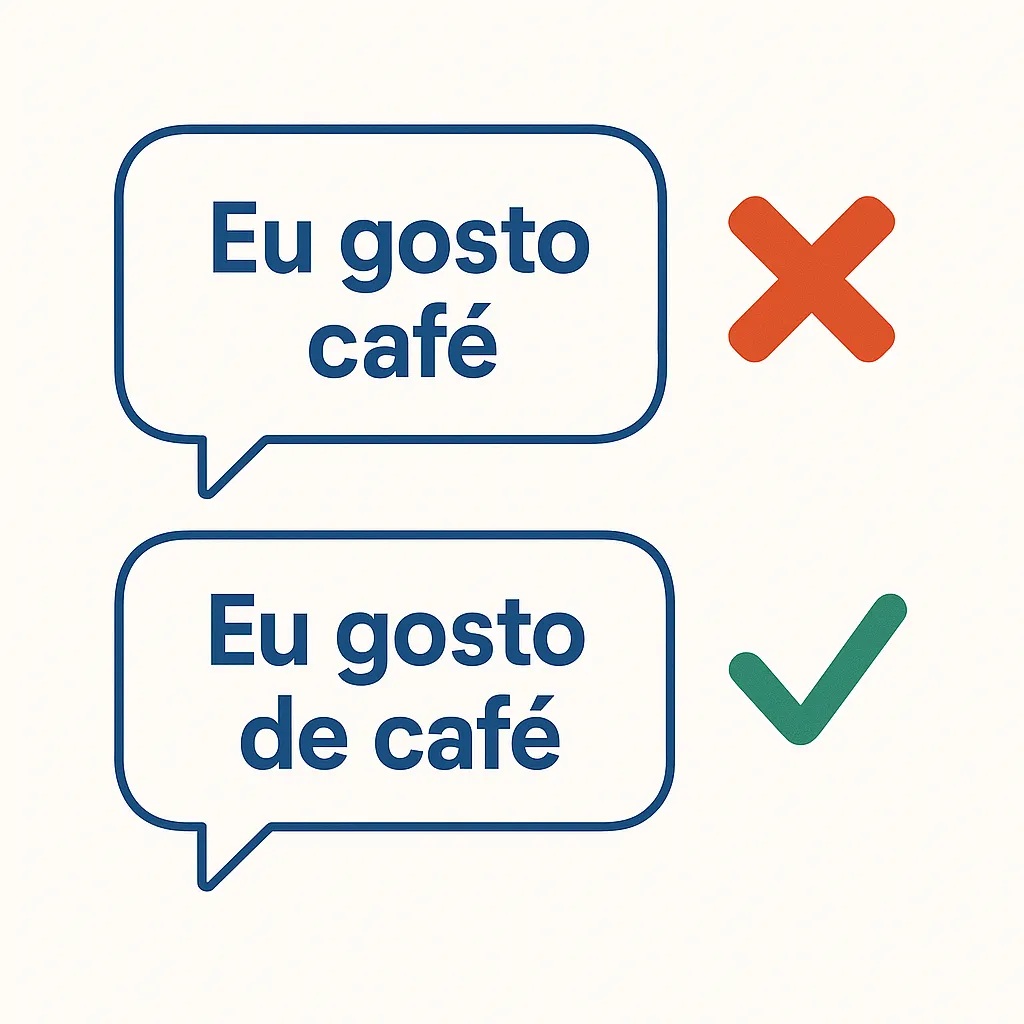 Getting this one small word right is a big step toward sounding more natural.
Essential Daily Verbs
If you only learn this following short list, you’ll have effectively solved most of the most common “de” mistakes.
These verbs come up in a LOT of conversations. The -se ending signifies that the verb is reflexive (something one does to themselves).
| English | Portuguese |
|---|---|
| To like | Gostar de |
| To need | Precisar de |
| To talk about | Falar de |
| To remember | Lembrar-se de |
| To forget | Esquecer-se de |
| To laugh at | Rir-se de |
| To change (your mind, job, etc.) | Mudar de |
| To doubt | Duvidar de |
| To overuse / take advantage of | Abusar de |
| To take care of / deal with | Tratar de |
Audio lessons and PDF study guides to accompany every lesson
Get In on the Ground Floor!
This is a new website!
As such, I'm starting the price for premium at just $2.99/mo, increasing to $11.99/mo after my first 100 members.
Emotional States
Many emotional expressions in Portuguese simply don’t work without de. This is how you say you’re tired of something or afraid of something. It’s the “of”.
| English | Portuguese |
|---|---|
| To be afraid of | Ter medo de |
| To be ashamed of | Ter vergonha de |
| To be proud of | Ter orgulho de |
| To be jealous of | Ter ciúmes de |
| To feel sorry for | Ter pena de |
| To miss (someone/something) | Ter saudades de |
| To be fed up with | Estar farto de |
| To be tired of | Estar cansado de |
[!tip] You still need to conjugate Ter and Estar!
These above are the “general, objective way” of saying these things. But if you want to say “I” am afraid of something, it becomes “Tenho medo de”. He is afraid = “Tem medo de” and so on.
Actions and Activities
These help you tell a story or explain what you’ve been up to.
Acabar de is especially useful, since it covers things that just happened. ie. “Acabei de comer” = I just ate
| English | Portuguese |
|---|---|
| To have just (done something) | Acabar de |
| To stop (doing something) | Deixar de |
| To give up on | Desistir de |
| To take charge of | Encarregar-se de |
| To take care of / be busy with | Ocupar-se de |
| To make sure of | Certificar-se de |
| To ensure | Assegurar-se de |
| To convince oneself of | Convencer-se de |
Common Expressions
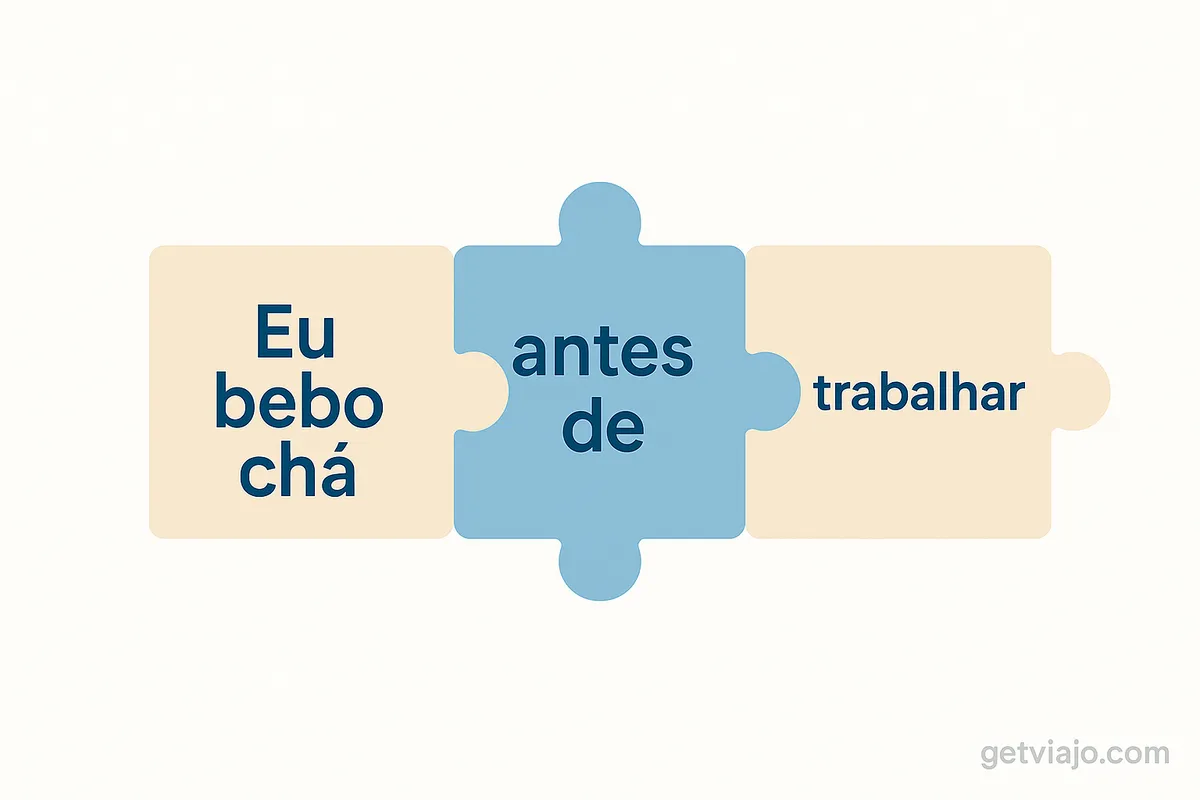
These are the glue that holds longer sentences together. Using them well makes your Portuguese sound more fluid and less like a direct translation from English.
| English | Portuguese |
|---|---|
| Before | Antes de |
| After | Depois de |
| Starting from | A partir de |
| Besides / In addition to | Além de |
| In order to | A fim de |
| Instead of | Em vez de |
| Despite | Apesar de |
| Because of | Por causa de |
| Near | Perto de |
| Far from | Longe de |
| Through | Através de |
Formal and Business
These don’t come up much in normal everyday situations, but, observationally, they show up a lot in paperwork, bureaucracy, and professional emails.
| English | Portuguese |
|---|---|
| To depend on | Depender de |
| To require / need (formal) | Necessitar de |
| To have available / at one’s disposal | Dispor de |
| To take care of (e.g., a task) | Cuidar de |
| To inform of | Informar de |
Conclusion
To me, understanding these small prepositions like de feels like a secret Portuguese handshake. A club that you will belong to once you commit them to memory (I’m personally still working on many of them).
It’s a tiny thing that changes how naturally your Portuguese flows, and once you have it down, your confidence climbs.
But you don’t need to memorize the whole list at once. Start with gostar de and precisar de and let the rest come with exposure. To see how these pieces fit into the bigger picture, take a look at my guide on Portuguese sentence structure.
Found this helpful?
Browse my other Portuguese vocabulary guides or contact me with questions or suggestions for new vocabulary topics.
Frequently Asked Questions
[!faq]- How do I know when a verb needs “de”? There’s no clean, obvious rule. It comes down to memorization and exposure. The most useful trick is to learn verbs as “verb + preposition” chunks, so gostar de lives in your head as one unit rather than just gostar. Start with the most common ones on this list and a feel for the pattern develops over time. Honestly, sometimes I use it even when I don’t have to. I kinda lean on it more than I should.
[!faq]- Is “de” the same as “do”, “da”, “dos”, or “das”? Yes and no. Do, da, dos, and das are contractions of the preposition de plus an article (o, a, os, or as). You use the simple de for general statements and the contraction when talking about a specific thing.
Here’s the difference in practice:
English Portuguese I like coffee (in general) Gosto de café I like the coffee from here Gosto do café daqui So gosto do café is just a shortened way of saying gosto de + o café.
[!faq]- What’s the difference between “gostar de” and “gostar”? In Portugal, gostar almost always needs de when followed by a noun or another verb. Eu gosto o livro is incorrect, it has to be Eu gosto do livro. The one common spot where gostar shows up alone is in a short reply. If someone asks Gostas?, you can answer Gosto, meaning “I do.”
[!faq]- Is this vocabulary the same in Brazil? Mostly, yes. The verbs and the need for de are largely shared. There are some usage and pronunciation differences though. In Brazil, Eu gosto de você is more common, while in Portugal you’d hear Eu gosto de ti. This list is geared toward sounding natural in Portugal.
