


I used to dread the most common “catching up” question in the Portuguese language.
“O que tens feito?” (What have you been up to?)
For the longest time, my brain would panic. I would default to the Simple Past and say things like “Trabalhei” (I worked) or “Comi muito” (I ate a lot).
People would laugh and give me a sympathetic, “that’s cute nice try” pat on the back and need to correct me, often trying to explain things that just made me smile along and nod without actually understanding what they were saying.
To them, I sounded like I was reporting a single, isolated incident. I failed to convey that these were current habits. I needed to describe actions that started in the past and were still happening right now.
But… I finally found the bridge between the past and the present.
Portuguese uses a specific tool for this called the Pretérito Perfeito Composto, or the “Continuous Past.”
You need this formula to say “I have been doing X.”
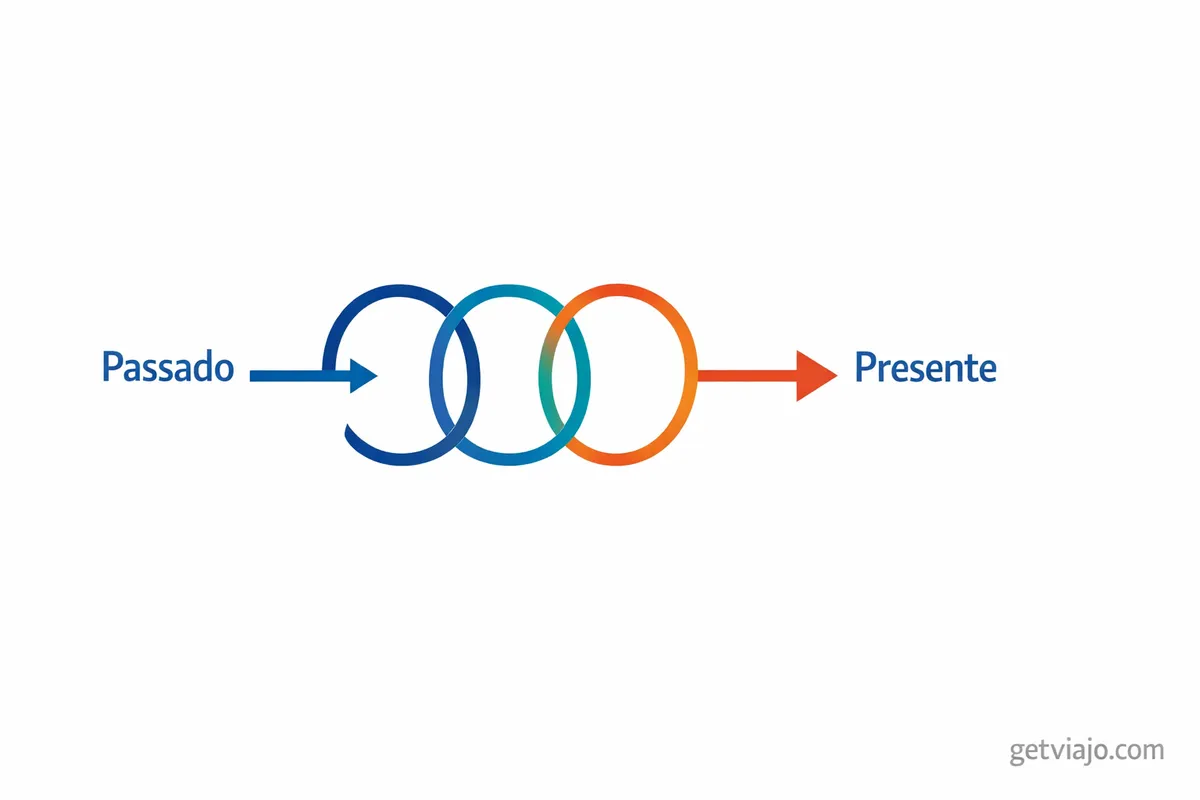 This structure links your history to your current reality.
The Logic Behind the Loop
This concept is actually simpler than English logic.
In English, we say “I have been working.” In Portuguese, you literally say “I have worked” (Tenho trabalhado).
The meaning matches the English continuous form perfectly.
This structure creates a loop. It connects the past to the present. You use it to describe a repeated action or a habit that is still active in your life today.
The Ter Plus Participle Formula
The formula relies on two specific pieces.
Auxiliary Verb (Ter) + Main Verb (Past Participle)
You must conjugate the verb Ter (To have) in the Present Tense to start the sentence.
We use the present tense because the action is technically still relevant now.
Here is the conjugation you need to memorize.
| Subject | Conjugation |
|---|---|
| Eu (I) | Tenho |
| Tu (You) | Tens |
| Ele / Ela / Você | Tem |
| Nós (We) | Temos |
| Eles / Elas / Vocês | Têm |
[!warning] Watch the Accent
Notice the difference between the singular Tem (He/She has) and the plural Têm (They have). That little circumflex accent (
^) is the only thing separating one person from a crowd. They’re pronounced similarly to “Tame” and “Tay-ame”, with the accent giving more emphasis to the ê.
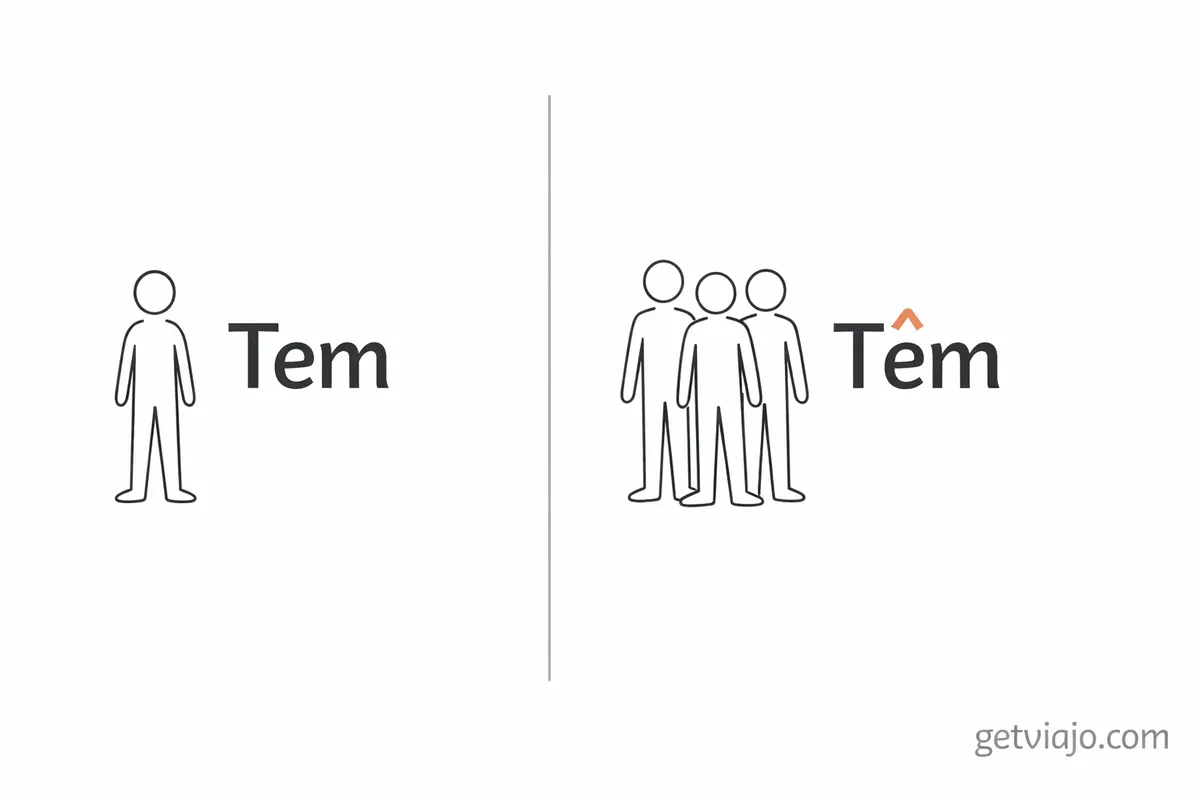 The accent mark changes the entire number of people involved.
How to Build the Main Verb
The second part of the equation is the action itself. We use the Past Participle.
For regular verbs, you swap the ending.
- -AR verbs become -ado (Falar → Falado)
- -ER verbs become -ido (Comer → Comido)
- -IR verbs become -ido (Partir → Partido)
You simply combine them to build your thought.
Tenho (Auxiliary) + Falado (Participle) = Tenho falado.
Here are a few practical examples.
| Portuguese | English |
|---|---|
| Tenho trabalhado | I have been working |
| Tens comido bem? | Have you been eating well? |
| Ela tem estudado | She has been studying |
| Temos andado | We have been walking |
Audio lessons and PDF study guides to accompany every lesson
Get In on the Ground Floor!
This is a new website!
As such, I'm starting the price for premium at just $2.99/mo, increasing to $11.99/mo after my first 100 members.
The Trigger for This Tense
I kept asking myself how to know when to use this versus the normal past tense.
The rule is the “Lately” factor.
If your sentence could include the word Ultimamente (Lately) or Recentemente (Recently), you typically use this structure.
It implies a span of time rather than a specific moment.
| Phrase | Correct Usage | Translation |
|---|---|---|
| Ultimamente | Tenho dormido pouco | Lately, I have been sleeping little |
| Recentemente | Tenho trabalhado muito | Recently, I have been working a lot |
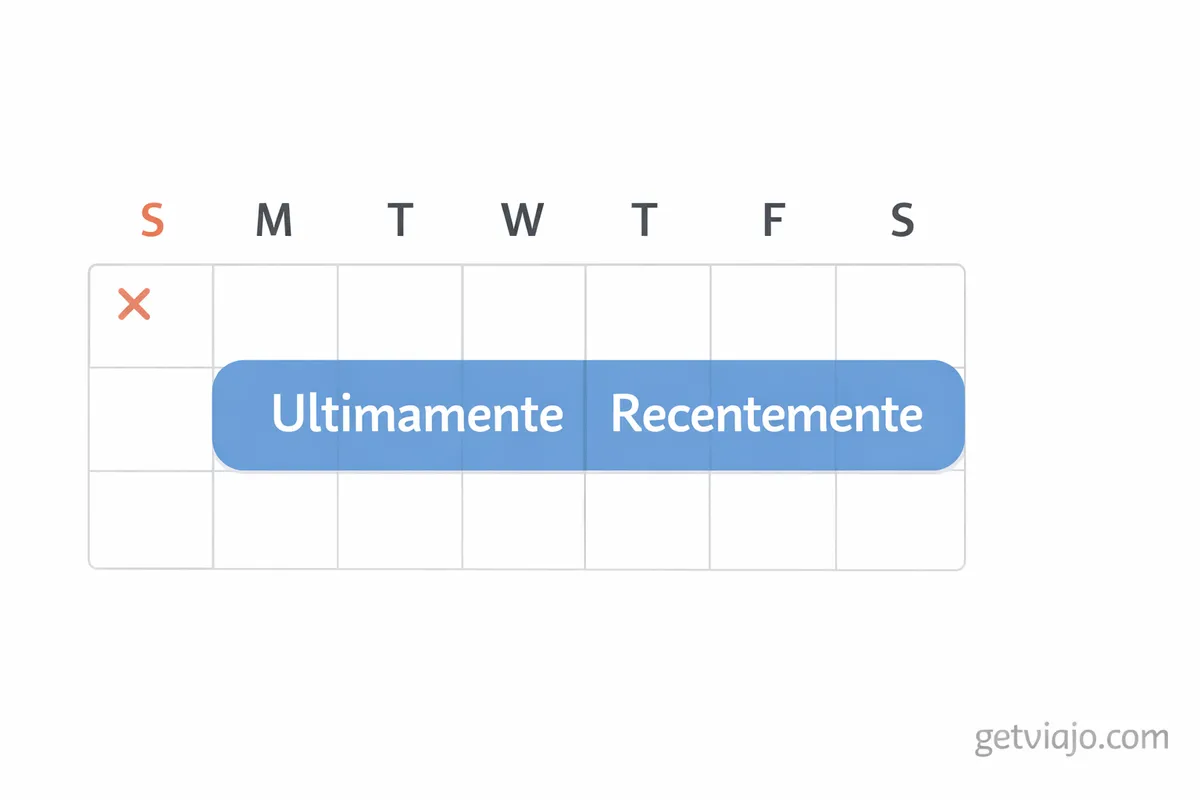 Use this tense when the action spans across recent days.
The Big Four Irregular Verbs
Most verbs follow the -ado/-ido rule. However, the verbs you use the most often tend to be irregular.
These four appear constantly in daily conversation.
| Verb | Participle | Example |
|---|---|---|
| Fazer (To Do) | Feito | Tenho feito isso |
| Dizer (To Say) | Dito | Tens dito a verdade? |
| Vir (To Come) | Vindo | Eles têm vindo cedo |
| Ter (To Have) | Tido | Tenho tido sorte |
[!tip] The “Tenho Tido” Redundancy
“Tenho tido” sounds confusing to English speakers. It translates literally to “I have had,” (which, obviously we use in English) but it instead actually means “I have been having.” You will use this often to describe ongoing luck or difficulties.
The Difference Between Andar and Ter
You might hear Portuguese people also using a different structure that sounds similar using Andar a + Infinitive.
- Ando a trabalhar muito. (I go around working a lot).
While Ter + Participle is the standard textbook method, I’ve found that to really show off, you should embrace Andar a as well. They’re both used seemingly interchangeably, so you’ll likely hear both… just be aware of how they’re used.
- Textbook: Tenho trabalhado muito. = I’ve been working a lot
- Street: Ando a trabalhar muito. = I’ve been working a lot
If I had to try and pick out the minute difference, Andar a implies you are “going around” doing something. It is often preferred for describing the ongoing “busy-ness” of life, whereas Ter is often used when you want to emphasize the accumulated result.
One thing I like about Andar a is that it uses the Infinitive verb. That means you don’t have to memorize any irregular Participles (like Feito or Dito). You just use the verb as is.
- O que andou a fazer ultimamente? (What have you been doing lately?).
- Ando a estudar muito. (I have been studying a lot).
Frequently Asked Questions
[!faq]- Can I use this for a single event? No. If you say “Tenho comprado um carro” (I have been buying a car), it sounds like you buy a car every day as a habit. If you bought a car once yesterday, use the Simple Past (Comprei um carro).
[!faq]- Is this the same as Brazilian Portuguese? Not exactly. In Brazil, it is much more common to use the Gerund form (Estou fazendo) to describe ongoing actions. In Portugal, Estou a fazer (I am doing) or Tenho feito (I have been doing) are the standard forms.
[!faq]- Can I use “Haver” instead of “Ter”? I don’t think so! You might see Haver used as an auxiliary in very old literature, but in daily life, Ter is the only auxiliary verb you need for this structure.
[!faq]- How do I say “I had been doing”? That requires the Pluperfect (Mais-que-perfeito). You would conjugate Ter in the Imperfect tense (Tinha) + Participle. Tinha trabalhado means “I had been working.” More coming in a future article on this later!
