


You can speak grammatically correct Portuguese and still come across as rude. The small social rituals matter more than the conjugations, and skipping them is the fastest way to feel a chill from the person behind the counter.
If you walk into a padaria and tell the baker what you want without first saying “Bom dia” or “Boa tarde,” the interaction will go sideways before it even starts.
I think of this as “Cave Troll Portuguese.”
Cave Troll Portuguese can be grammatically fine but socially off. It is efficient and direct, and it skips the small bit of social lubricant that holds Portuguese interactions together.
Acknowledgement Before Transaction
In the US, efficiency is often the whole point. You walk into a coffee shop and say “one coffee, please” while reaching for your wallet, and nobody notices.
In Portugal, the interaction tends to start with acknowledgement. The person in front of you usually expects a greeting before any business gets discussed.
It adds about three seconds to your day and changes the whole feel of the encounter. Skipping the greeting makes it feel like you are talking to a vending machine.
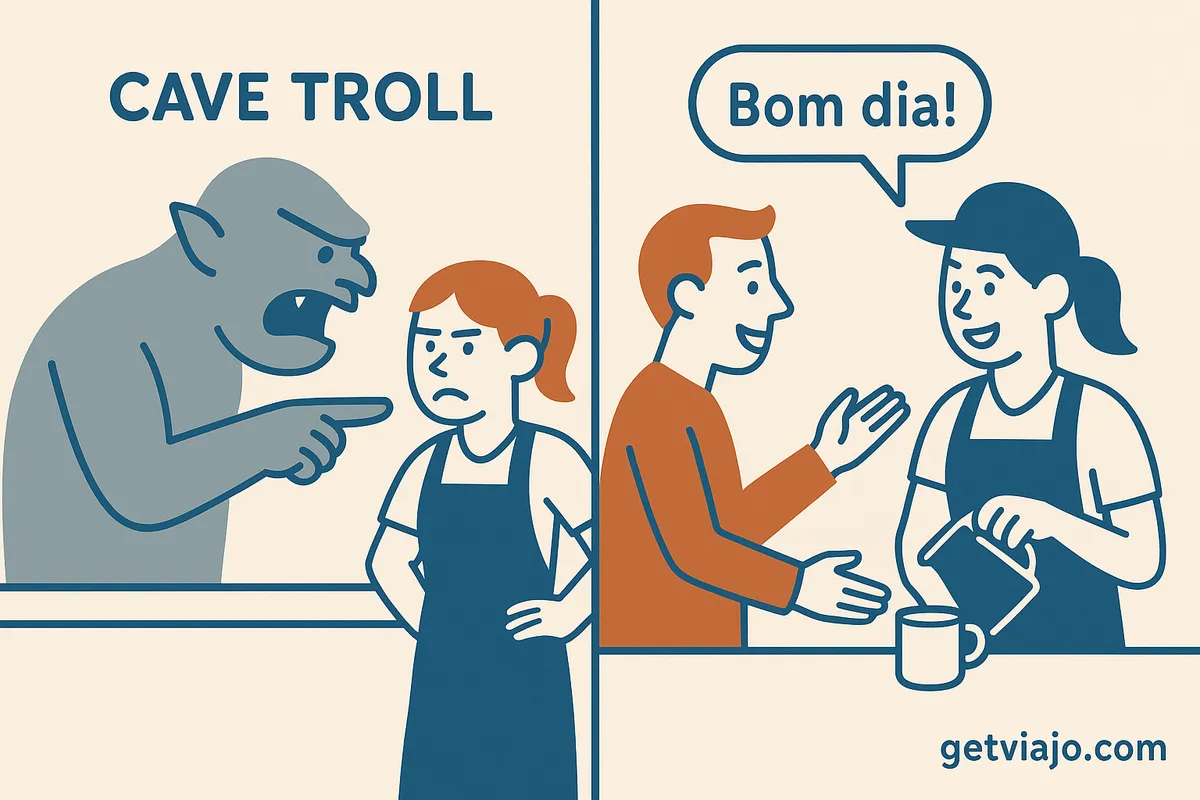 Efficiency is not the virtue here. Politeness is.
Here is how to stop sounding like a cave troll and start getting warmer service.
| English | Portuguese |
|---|---|
| (Walks up to counter) | (Walks up to counter) |
| “A coffee, please." | "Bom dia!” (Wait for reply) |
| “Um café, por favor." | "Um café, se faz favor.” |
[!tip] Local Tip: “Se faz favor” Por favor is correct, but in service interactions you will often hear “Se faz favor” (pronounced S’faz favor). It flows better and sounds more natural in a shop or cafe.
The License to Move
There is a phrase in Portuguese that moves people out of your way and lets you navigate crowded spaces without feeling rude.
The phrase is “Com licença” (literally “with license” or permission).
Use it whenever you are intentionally entering someone’s personal space. It is the “I am not a threat” signal. It tells the other person you know you are intruding and you are asking for room. The same phrase doubles as a polite interruption, so you can use it to catch a waiter’s attention as they walk past.
| Scenario | What to Say (Context) |
|---|---|
| Squeezing past someone on the metro | Com licença (“Excuse me, coming through.”) |
| Reaching across the table for salt | Com licença (“Pardon my reach.”) |
| Calling a waiter over | Com licença (“Excuse me, sir/ma’am.”) |
| Leaving a dinner table temporarily | Com licença (“Excuse me for a moment.”) |
[!warning] The “Bumping” Trap Com licença and Desculpe overlap, but they are not interchangeable.
Com licença is mostly for before you intrude (asking for space).
Desculpe is for after you make a mistake (apologizing for contact).
Desculpe is a bit of a multi-tool. You can also use it to squeeze past someone on the bus. It is slightly less formal than com licença but still perfectly polite. The rule of thumb: if you bump into someone, say “Desculpe!” Saying “Com licença” after hitting them sounds like you are claiming you had permission to do that.
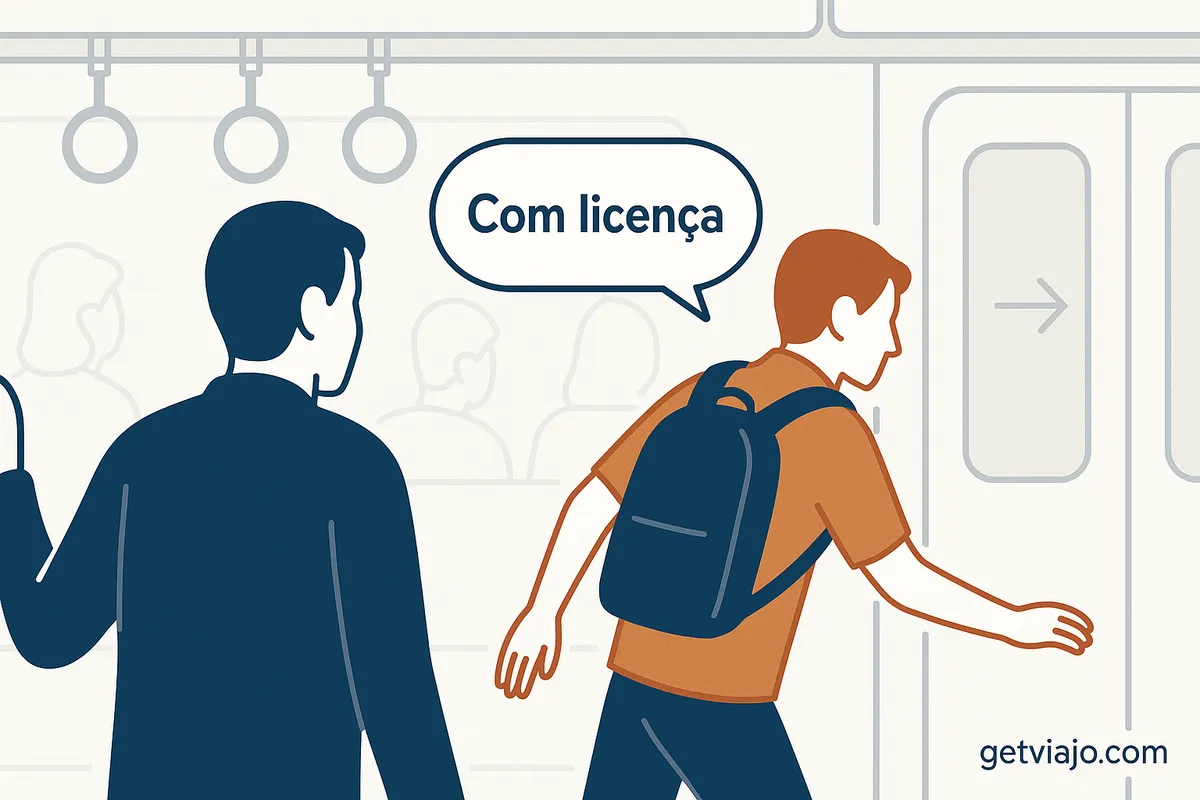 Use ‘Com Licença’ to ask for space. Use ‘Desculpe’ if you accidentally bump into them.
Softening the Request with the Imperfect
When you order food or ask for help, the Present Tense can land harsh.
- “Eu quero isto.” (I want this.) , Too direct.
- “Pode ajudar-me?” (Can you help me?) , A bit abrupt.
The Imperfect Tense (Pretérito Imperfeito) softens the request and turns a demand into a polite ask. It is the difference between “I want” and “I would like.”
| English | Cave Troll (Present) vs. Polite Human (Imperfect) |
|---|---|
| I want a coffee | Quero um café / Queria um café |
| Can you help? | Pode ajudar? / Podia ajudar? |
| Could you give me a bag? | Dá-me um saco? / Podia dar-me um saco? |
[!tip] The “Era” Variant In busy cafes you might hear people order by saying “Era um café” (literally: It was a coffee). It is colloquial and common. As a beginner, stick to Queria, but do not be thrown when you hear Era.
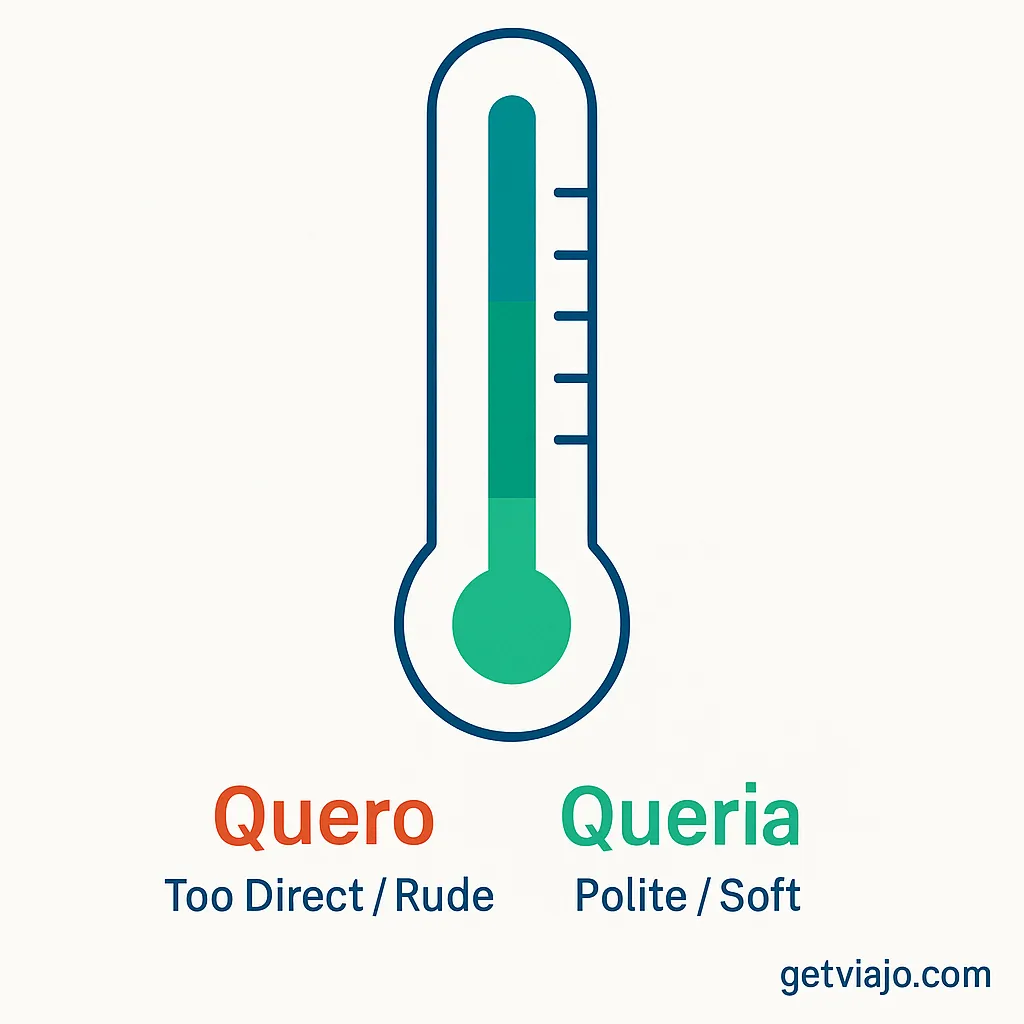 Changing one vowel takes you from demanding to asking nicely.
Audio lessons and PDF study guides to accompany every lesson
Get In on the Ground Floor!
This is a new website!
As such, I'm starting the price for premium at just $2.99/mo, increasing to $11.99/mo after my first 100 members.
Dining Etiquette and the Waiter Dance
In restaurants, especially traditional tascas, getting service follows a specific rhythm.
- Entering: Stand at the entrance. Do not seat yourself. Catch a waiter’s eye, nod, and wait for the hand wave. You can signal the number of people with your fingers or say, “Boa tarde, somos dois” (We are two).
- Ordering: Let them bring the menu. Order drinks first, then food. Rushing the waiter rarely lands well.
- Calling for Help: If you need something, both “Desculpe” and “Com licença” work to get a waiter’s attention. A small hand wave pairs with it nicely.
- The Bill: They will almost never bring the bill until you ask. Sitting at the table for half an hour after eating is treated as relaxing (convívio), not bad service. They are giving you space.
To get the bill, raise your hand, catch their eye, and make a small “scribbling” motion in the air. That gesture is well understood.
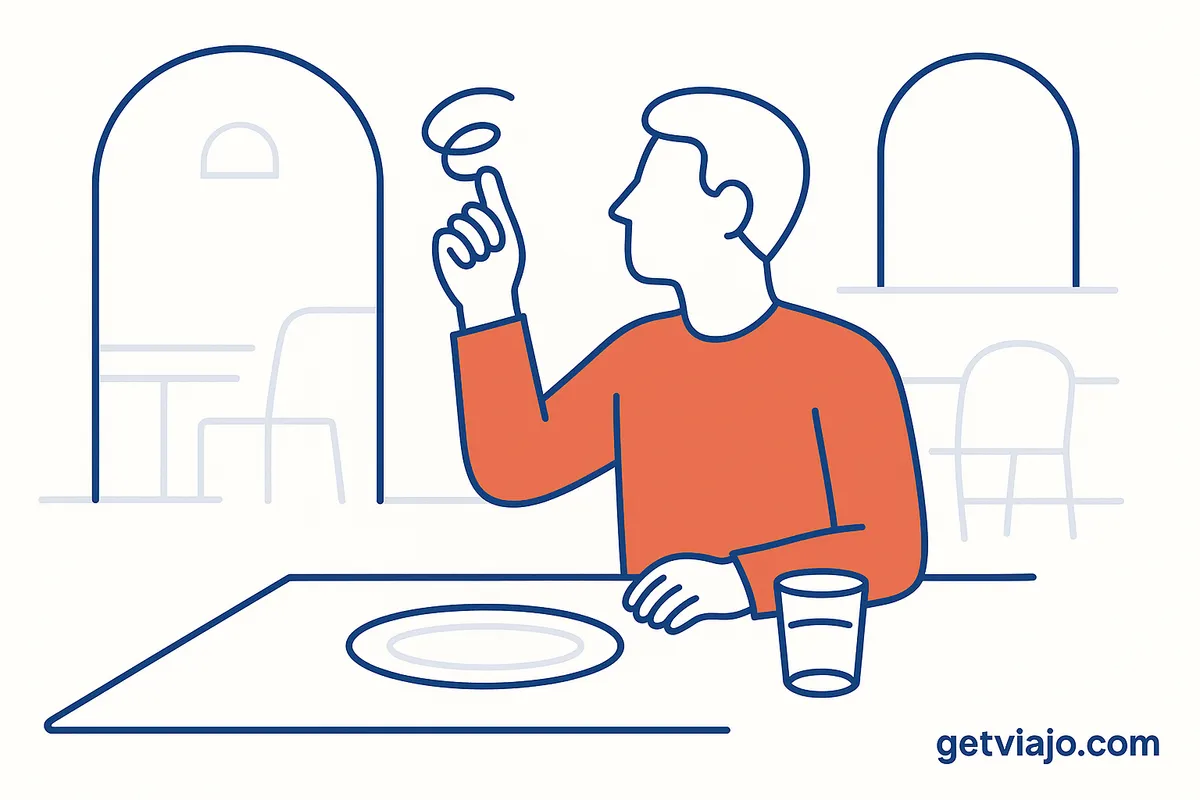 This gesture saves you from shouting ‘A conta’ across a busy room.
- Master the Menu: Essential Portuguese Restaurant Phrases
- Navigate a Traditional Seafood Restaurant Marisqueira Vocabulary
The Goodbye Loop
Acknowledging people on the way in has a matching ritual on the way out. Leaving a shop or an elevator in silence feels cold.
| Situation | The Right Goodbye |
|---|---|
| Leaving a shop | ”Obrigado/a, bom dia!” |
| Leaving an elevator | ”Boa tarde” (to the strangers inside) |
| Leaving a cafe | ”Até logo” (See you later) |
- Leaving a group: See the specific greeting/exit rules here.
Conclusion
You probably are not being rude on purpose. You are running a “system of efficiency” in a place that runs on “systems of relations.”
Switching the operating system comes down to three small adjustments:
- Greet before you transact.
- Ask for “license” (com licença) to enter spaces or attention.
- Soften your “wants” into “would likes” (Queria).
Do these three things and most of the friction tends to disappear.
Frequently Asked Questions
[!faq]- Do I really have to say ‘Bom dia’ to the elevator strangers? You do not have to, but it is the norm. Saying “Bom dia” as you step into a lift reads as well-mannered. Staring at the floor in silence feels cold. A small nod and a mumble usually does the job.
[!faq]- Is ‘Desculpe’ the same as ‘Com Licença’? Not exactly, but they are close cousins. Com Licença is for permission, passing through, or catching attention politely. Desculpe covers apologies, getting attention, or squeezing past someone.
- Bumped into someone, Desculpe.
- Need the waiter’s attention, Desculpe! or Com licença!
- Squeezing past someone on the Metro, Com licença (formal) or Desculpe (standard).
[!faq]- Why does getting the bill take so long? They are giving you your leisure time. The table is yours for as long as you want it, and bringing the bill unasked is treated as rushing you out the door. You have to signal for it.
[!faq]- When does ‘Bom dia’ switch to ‘Boa tarde’? The switch happens at noon (12:00 PM). Even if you have not had lunch yet, once the clock hits twelve, it is Boa tarde. If you are unsure right around that time, do not worry about it.
[!faq]- Should I tip in Portugal? Usually no. The 15-20% American habit can actually distort local norms. For exceptional service at a sit-down dinner you can leave €1 or €2, or round up the bill (e.g., €30 for a €28.50 tab). It is never expected.
[!faq]- Do I use ‘Tu’ or ‘Você’ with shopkeepers? Stick to the formal “Você” conjugation (3rd person) with strangers. Avoid actually saying the word “Você” though. Just use the verb (e.g., “Quer ajuda?” instead of “Você quer ajuda?”).
The Age Nuance: There is an age factor. Two young people (roughly under 25) will often jump to “Tu” with each other immediately. For most adults, “Você” (third person) is the standard polite distance.
