


Translating “I want a coffee” directly into Portuguese results in Eu quero um café. It is technically correct grammar. If you’re using this to actually order a coffee, it’s going to make you sound weirdly toddler-ish.
This is a hurdle for those of us trying to handle daily situations. We may learn basic verbs and notice they sound off, but not have the tools to improve them. I spent my first few months pointing at pastry cases because I was unsure how to ask politely.
The solution lies in the imperfect tense, which, amongst other things, acts as a gentle way to ask for things.
The Imperfect Tense for Polite Requests
In English, we soften our requests by using phrases like “I would like a coffee” or “Could you help me?”
Portuguese uses a similar softening technique. In everyday speech, you will hear the Imperfect Tense (Pretérito Imperfeito) used for this purpose.
Literally, and perhaps weirdly, you are saying “I wanted” in the past tense.
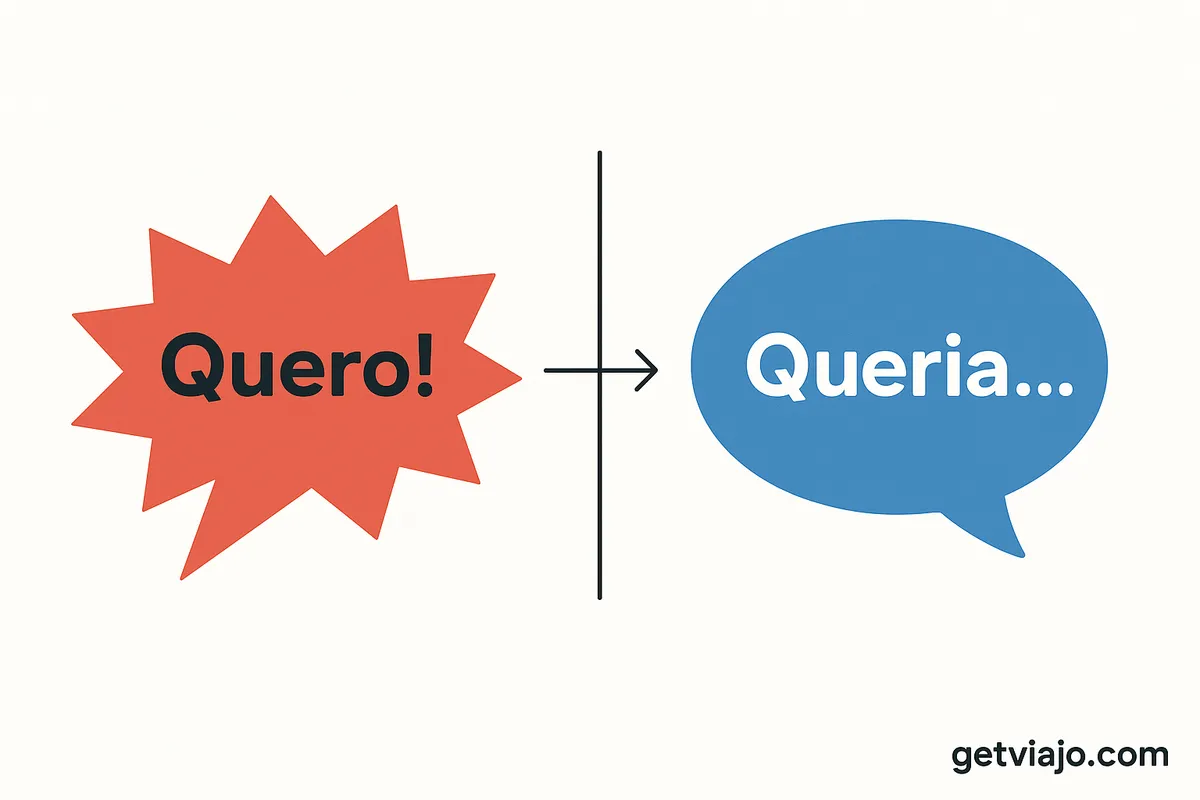 Softening your language changes the entire tone of the interaction.
| English | Portuguese |
|---|---|
| I wanted a coffee | Eu queria um café |
[!tip] The Quintessential “Dad Joke” Since you are technically using the past tense to ask for something you want right now, you might run into a cheeky waiter who hits you with: “Queria? Já não quer?” (You wanted it? You don’t want it anymore?).
Don’t panic! He’s just poking fun at the grammar. Just tap your head, give a little smile, and say: “Quero, pois!” or “Ainda quero!” (I certainly do! / I still want it!). It shows you get the joke and can handle the street-smart banter.
This concept takes a moment to process. You soften the demand by putting it in the past tense. It places a polite distance between you and the request.
Three Verbs for Daily Interactions
To handle typical daily interactions, which I cover in my Social Etiquette Guide, I focus on three specific verbs.
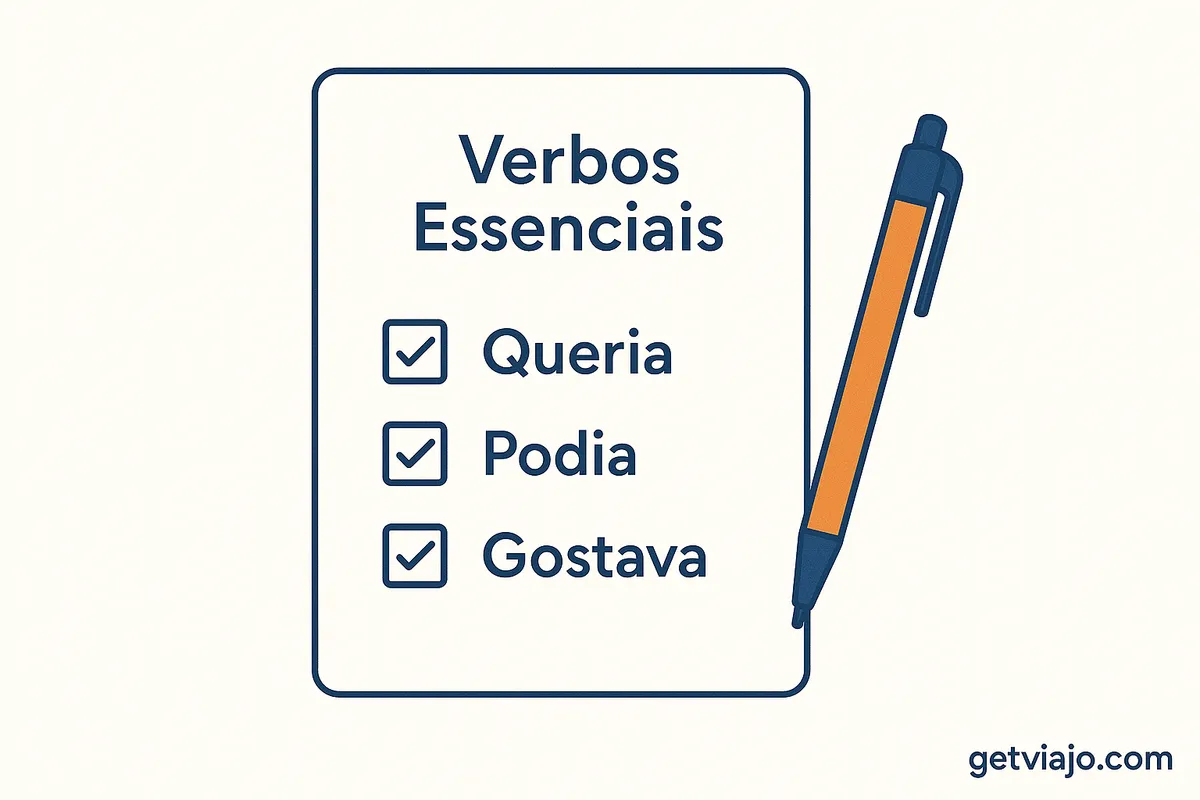 Master these three, and you master polite society.
Queria
The Verb: Querer (To want)
You’ll use this frequently when ordering food or asking for an item in a shop.
| English | Portuguese |
|---|---|
| I want a coffee. | Quero um café. |
| I’d like a coffee. | Queria um café. |
Here is exactly how to use it in a real café scenario:
Server: “Bom dia, o que vai ser?” (Good morning, what’ll it be?)
You: “Bom dia. Queria um café e um pastel de nata, se faz favor.” (Good morning. I’d like a coffee and a pastel de nata, please.)
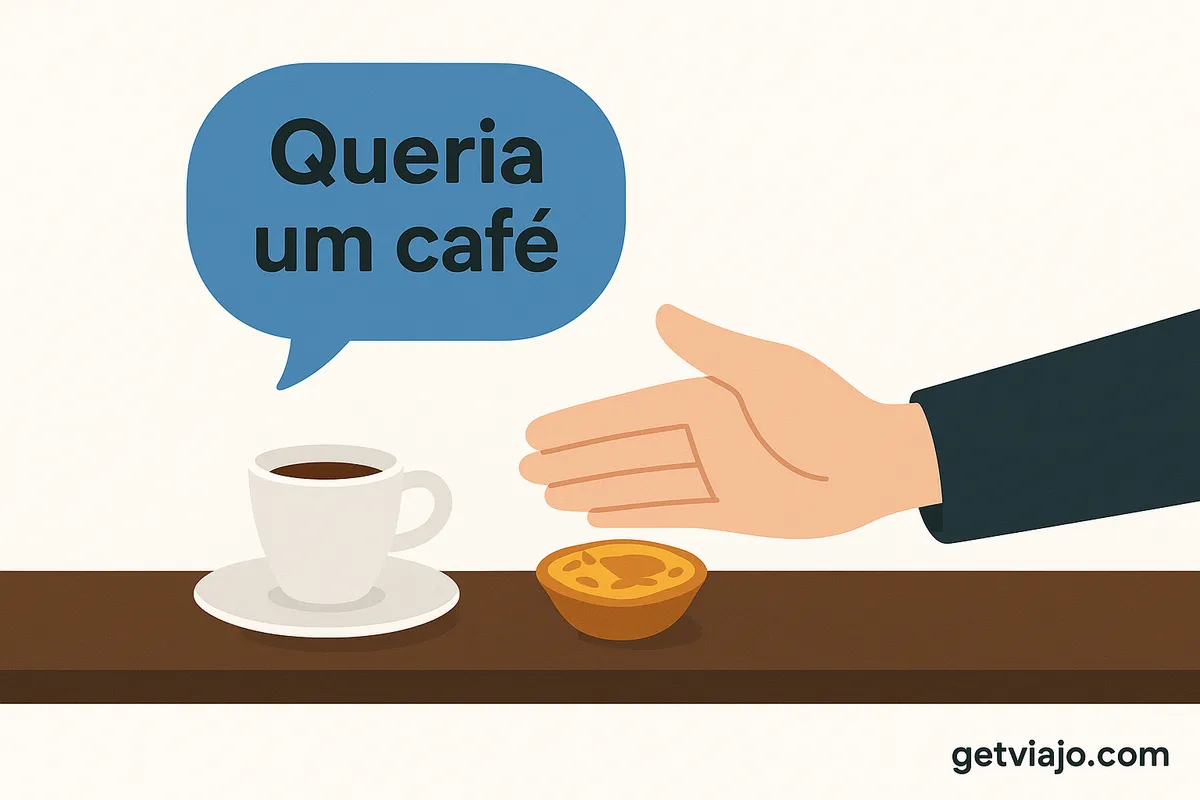 This one verb covers almost every transaction you will make.
Podia
The Verb: Poder (Can, or “To be able to”)
Use this when you need a favor, information, or help with something.
| English | Portuguese |
|---|---|
| Can you help me? | Pode ajudar-me? |
| Could you help me? | Podia ajudar-me? |
Let’s say you are buying tickets for a museum:
You: “Desculpe, podia dizer-me o preço dos bilhetes?” (Excuse me, could you tell me the price of the tickets?)
Receptionist: “Claro, são cinco euros.” (Of course, they’re 5 euros)
Gostava de
The Verb: Gostar de (To like)
Use this when expressing a desire to do something, when making a reservation, or talking about a plan. Note that Gostar and Gostava always require the preposition de plus a verb immediately after.
Receptionist: “Hotel Lisboa, bom dia.”
You: “Boa tarde, gostava de reservar um quarto para a próxima semana.” (Good afternoon, I would like to reserve a room for next week.)
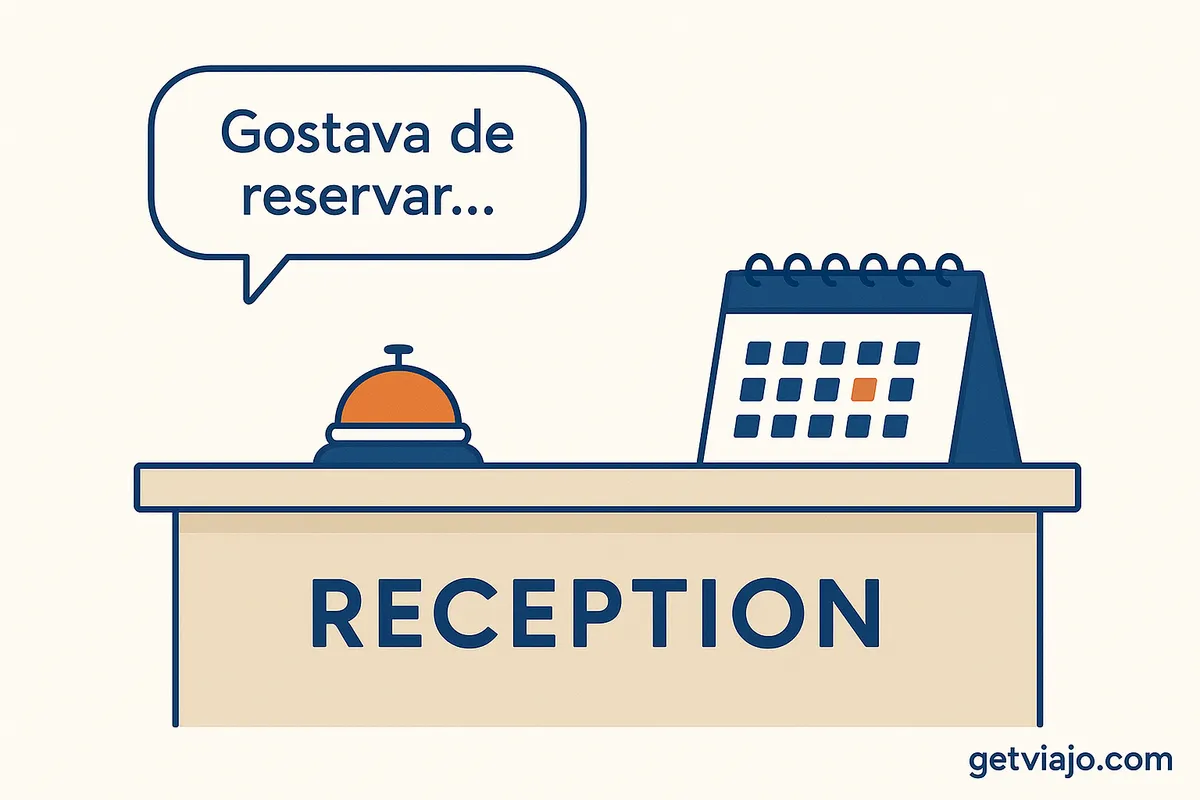 Use ‘Gostava de’ whenever you would say “I would like to” something.
[!tip] Pro Tip You also use Gostava de for things that are a bit hypothetical or unrealistic
“Eu gostava de ir ao Brasil, mas é caro.” (I would like to go to Brazil, but it’s expensive.)
A Clothing Store Scenario
Let’s see how these work together in a fluid conversation. Imagine you see a jacket in a shop window and want to try it on.
You: “Bom dia. Queria ver aquele casaco na montra.” (Good morning. I’d like to see that jacket in the window.)
Shopkeeper: “Com certeza. Aqui tem.” (Certainly. Here you go.)
You: “É bonito, mas é um bocado grande. Podia trazer o tamanho abaixo?” (It’s nice, but it’s a bit big. Could you bring the size below?)
Shopkeeper: “Vou ver o que temos.” (I’ll see what we have.)
Using the Conditional vs Imperfect
You might catch some textbooks suggesting you use the Conditional Tense (Condicional), which usually ends in ‘-ia’ (gostaria de, podia, etc.).
In my observation, the Imperfect (Gostava de, Podia) is more commonly used in everyday speech. Stick to the Imperfect to sound more “normal” in daily interactions.
Conjugating These Verbs
I have only shown you the “Eu” (I) and “Você” (You, formal) forms here because that covers 99% of your one-on-one interactions.
But if you want to see how these verbs change for “Nós” (We) or “Tu” (informal You), I have the full charts ready for you here:
👉 Deep Dive: The "No-Stress" Guide to Imperfect Conjugations
Audio lessons and PDF study guides to accompany every lesson
Get In on the Ground Floor!
This is a new website!
As such, I'm starting the price for premium at just $2.99/mo, increasing to $11.99/mo after my first 100 members.
Frequently Asked Questions
[!faq]- Is it ever okay to use “Quero”? Yes. It’s the same as in English. If you are at dinner with your friends, saying “Quero mais vinho” (I want more wine) is totally normal. With a waiter or a stranger, sticking to Queria (“I’d like”) is the more polite choice.
[!faq]- Can I use “Gostaria de” instead of “Gostava de”? You can, and everyone will understand you. Gostaria de is the Conditional tense, which is real and understandable, but it’s just seen as very formal. You might hear it in high-end establishments or official announcements. Using it at a local tasca to order a sandwich might make you sound a bit like a walking textbook. Gostava de is generally the more natural bet for daily life.
[!faq]- Do I use “Podia” for permission too? Yes. Podia works for both ability (“Could you help me?”) and permission (“Could I come in?”). For permission, though, you also frequently hear the Present tense used politely: “Posso entrar?” (May I come in?). Both work, but Podia remains a great “softener.”
