


I remember when I first moved to Lisbon, I would walk past these small “tasca” restaurants with bright fluorescent lights, paper tablecloths, and a TV in the corner showing a football match. I would keep walking until I found a restaurant with English menus and “familiar to back home” vibes.
I later realized I was missing out on very good meals.
Tascas are an old-fashioned, quintessential staple of Portuguese dining. It is where you find simple food, no frills wine, and a full meal for a very reasonable price. I know from experience how these spots can feel intimidating or unfamiliar. You will rarely see a host stand, the menu is often handwritten, and it’s full of Portuguese people having a good time, but the experience is worth your time.
You should be having a good time, too.
Here is my personal guide on exactly how to navigate a Tasca without looking like a lost tourist.
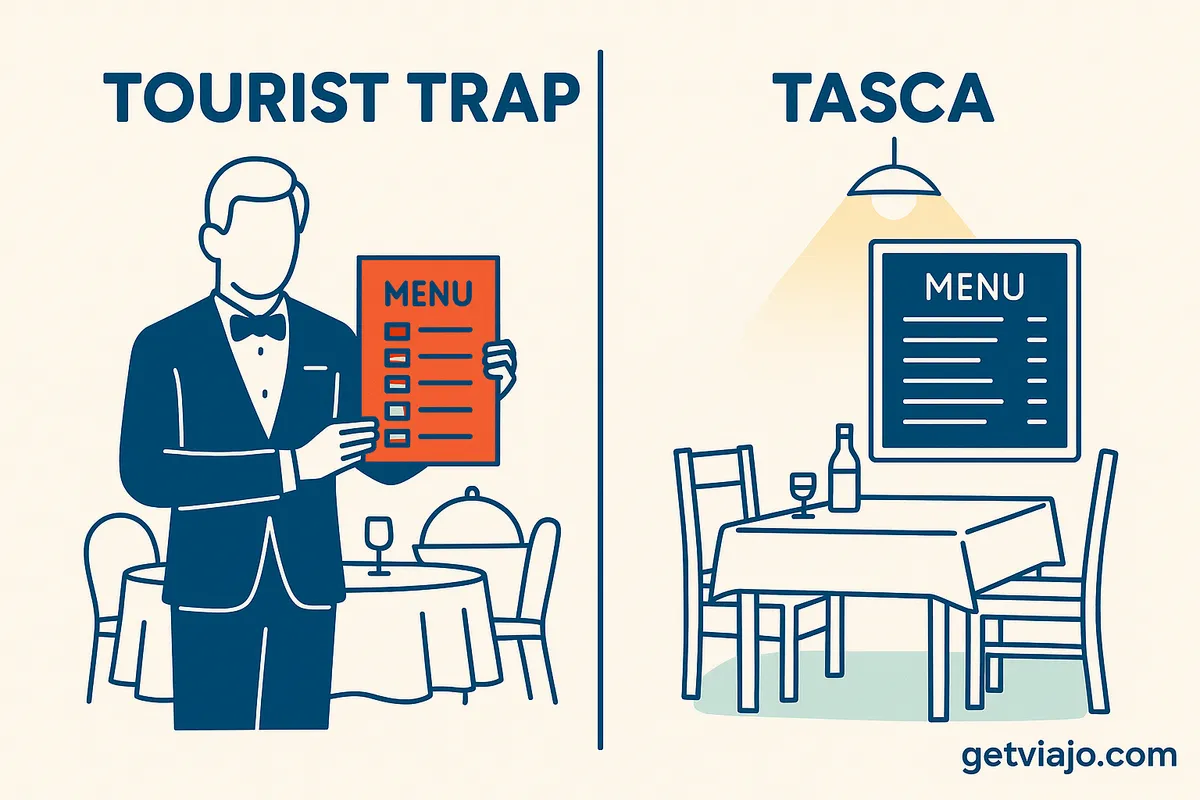 Ignore the fancy decor. Follow the paper tablecloths.
[!warning] Tasca vs. Restaurante Típico While I use the word “tasca” a lot, be careful with the label. Originally, tascas were small taverns that often made their own wine. Today, the word usually describes small, no-frills eateries.
However, calling a proud, family-run restaurante típico (typical restaurant) a “tasca” can sometimes be taken as a slight, implying it’s a bit “low-class.” When in doubt, just call it a “restaurante”.
Indicators of a Tasca
When hunting for a good, no frills Portuguese lunch, I look for specific visual cues.
You will usually find paper tablecloths clipped over a plastic one. Tascas are practical and usually lit with unflattering, doctors-office fluorescent lights. A TV is almost always on, showing either the news or a football match. The clientele largely consists of locals eating lunch or dinner. Sometimes they’re just hanging out having some drinks, or sipping on an espresso that takes an hour to get through.
If the menu is translated into English and the place feels like something you’ve been in before, that means the restaurant is likely geared toward tourists.
The Logic of the Prato do Dia
In my experience, the best “pro tip” is to ignore the long menu (the A Ementa) entirely. Instead, focus on O Prato do Dia (The Dish of the Day).
These dishes are made fresh daily, designed to be cheap, filling, and delicious. They usually cost between €8 and €12, which often includes your soup, a drink, a coffee, and sometimes even dessert. It’s the ultimate value play.
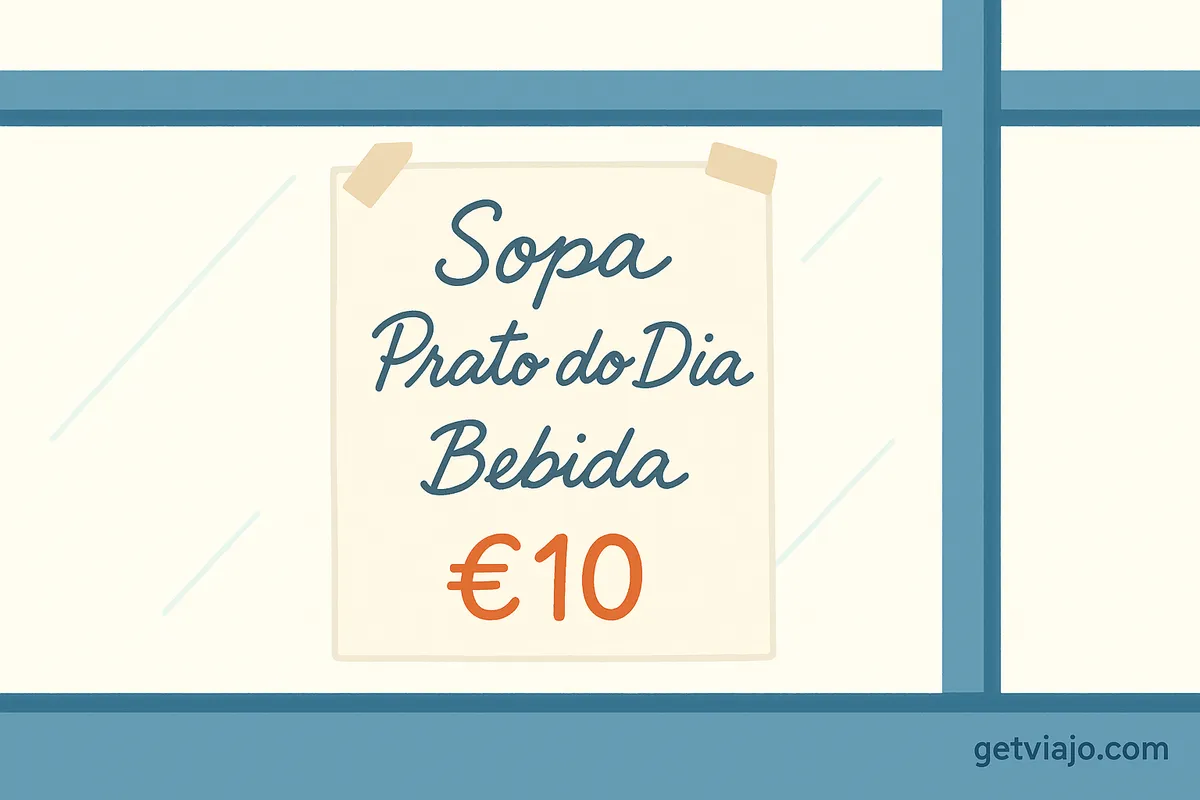 If you can’t read the handwriting, don’t panic. Just ask for the prato do dia and trust the chef.
Ordering Script
Tasca service is fast and efficient, and oftentimes they’re busy and don’t have time to wait around for you to struggle through niceties.
It’ll behoove you to have some phrases memorized, like these:
| English | Portuguese |
|---|---|
| Good afternoon. | Boa tarde. |
| What is the dish of the day? | Qual é o prato do dia? |
| Is it meat or fish? | É carne ou peixe? |
| I’ll have that, please. | Pode ser esse, se faz favor. |
Always greet the staff first. Asking for the dish of the day is your most useful phrase. If you are unfamiliar with the dish name, ask if it is meat or fish. When you are ready, “pode ser esse, se faz favor” is a polite way to accept.
For example, you might greet the waiter and ask for the dish of the day. The waiter might reply that they have cozido or bacalhau. You can then say “Pode ser o bacalhau, se faz favor.”
If you want to explore the full menu, the standard restaurant rules apply, but I almost always stick to the specials.
Service Dynamics
Tascas have a specific flow. Understanding these steps saves a lot of confusion.
Seating Protocol
If a host stand is absent, catch the waiter’s eye and hold up your fingers for how many people are in your group. If the restaurant is busy, they might point you toward a table that needs to be cleared. This is normal. Just sit down and they will clear and clean it shortly.
The Couvert
The waiter will likely place bread, cheese, olives, or tuna paté on your table as soon as you sit.
This food incurs a small charge. If you eat it, you pay for it, which usually costs a couple of euros. To decline, leave it untouched or say “Não, obrigado/a” and they will take it away.
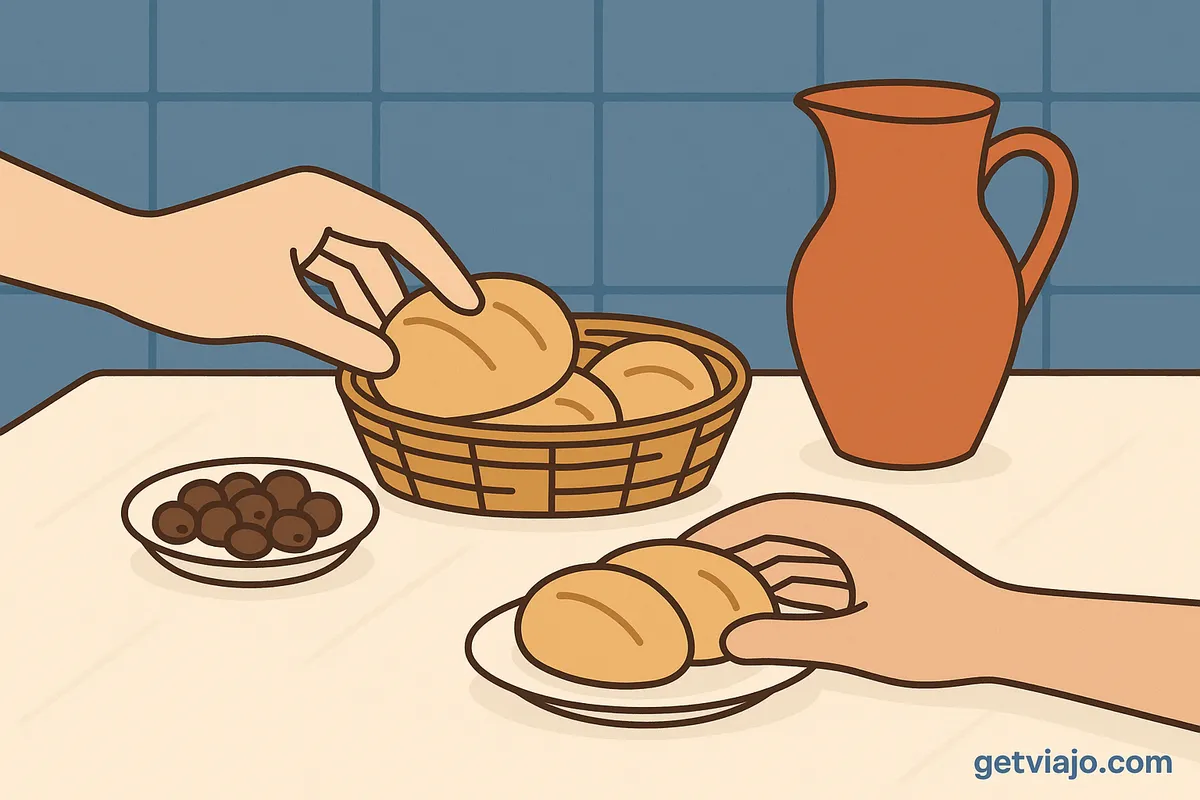 The bread isn’t free, but I usually find it’s worth the extra Euro.
House Wine
Maybe me and my Portuguese friends are just classless, but I’ve never seen someone ask for a wine list at a tasca, instead just opting for the Vinho da Casa. It is affordable, local, and usually pairs well with the food.
| Portuguese | English |
|---|---|
| Um copo | A single glass |
| Uma meia | A half-liter carafe |
| Um jarro | A full liter |
A half-liter carafe meia is generally enough for two people, while a full liter jarro works well for groups.
The Coffee
As I’m sure you’ve noticed, many people in Portugal treat their coffee like it’s mandatory after every meal (and often in between).
Lunch often concludes with coffee. You might hear people in Lisbon call it a bica, however if that intimidates you, or if you’re elsewhere in the country, I recommend just asking for um café. This is the standard term for an espresso anywhere in Portugal.
Make sure you make polite requests by using “queria” (I would like) instead of “quero” (I want).
Audio lessons and PDF study guides to accompany every lesson
Get In on the Ground Floor!
This is a new website!
As such, I'm starting the price for premium at just $2.99/mo, increasing to $11.99/mo after my first 100 members.
The Bill and Payment
When you’re ready to leave, just try to catch the server’s eye and make a “check signing” scribble motion in the air. It is a common sign for the bill and saves you from trying to shout across a noisy room.
| English | Portuguese |
|---|---|
| The bill, please. | A conta, se faz favor. |
| Do you have multibanco (card)? | Tem multibanco? |
| Keep the change. | (Just leave the coins on the table) |
Many tascas strictly accept local Portuguese cards (definitely not American Express), and many will require a minimum spend. I always carry cash to these just to be safe.
[!tip]
Interested in a different, yet equally awesome Portuguese dining experience? Check out my article on marisqueiras, which are a specialized seafood hall where you’re sure to have a great time.
In Summary
When you enter, look for paper tablecloths and locals. For your meal, the Prato do Dia and Vinho da Casa are reliable choices. Remember that you only pay for the couvert if you eat it. Always bring cash just in case.
Getting comfortable eating at tascas has helped me personally feel a lot more comfortable in my neighborhood, and in Portugal as a whole. They’re great! You receive good food, save money, and get to experience the rhythm of daily Portuguese life.
If you want to dive deeper into local habits, check out my guide on social etiquette to help you make a great impression.
Frequently Asked Questions
[!faq]- Do I need to tip in a Tasca? No. Tipping is a very American habit that isn’t expected here. In a tasca, I might round up the bill to the nearest Euro or leave a few coins on the table (e.g., leaving a €20 bill for a €19.20 meal), but that’s it.
[!faq]- Can I eat alone in a Tasca? Definitely. I eat alone in tascas all the time. They are very common spots for solo diners, especially workers at lunch. You’ll fit right in.
[!faq]- What time is lunch and dinner? Lunch usually runs from ~12:30 PM to ~3:00 PM. Dinner typically starts around 7:30 PM, but you’ll see many locals arriving closer to 8:30 or 9:00 PM. If you show up at 6:00 PM for dinner, the doors will likely be locked!
[!faq]- Are there vegetarian options? Traditional tascas are very meat and fish heavy. However, they almost always have a vegetable soup. Pro Tip: Try asking “A sopa leva carne ou peixe?” (Is the soup made with meat or fish?) just to be safe. Most places can also make you an omelete (omelet). They’ll usually come with the “Tasca Trio”: rice, salad, and “batatas fritas” (fries).
