


Living in a new country means you will end up telling your backstory more times than you can count. People ask what your life looked like before you arrived, and you want simple things like “I used to drive everywhere” or “I used to work in sales” to come out smoothly.
This is where many of us hit a wall. The instinct is to translate “used to” word-for-word, which produces something like usado a, and that does not work in Portuguese.
Portuguese handles the idea of “used to” differently than English. Once that clicks, talking about your old life becomes one of the easier parts of conversation.
If you are still getting comfortable with the broader feel of this tense, here is my breakdown on how to think about using the Imperfect tense.
The Costumava Routine
When you type “I used to go” into a translator, you usually get Eu costumava ir. For a while I assumed this was a textbook phrase that sounded too stiff, but I have come around on it. The Imperfect tense alone (like Eu ia) is the short way, but the verb costumar is also common when you want to flag that something was a steady routine or a specific era of your life. It is not formal. It just adds an extra layer of “I did this regularly.”
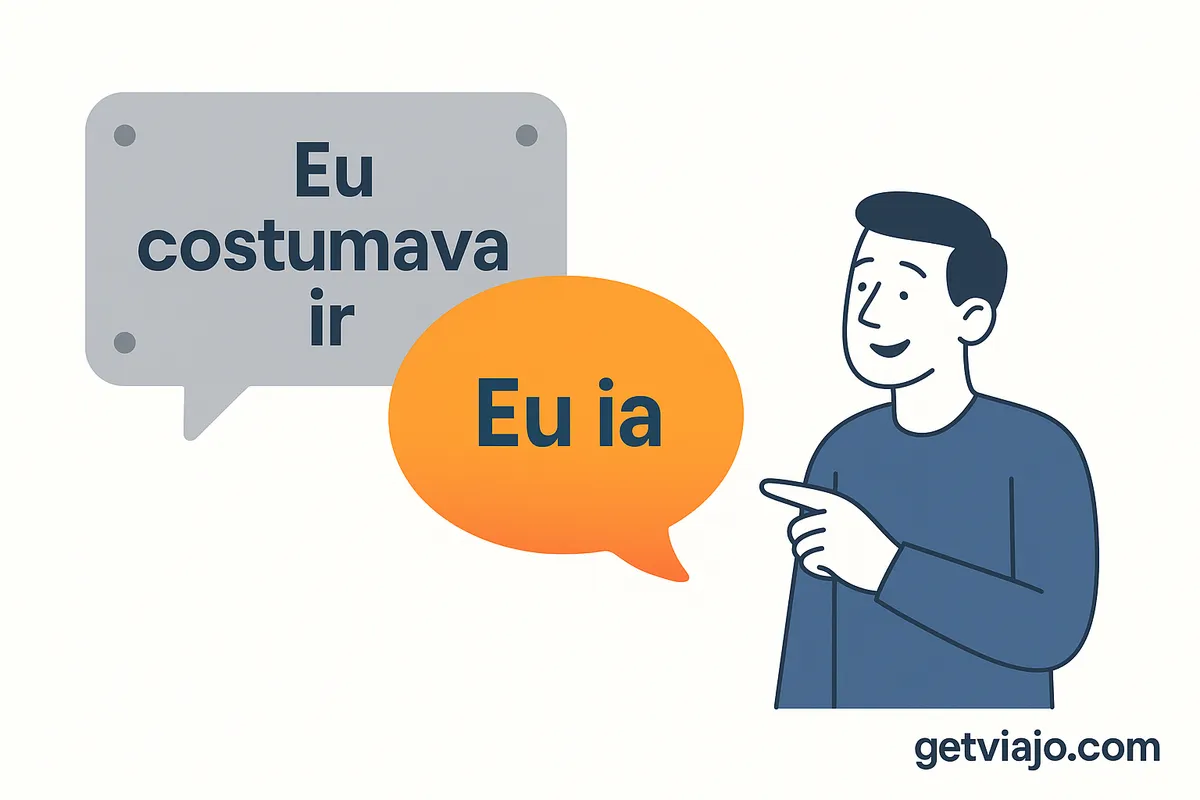 The plain Imperfect keeps things short and natural.
The “used to” idea can sit inside a single Imperfect verb, or costumava can do the work for you.
| English | Portuguese |
|---|---|
| I used to go | Eu ia (short way) / Eu costumava ir (routine way) |
| I used to eat | Eu comia (short way) / Eu costumava comer (routine way) |
A small exchange:
- A: “Como é que ias para a escola nos Estados Unidos?” (How did you use to go to school in the US?)
- B: “Antes, eu costumava ir de autocarro, mas às vezes o meu pai levava-me.” (Before, I used to go by bus, but sometimes my dad would take me.)
[!tip] The “Used To” Shortcut When you want to say “I used to [verb],” you can often drop the “used to” entirely and conjugate the main verb in the Imperfect.
- “I used to eat” → Comia
- “I used to live” → Vivia
- “I used to be” → Era
It is cleaner, faster, and sounds natural.
[!warning] “Used To” vs. “Usually” This one trips people up. Costumava is for the past, but the same verb (costumar) shows up in the present with the meaning “usually.”
- Past (used to): “Eu ia lá.” (I used to go there.)
- Present (usually): “Eu costumo ir lá.” (I usually go there.)
Avoid “Eu uso ir” or “Eu usado ir” for “I used to go.” Those are literal translations that do not exist in Portuguese.
The Antes vs. Agora Formula
If you want to contrast your old life with your new one, anchor the timeline with two words:
- Antes (before)
- Agora (now)
You will also hear Dantes, which is just a contraction of de + antes. It is common in spoken Portuguese when someone is talking about an earlier chapter of their life.
The formula is straightforward: “Antes [Imperfect], mas agora [Present].”
| English | Portuguese |
|---|---|
| Before, I lived in London… | Antes, eu vivia em Londres… |
| …but now I live in Porto. | …mas agora vivo no Porto. |
Another version: “Antigamente, eu ia para o trabalho de carro, mas agora vou de metro.” (Back in the day, I used to go to work by car, but now I go by metro.)
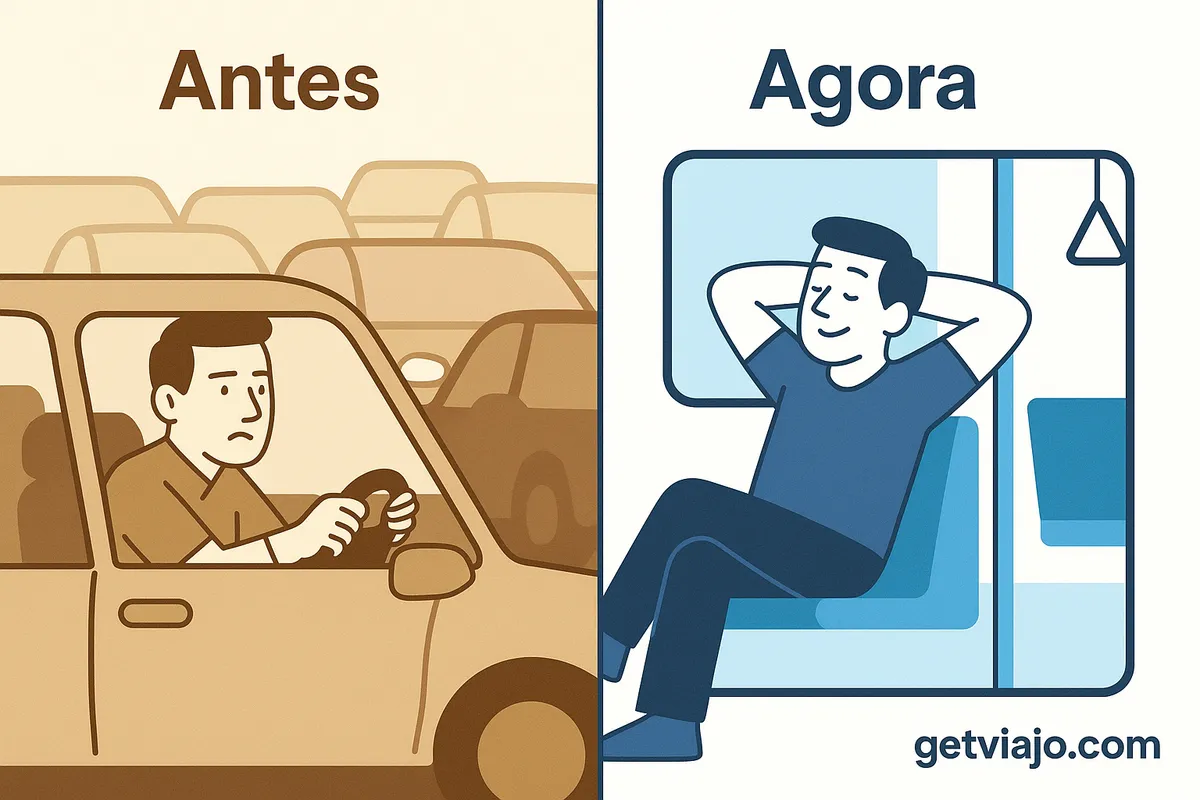 Anchoring with ‘Antes’ and ‘Agora’ makes the timeline clear.
A Practical Example
A good way to feel the difference between what we used to do (Imperfect) and what we do now (Present) is to look at how technology has shifted everyday habits.
| English | Portuguese |
|---|---|
| Navigation. People used to use maps. Now, they use Google Maps. | Antigamente, as pessoas usavam mapas. Agora, usam o Google Maps. |
| Music. We used to listen to CDs in the car. But now we use Spotify. | Antes, nós ouvíamos CDs no carro. Mas agora usamos o Spotify. |
| Contact. We used to call our friends. Now, we just send messages. | Antigamente, nós ligávamos aos amigos. Agora, só mandamos mensagens. |
Build your own version. Think about what you fazias (used to do) back home versus what you fazes (do) now.
Audio lessons and PDF study guides to accompany every lesson
Get In on the Ground Floor!
This is a new website!
As such, I'm starting the price for premium at just $2.99/mo, increasing to $11.99/mo after my first 100 members.
Past Intentions with Eu Ia and Eu Estava Para
There is a second flavor of “used to” that means a failed plan or a past intention, the “I was going to” version.
The Imperfect of ir covers the basic “I was going to” cleanly. For the more specific “I was just about to,” estava para does the job.
- “Eu ia ao supermercado, mas começou a chover.” (I was going to the supermarket, but it started raining.)
- “Eu estava para te ligar agora mesmo, mas fiquei sem bateria!” (I was just about to call you right now, but my battery died!)
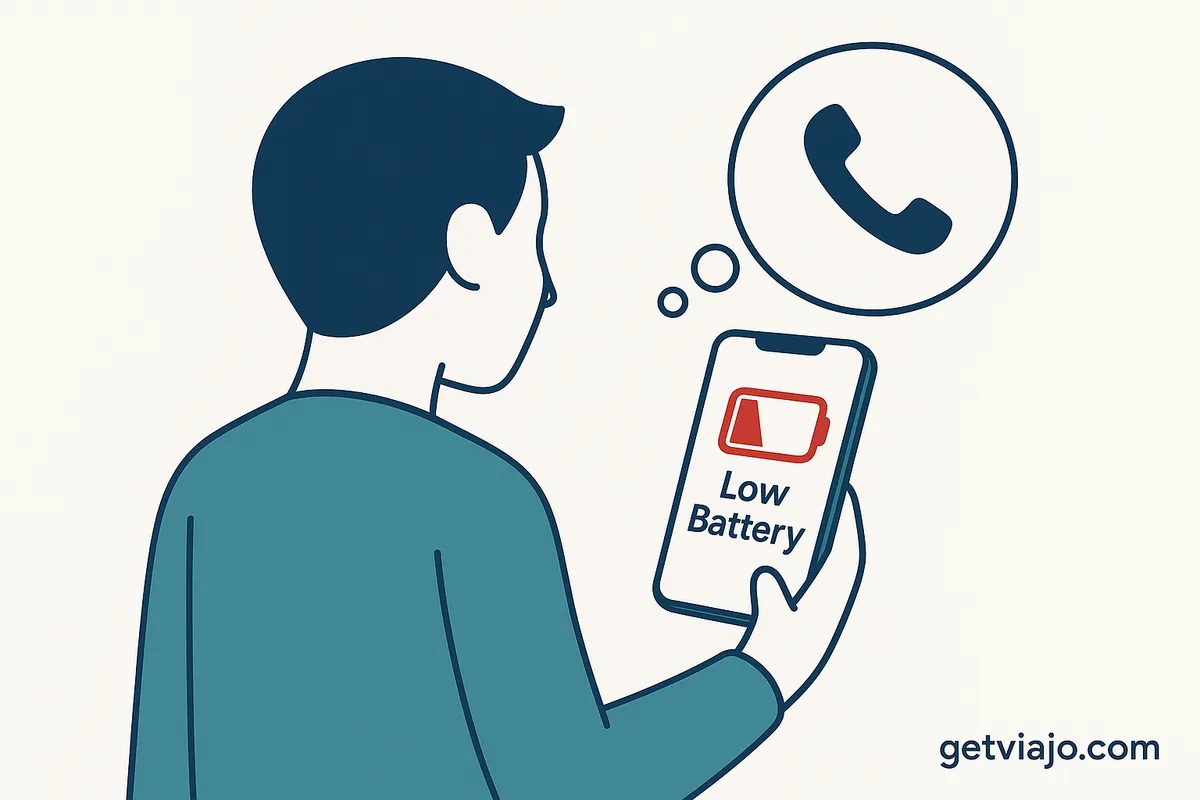 Use ‘Eu ia’ or ‘Eu estava para’ when the plan was real but something got in the way.
A small exchange:
- A: “Ainda vens ao jantar?” (Are you still coming to dinner?)
- B: “Desculpa, eu ia sair de casa agora, mas o meu senhorio apareceu sem avisar.” (Sorry, I was going to leave the house now, but my landlord showed up without warning.)
[!warning] Watch the Pronunciation ia (I was going / I used to go) is pronounced “Ee-ya”, two distinct beats.
Do not slur it into “Yah.” It needs to be clearly different from fui (I went, simple past).
- Eu ia = I was on my way / I used to go regularly.
- Eu fui = I went (and arrived).
How to Form These Verbs
You probably have the concept down now, but you may still want the mechanics of conjugating ia, vivia, or comia.
I kept the heavy charts out of this article to keep the focus on usage. When you are ready to memorize the endings (which are surprisingly regular), the next guide has them.
👉 Deep Dive: The No-Stress Guide to Imperfect Conjugations
Frequently Asked Questions
[!faq]- Can I ever use “costumava”? Yes. It is perfectly fine in everyday conversation, especially when you want to emphasize a repeated habit. The plain Imperfect (Eu ia) is shorter, but costumava works well when describing a previous chapter of your life.
[!faq]- Is “Dantes” better than “Antes”? Not really. Antes is the standard word for “before.” Dantes is a common spoken contraction of de + antes. Use Antes as your default and you will hear Dantes often enough in casual conversation.
[!faq]- How do I say “I didn’t use to”? You can put não before the verb in the Imperfect (e.g., Eu não gostava de peixe). For habits, não costumava often sounds more natural. For example: “Eu não costumava comer peixe” (I didn’t use to eat fish).
[!faq]- Does “Eu ia” always mean a failed plan? No. Context decides. “Eu ia à praia todos os dias” means “I used to go to the beach every day” (habit). “Eu ia à praia, mas choveu” means “I was going to the beach, but it rained” (intention).
