


I’ll never forget the first time I got invited to a group hike with some Portuguese friends. They moved in and out between Portuguese and English, and I was trying to keep up.
I wanted to say I had gone on a different hike the week before, but what came out was “Eu vou… à serra… ontem?” (I go… to the mountain… yesterday?) 😬
A friend, trying to be kind, just smiled and said in English, “nice try.”
Sound familiar? I imagine this is how speaking Portuguese has gone for a lot of us here.
I’ve improved since then, and a large part of that is leaning on a few rules and patterns that I think might be helpful for you too.
Here’s what I’ve figured out, from one learner to another.
 The pain. The dejection. I’ll never live it down
Present Tense Conjugations
Before we get to the fun stuff (the irregular verbs), let’s quickly review the regular ones.
You’ve probably been exposed to this before: verbs end in -AR, -ER, or -IR. The endings change depending on the subject (not who is physically speaking, but who or what they’re speaking about).
Here’s a quick look at how they work, using falar (to speak/to talk), comer (to eat), and abrir (to open).
- -AR Verbs (Falar): falo, falas, fala, falamos, falam
- -ER Verbs (Comer): como, comes, come, comemos, comem
- -IR Verbs (Abrir): abro, abres, abre, abrimos, abrem
In spoken Portuguese, pronouns often get dropped when it’s obvious who you mean. So instead of “Eu falo” (I speak), you’ll often hear “Falo.”
This makes you sound a little more natural and a little less like you’re reading from a textbook.
The First Person in Practice
You’re at a café. You want to tell your friend about what you do there, make a general statement, or say something you’re about to do in the immediate future.
In Portuguese, the present tense in the first person singular (ex: falo, como, abro) covers three use cases.
Using “falar” as an example:
| Use case | English | Portuguese |
|---|---|---|
| General truth | I always speak Portuguese in cafés. | Falo sempre português nos cafés. |
| Habitual action | Whenever I come here, I talk with the locals. | Sempre que venho cá, falo com os locais. |
| Immediate future action | Hang on, I’ll talk with the waiter now. | Espera aí, falo já com o empregado. |
[!warning] About the “immediate future” use case This is a specific use case. Future actions normally use different verb tenses 👇
- “Vou falar” = I will speak (future, not necessarily right now)
- “Falarei” = I will speak (future, not necessarily right now)
For the “right now” meaning, “falo já” is natural in speech.
First-person regular verbs ending in -ER and -IR
Same idea now using comer (to eat) and abrir (to open). Three real-life use cases again: general truth, habit, and immediate future.
Using comer
| Use case | English | Portuguese |
|---|---|---|
| General truth | I usually eat something at cafés. | Normalmente como qualquer coisa no café. |
| Habitual action | Whenever I come here, I eat a pastel de nata. | Sempre que venho cá, como um pastel de nata. |
| Immediate future action | Okay, I’ll eat now. | Está bem, como já. |
[!tip] A note on meals In Portugal, you’ll usually hear tomar o pequeno-almoço (have breakfast) and the verbs almoçar/jantar (have lunch/dinner). Comer still works for food in general: Como fruta todos os dias, Comemos bacalhau ao Natal, etc.
Using abrir
| Use case | English | Portuguese |
|---|---|---|
| General truth | I open the window in the morning. | Abro a janela de manhã. |
| Habitual action | Whenever I arrive, I open the shop. | Sempre que chego, abro a loja. |
| Immediate future action | Hold on, I’ll open it now. | Espera, abro já. |
 Use simple tools like flashcards to help you remember the regular verb patterns.
Present Tense Regular Verb Conjugations
Now that we’ve looked at the first person, here’s the full present tense for all three types of regular verbs.
[!tip] What’s a regular verb?
Most verbs follow the same pattern. The only part that changes is the ending (-AR, -ER, -IR) based on the subject.
I’ll keep the phrasing natural so these are ready for real conversation.
Regular -AR Verbs
Ex: Falar (to speak / to talk)
| Subject | English | Portuguese |
|---|---|---|
| Eu | I speak Portuguese at home. | Eu falo português em casa. |
| Tu | You speak very fast. | Tu falas muito depressa. |
| Ele/Ela/Você | He speaks with the manager. | Ele fala com o gerente. |
| Nós | We speak every week. | Nós falamos todas as semanas. |
| Eles/Elas/Vocês | They speak quietly. | Eles falam baixinho. |
Regular -ER Verbs
Ex: Comer (to eat)
| Subject | English | Portuguese |
|---|---|---|
| Eu | I eat early. | Eu como cedo. |
| Tu | You eat too much sugar. | Tu comes açúcar a mais. |
| Ele/Ela/Você | She eats at work. | Ela come no trabalho. |
| Nós | We eat together on Sundays. | Nós comemos juntos ao domingo. |
| Eles/Elas/Vocês | They eat fish almost every day. | Eles comem peixe quase todos os dias. |
[!tip] Meals vs comer For meals, you’ll often hear tomar o pequeno-almoço, almoçar, jantar. Save comer for food in general.
Regular -IR Verbs
Ex: Abrir (to open)
| Subject | English | Portuguese |
|---|---|---|
| Eu | I open the window at eight o’clock. | Eu abro a janela às oito. |
| Tu | You open the shop late on Fridays. | Tu abres a loja tarde à sexta-feira. |
| Ele/Ela/Você | He opens the door now. | Ele abre a porta agora. |
| Nós | We open at nine. | Nós abrimos às nove. |
| Eles/Elas/Vocês | They open early on Saturdays. | Eles abrem cedo ao sábado. |
Present Tense Irregular Verb Conjugations
What is an irregular verb?
Some verbs don’t follow the regular patterns above, but you’ll hear them constantly. Don’t overthink the logic. Memorize the common ones and they’ll become second nature.
Ser vs Estar
[!tip] How to think about it
Both ser and estar mean “to be”.
Estar = temporary conditions, states, moods, locations.
Ser = permanent facts: identities, professions, time.
Ser (to be, permanent)
| Subject | English | Portuguese |
|---|---|---|
| Eu | I’m Portuguese. | Eu sou português. |
| Tu | You’re my friend. | Tu és meu amigo. |
| Ele/Ela/Você | He’s a teacher. | Ele é professor. |
| Nós | We’re neighbours. | Nós somos vizinhos. |
| Eles/Elas/Vocês | They’re from Porto. | Eles são do Porto. |
Estar (to be, temporary)
| Subject | English | Portuguese |
|---|---|---|
| Eu | I’m at home. | Eu estou em casa. |
| Tu | You’re at the café. | Tu estás no café. |
| Ele/Ela/Você | She’s tired today. | Ela está cansada hoje. |
| Nós | We’re ready to leave. | Nós estamos prontos para sair. |
| Eles/Elas/Vocês | They’re on holiday this week. | Eles estão de férias esta semana. |
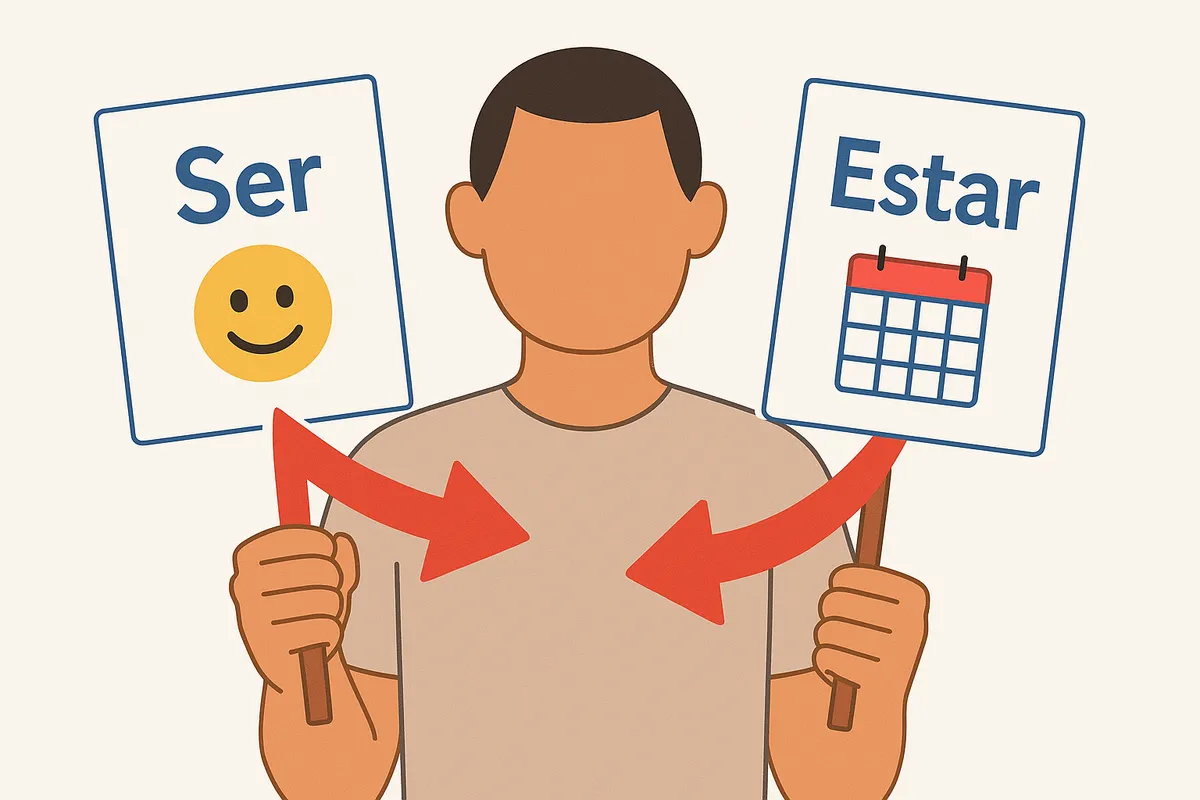 While both mean ‘to be’, Ser = permanent traits and Estar = temporary ones.
Ter (to have)
| Subject | English | Portuguese |
|---|---|---|
| Eu | I have two cats. | Eu tenho dois gatos. |
| Tu | You have a nice car. | Tu tens um carro bonito. |
| Ele/Ela/Você | She has a lot of work. | Ela tem muito trabalho. |
| Nós | We have free time today. | Nós temos tempo livre hoje. |
| Eles/Elas/Vocês | They have children. | Eles têm filhos. |
Ir (to go)
| Subject | English | Portuguese |
|---|---|---|
| Eu | I go to the gym. | Eu vou ao ginásio. |
| Tu | You go by train. | Tu vais de comboio. |
| Ele/Ela/Você | He goes to school. | Ele vai à escola. |
| Nós | We go together. | Nós vamos juntos. |
| Eles/Elas/Vocês | They go shopping. | Eles vão às compras. |
Simple Past Tense Regular Verb Conjugations
Regular verbs still follow normal patterns. The endings change to show you’re talking about the past. This is the tense you’ll use when telling stories. 📖
Regular -AR Verbs
Falar (to speak / to talk)
| Subject | English | Portuguese |
|---|---|---|
| Eu | I spoke with Ana yesterday. | Eu falei com a Ana ontem. |
| Tu | You spoke very clearly. | Tu falaste muito bem. |
| Ele/Ela/Você | He spoke about the project. | Ele falou sobre o projeto. |
| Nós | We spoke for an hour. | Nós falámos durante uma hora. |
| Eles/Elas/Vocês | They spoke to the manager. | Eles falaram com o gerente. |
Regular -ER Verbs
Comer (to eat)
| Subject | English | Portuguese |
|---|---|---|
| Eu | I ate too much cake. | Eu comi bolo a mais. |
| Tu | You ate quickly. | Tu comeste depressa. |
| Ele/Ela/Você | She ate all the soup. | Ela comeu toda a sopa. |
| Nós | We ate together. | Ontem comemos juntos. |
| Eles/Elas/Vocês | They ate at the restaurant. | Eles comeram no restaurante. |
Regular -IR Verbs
Abrir (to open)
| Subject | English | Portuguese |
|---|---|---|
| Eu | I opened the door early. | Eu abri a porta cedo. |
| Tu | You opened it in a rush. | Tu abriste a porta à pressa. |
| Ele/Ela/Você | He opened the shop. | Ele abriu a loja. |
| Nós | We opened the windows after lunch. | Nós abrimos as janelas depois do almoço. |
| Eles/Elas/Vocês | They opened without warning. | Eles abriram sem avisar. |
Simple Past Tense Irregular Verb Conjugations
A handful of irregular verbs are especially useful in the past. You’ll use (and hear) these often.
Estar (to be, temporary)
| Subject | English | Portuguese |
|---|---|---|
| Eu | I was at home. | Eu estive em casa. |
| Tu | You were in Lisbon. | Tu estiveste em Lisboa. |
| Ele/Ela/Você | She was at the doctor’s. | Ela esteve no médico. |
| Nós | We were close. | Nós estivemos perto. |
| Eles/Elas/Vocês | They were on holiday. | Eles estiveram de férias. |
[!tip] A small preview: estava For ongoing states (tired, happy, etc.), Portuguese often uses another tense (called the imperfect).
For example, “I was tired” is “estava cansada”, rather than “eu estive cansada”.
That’s beyond the scope of this article, but I’ve written a guide to the imperfect tense if you want to go deeper.
Ser / Ir (to be / to go)
[!tip] Same word, two meanings Ser (to be, permanent) and Ir (to go) are identical in the past. Context tells you whether fui/foi/foram means “was/were” or “went.”
| Subject | English | Portuguese |
|---|---|---|
| Eu | I was a student. / I went to the park. | Eu fui estudante. / Eu fui ao parque. |
| Tu | You were my neighbor. / You went to the cinema. | Tu foste meu vizinho. / Tu foste ao cinema. |
| Ele/Ela/Você | He was the manager. / He went to work. | Ele foi gerente. / Ele foi trabalhar. |
| Nós | We were volunteers. / We went together. | Nós fomos voluntários. / Nós fomos juntos. |
| Eles/Elas/Vocês | They were the winners. / They went by train. | Eles foram os vencedores. / Eles foram de comboio. |
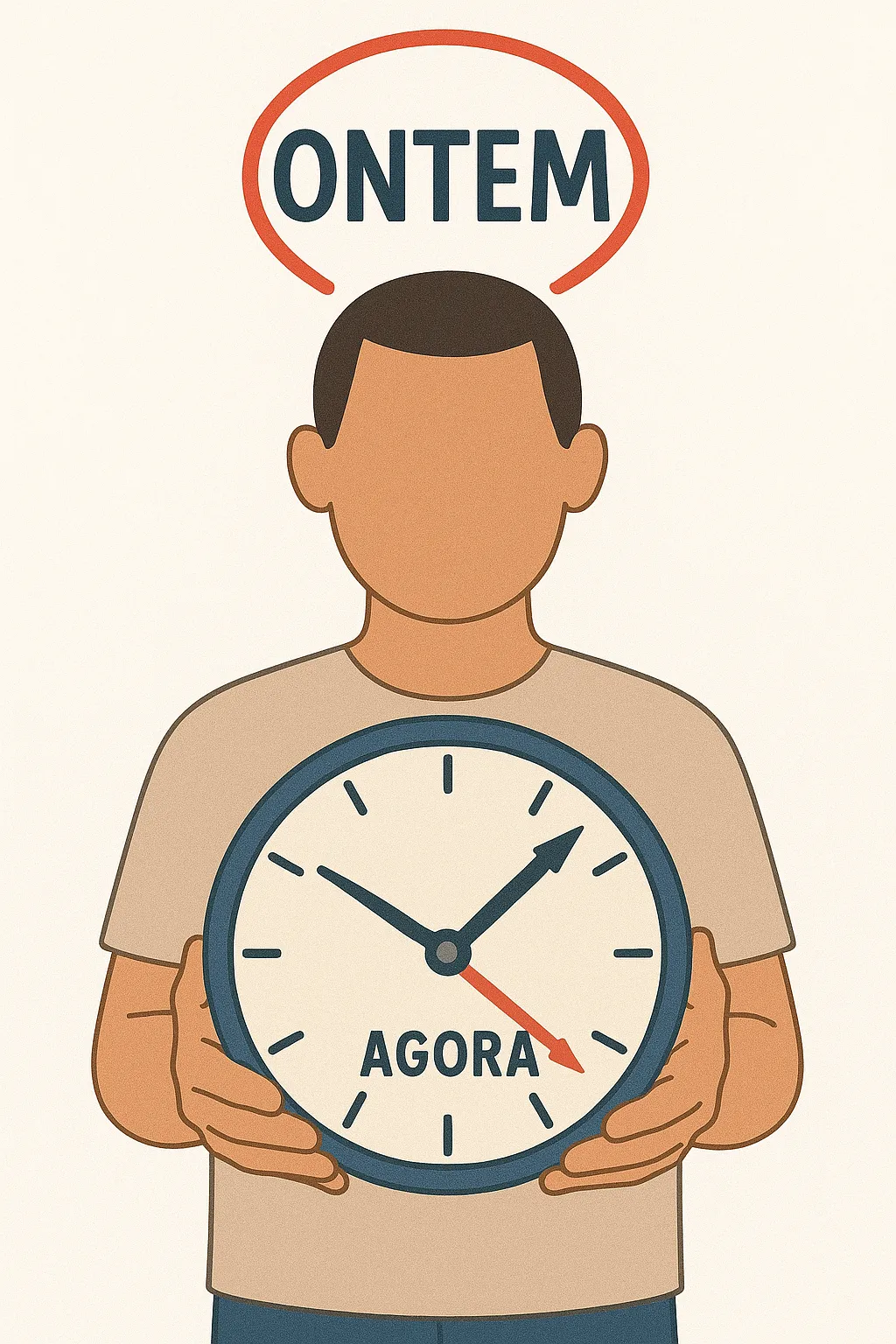 Use the past tense for telling stories. Ontem = yesterday. Agora = now.
[!tip] 🚀 Deep dive: past tense nuances Once you have the basics down, two common points of confusion tend to show up. I’ve written specific guides for each:
- Which “was” do I use? If you’re stuck between Foi (Ser) and Esteve (Estar), read my guide on Foi vs. Esteve.
- Setting the scene. If you’re confused about Simple Past vs. Imperfect Past (like estava), try this mental model: |The Movie Scene Method
Ter (to have)
| Subject | English | Portuguese |
|---|---|---|
| Eu | I had a busy day. | Eu tive um dia ocupado. |
| Tu | You had many calls. | Tu tiveste muitas chamadas. |
| Ele/Ela/Você | She had a good idea. | Ela teve uma boa ideia. |
| Nós | We had a great day. | Nós tivemos um ótimo dia. |
| Eles/Elas/Vocês | They had problems. | Eles tiveram problemas. |
Poder (can / to be able to)
| Subject | English | Portuguese |
|---|---|---|
| Eu | I could not go. | Eu não pude ir. |
| Tu | You could help me. | Tu pudeste ajudar-me. |
| Ele/Ela/Você | He could hear everything. | Ele pôde ouvir tudo. |
| Nós | We could see the sea. | Nós pudemos ver o mar. |
| Eles/Elas/Vocês | They could finish on time. | Eles puderam acabar a tempo. |
Quick Reference Cheat Sheet
Here’s a cheat sheet for the most common regular and irregular verbs in European Portuguese.
Regular Verb Endings
| Verb Type | Endings |
|---|---|
| -AR present (eu / tu / ele / nós / eles) | o / as / a / amos / am |
| -AR past (eu / tu / ele / nós / eles) | ei / aste / ou / ámos / aram |
| -ER present (eu / tu / ele / nós / eles) | o / es / e / emos / em |
| -ER past (eu / tu / ele / nós / eles) | i / este / eu / emos / eram |
| -IR present (eu / tu / ele / nós / eles) | o / es / e / imos / em |
| -IR past (eu / tu / ele / nós / eles) | i / iste / iu / imos / iram |
Common Irregular Verbs
| Verb | Conjugations |
|---|---|
| ser (present) | sou / és / é / somos / são |
| ser (past) | fui / foste / foi / fomos / foram |
| estar (present) | estou / estás / está / estamos / estão |
| estar (past) | estive / estiveste / esteve / estivemos / estiveram |
| ter (present) | tenho / tens / tem / temos / têm |
| ter (past) | tive / tiveste / teve / tivemos / tiveram |
| ir (present) | vou / vais / vai / vamos / vão |
| ir (past) | fui / foste / foi / fomos / foram |
| poder (present) | posso / podes / pode / podemos / podem |
| poder (past) | pude / pudeste / pôde / pudemos / puderam |
| querer (present) | quero / queres / quer / queremos / querem |
| querer (past) | quis / quiseste / quis / quisemos / quiseram |
| sair (present) | saio / sais / sai / saímos / saem |
| sair (past) | saí / saíste / saiu / saímos / saíram |
The order in each row is: eu / tu / ele/ela/você / nós / eles/elas/vocês.
[!tip] Keep it small If you can confidently use these irregulars in both present and past, you can handle most everyday conversations.
The Takeaway
Portuguese verbs can feel like a lot. There are so many to learn, and they all seem to have a million different forms.
But you don’t need to know every verb in the dictionary. And making mistakes is part of it.
My advice: master the most common ones and use them as often as you can. The ones in this article are the ones I run into the most in day-to-day life here.
It’s about being practical, not perfect. These conjugations are the starting line. To see how the tenses fit into the bigger picture, check out my master guide on Portuguese Verb Tenses.
Frequently Asked Questions
[!faq]- How do I remember all the irregular verbs? Focus on a handful of the most common ones and practice them every single day. Flashcards, simple sentences, or a real conversation all help. Repetition is what makes them stick. Start with the verbs I listed above. Once you have those, Google “Portuguese Irregular Verbs” and pick up a few more.
[!faq]- I’m still confused about
servs.estarThink about your coffee. “O café é bom” (é being a form of ser) says coffee, as a drink, is good, a permanent quality. “O café está bom” is about the specific cup in front of you right now, and it’s good in this moment. The difference is subtle but matters.
[!faq]- Is it a bad idea to learn all the verb tenses at once? Yes, that’s a quick way to get overwhelmed. Focus on the present tense first, then the simple past (
pretérito perfeito). Those two cover most daily conversation. Once you’re comfortable, you can branch into the future or the subjunctive.
[!faq]- Is it okay to use a translation app for verbs? Translation apps are handy for a quick word or phrase, but they can be unreliable for conjugations and tenses. Even when writing this article, I had to check a few things with a Portuguese friend that the apps couldn’t handle.
A reliable verb conjugation website or an app specifically designed for learning Portuguese is a safer bet. That way you’re learning the correct forms instead of trusting a machine that might be off.
