


If you have been learning Portuguese for six months, you probably feel like a superstar when you order a coffee. You can introduce yourself, ask for the bill, and talk about the weather with confidence.
But the moment the conversation shifts to yesterday or tomorrow, you hit a wall.
You freeze.
You want to tell your new friend about the hilarious thing that happened at the supermarket last week, but you can’t. You want to explain why you moved to Portugal, but the words for your past life aren’t there.
Or you can navigate transactions (buying, ordering, asking), but you cannot build relationships.
Friendships rely on shared stories (the past) and shared plans (the future). If you are stuck in the present tense, you are stuck at the “acquaintance” level forever.
This is the Social Ceiling.
This roadmap helps you break that ceiling by mastering just the tenses you actually need.
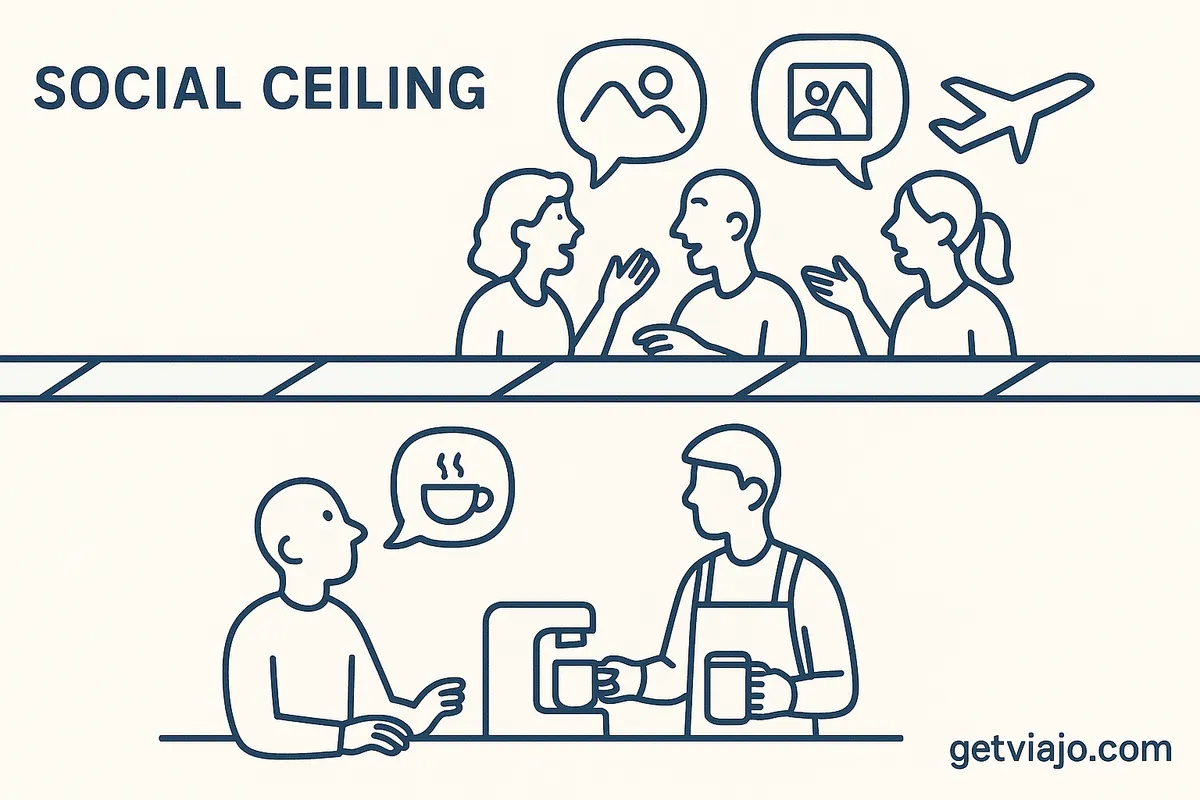 You can’t build a friendship if you can only talk about the weather.
Beyond the Present Tense
The present tense acts as your bread and butter. It pays the bills. However, relying on it exclusively makes you sound like a Sim character who only exists in the current moment (Zen, I suppose).
To start sharing your real self, you need to unlock the Past and the Future. But you don’t need to learn all of them at once. You just need the specific tools that let you tell a story.
For a quick refresher on the basics, check out this guide to the present and simple past.
The Simple Past vs Imperfect Past
Portuguese has multiple past tenses, but the most important thing you need to understand is the difference between two concepts: The Snapshot and The Movie.
1. The Simple Past (Pretérito Perfeito)
This tense covers actions that happened once and are finished. Click. Done. It answers the question “What happened?”.
| English | Portuguese |
|---|---|
| I went to the store | Fui à loja |
| I bought a car | Comprei um carro |
| I ate a pastel de nata | Comi um pastel de nata |
2. The Imperfect Past (Pretérito Imperfeito)
This tense covers actions that were ongoing, repeated, or set the scene. The camera was rolling. It answers “What was happening?” or “What were things like?”.
| English | Portuguese |
|---|---|
| I used to go to the store every day | Costumava ir à loja todos os dias |
| I was buying a car when… | Estava a comprar um carro quando… |
| I was eating the pastel de nata while… | Estava a comer o pastel de nata enquanto… |
[!tip] The “Portugal Progressive” Notice the structure in the table above: Estava a + Infinitive.
You might hear Brazilian speakers say Estava comprando (using the -ndo gerund). In Portugal, locals use the “a + verb” structure. Using this instantly makes you sound more local.
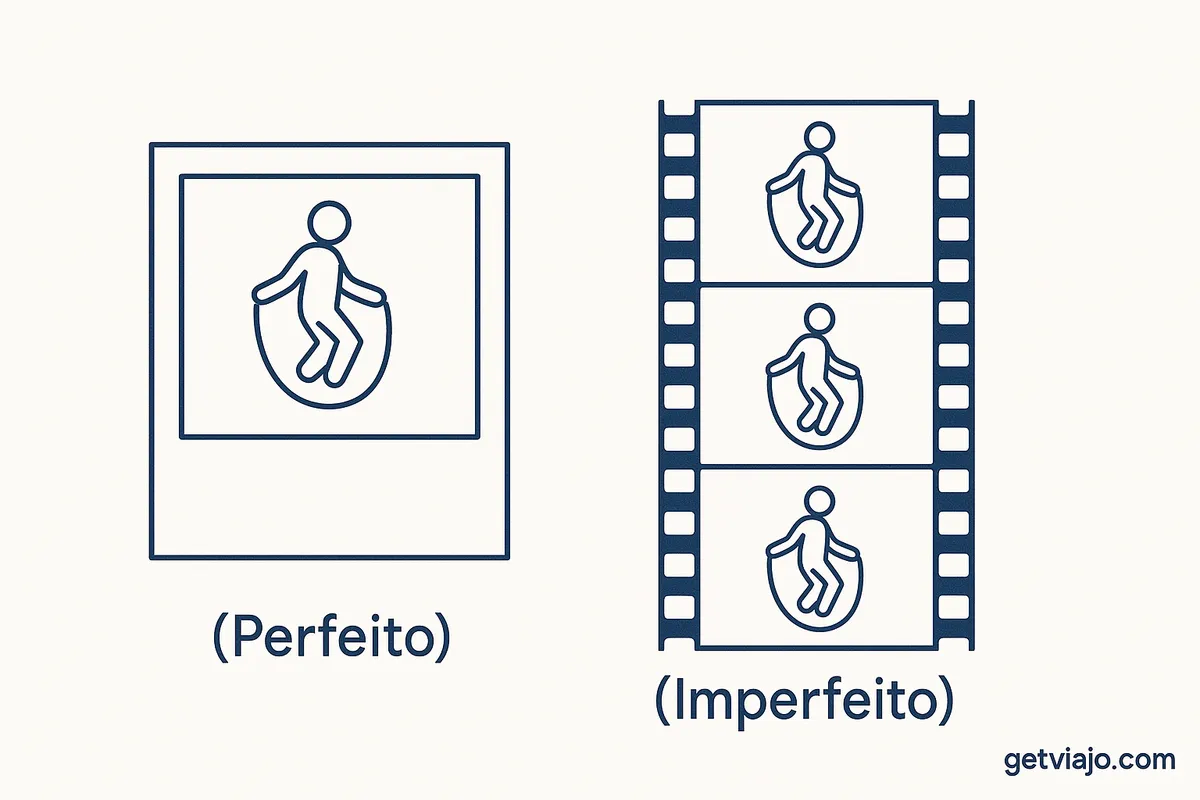 Use the perfect past (snapshot) for completed actions. Use the imperfect past (movie) for background details.
Mixing the Two in Real Life
To tell a story, I usually have to dance between both. Here is how I’d say this at a dinner party:
“Yesterday I went to the market. It was a beautiful day and I wanted to buy fruit. I bought some oranges and returned home.” — Ontem fui ao mercado. Estava um dia lindo e eu queria comprar fruta. Comprei umas laranjas e voltei para casa.
Mastering this distinction is a genuinely big leap you will make in your path to fluency.
- The Full Guide: Master the imperfect logic here
The Confusing Trap of Era vs Foi
One specific area that trips everyone (including myself) up is the verb “To Be” in the past. Was it Foi or Era?
The logic follows the Snapshot vs. Movie rule exactly.
- Era (Movie/Description): Used to describe how things were generally (personality, characteristics, background).
- Foi (Snapshot/Event): Used to say something happened or a specific event was completed.
| English | Portuguese |
|---|---|
| He was nice (personality) | Ele era simpático |
| He was nice (in that moment) | Ele foi simpático |
| The party was fun (vibe) | A festa era divertida |
| The party was fun (the event ended) | A festa foi divertida |
- Fix the confusion: The Four Ways to Say Was/Were in Portuguese
[!tip] Pro Tip for Saying “Ago” To tell your story (“I arrived 2 years ago”), don’t try to translate “ago.” Use the verb Haver (to exist).
The word há (which translates to ‘there are’) acts as the time marker and comes before the number.
“Cheguei há dois anos.” = I arrived, there are two years.
Also, don’t forget the building blocks. You will hear irregular participles like feito (done) and dito (said) constantly. Mastering past participles helps immensely for more advanced tenses later.
Audio lessons and PDF study guides to accompany every lesson
Get In on the Ground Floor!
This is a new website!
As such, I'm starting the price for premium at just $2.99/mo, increasing to $11.99/mo after my first 100 members.
The Easy and Hard Versions of the Future Tense
Once you can tell your story, you need to be able to share your plans. Where are you going? What do you want to achieve?
The good news is that there is a difficult and an easy version of the “Future Tense” in Portuguese (colloquially, anyway), and most people stick with the easy one.
Textbook Future vs The Real Future
Textbooks will teach you to say Eu viajarei (I will travel). It sounds fancy. It is grammatically correct.
Locals rarely use it in casual conversation.
In Portugal, if you want to sound like a local, I recommend using the “Go” Future (Futuro Próximo). You just conjugate the verb Ir (to go) and add the main verb (in its infinitive form).
| English | Textbook Future | Street Future (Use This) |
|---|---|---|
| I will buy a car | Comprarei um carro | Vou comprar um carro |
| We will travel next year | Viajaremos no próximo ano | Vamos viajar no próximo ano |
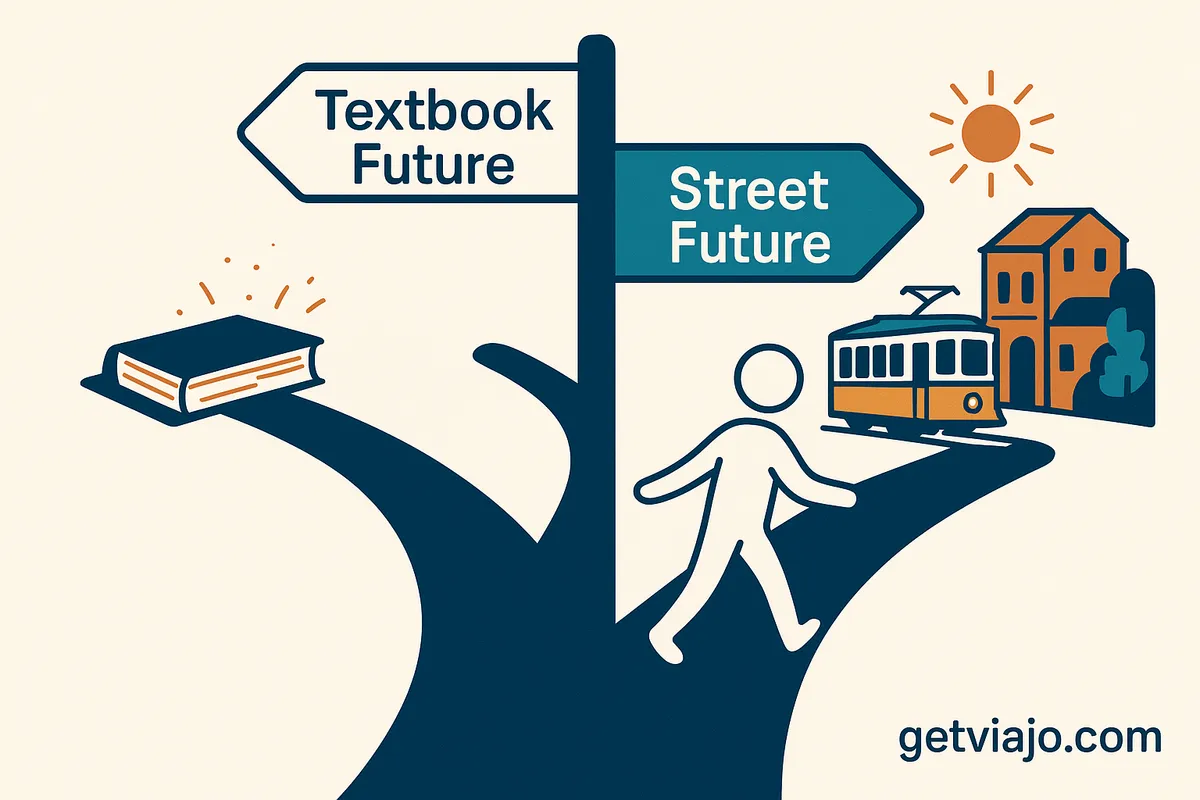 Save the formal future tense for writing emails. Use the ‘Go’ future for speaking.
Making Future Plans
If a neighbor asks me about my weekend, I keep it simple:
“Next week, I’m going to travel to Porto. I’m going to visit a friend.” — Na próxima semana, vou viajar para o Porto. Vou visitar um amigo.
This offers a massive shortcut. You don’t need to learn a whole new set of conjugations. You just need to know the present tense of Ir.
- The Shortcut: How to speak about the future naturally
The Roadmap to Connection
You don’t need to memorize the Mais-que-perfeito (Pluperfect) or the Futuro do Subjuntivo just yet. Even I myself am still floundering with these, but I promise I’ll start writing articles on the topic once I get the grasp of ‘em.
In my opinion, to break the social ceiling, focus your energy here:
- To tell people who you are now, use the present tense.
- To tell people who you were, use either the simple past or imperfect past.
- To tell people who you will be, use the simple future (ir + infinitive)
Once you have those, you stop being a robot who orders coffee, and you start being a person who can share a life.
Frequently Asked Questions
[!faq]- Do I really never need the “real” future tense? You will need it for reading newspapers, formal emails, or literature. But for speaking with friends, shopkeepers, or neighbors? You can survive happily for years using only the “Go” Future (Vou fazer). It is universally understood and accepted in speech.
[!faq]- What about “Tenho feito” (I have done)? Be careful! Tenho feito does not mean “I have done” (one time). In European Portuguese, this structure implies repetition. Tenho comido means “I have been eating (lately/repeatedly),” not “I have eaten (dinner just now).” If you did it once, use the Snapshot (Comi).
[!faq]- Is the Imperfect tense just for “used to”? It works for “used to” (especially using costumava), but also for setting the scene like “it was raining” (Estava a chover) or “I was sleeping” (Estava a dormir). If the action didn’t have a clear start and end point in your story, stick with the Imperfect.
[!faq]- Which past tense should I learn first? Start with the Perfeito (Snapshot). It allows you to state facts: I went, I did, I saw. That covers the basic requirements of reporting your day. Add the Imperfeito (Movie) later to add color and context to those facts.
[!faq]- Can I say “Vou ir” for “I’m going to go”? This is a common beginner mistake. It sounds redundant (“I go to go”). If you are going somewhere, just use the present tense Vou (I go). “Vou ao parque” implies you are going to the park right now or in the near future.
[!faq]- Does “Haver” change for plural years? No. When using Há for time (ago), it is impersonal and never changes to plural. Even if it was 50 years ago, it is still Há 50 anos, never Hão.
