


You’ll likely hear the words ainda and já all the time in Portugal. On the surface they seem simple. Ainda translates to “still” and já means “already.” That, however, only covers maybe half of what they actually do.
For example, both words shift meaning depending on where they sit in a sentence and what is going on around them.
Using them well is one of the small things that makes your Portuguese sound more natural, especially once you start working with the present and past tense.
Here is how these two words tend to behave in practice.
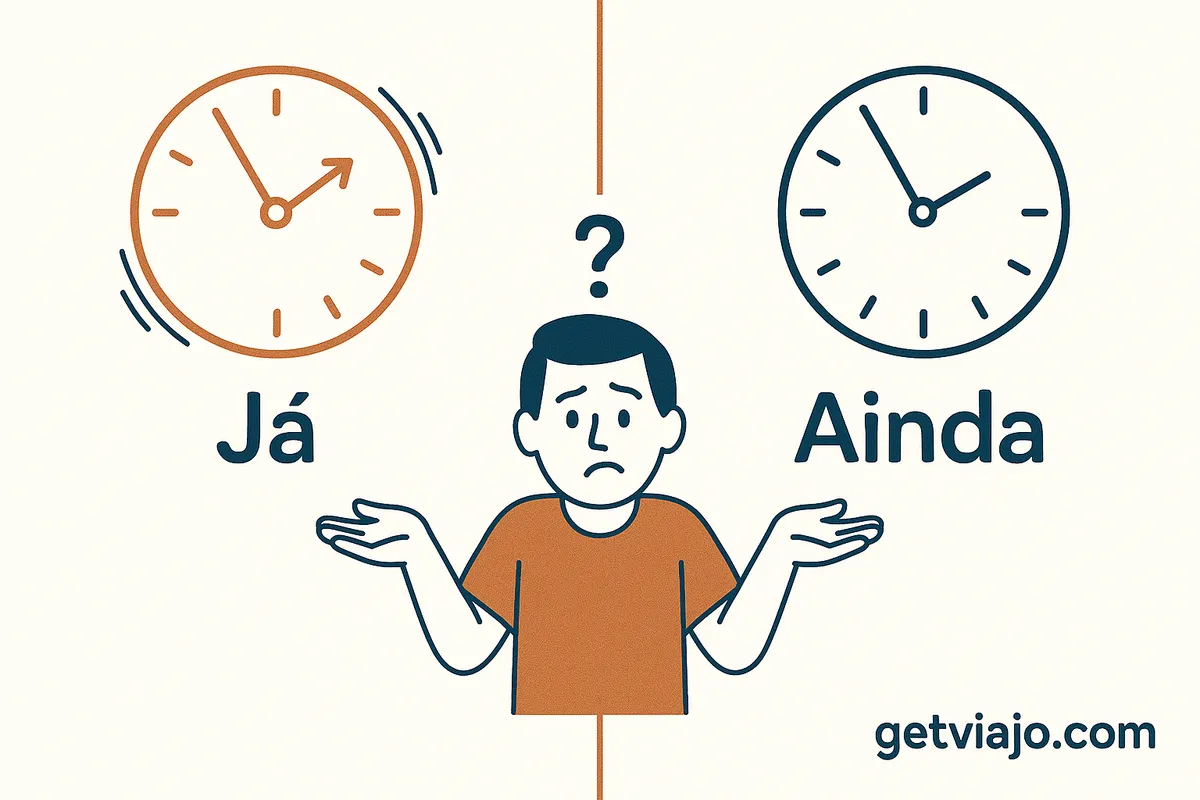 Já and Ainda can feel like they operate on two different timelines, but it’s all about context.
How to Use Ainda
The easiest way to keep ainda straight is to think of it as the word for things that are ongoing or continuing. The two most common translations are “still” and “yet.”
Ainda for “Still”
Like “still”, it means the situation has not changed, and ainda marks that.
Imagine a friend is waiting for you at a café while you are running late:
| English | Portuguese |
|---|---|
| Are you still at the café? | Ainda estás no café? |
| Yes, I’m still here. | Sim, ainda estou aqui. |
The action of being at the café is continuing. That is the whole job of ainda here. It works with any verb, but like “still” in English, the sentence usually needs enough context to make clear what is continuing.
“Ainda corro todos os dias” (I still run every day) sounds like a complete sentence. “Ainda corro” (I still run) on its own feels like a response to someone’s question.
Ainda for “Yet” in Negative Sentences
When you want to say “not yet,” the phrase is always ainda não, in that order.
[!warning] Word order matters
It is always ainda não, never não ainda. Flipping them sounds wrong to a Portuguese ear.
In practice:
| English | Portuguese |
|---|---|
| Have you finished the report? | Já acabaste o relatório? |
| Not yet. I’ll finish it soon. | Ainda não. Acabo daqui a pouco. |
Ainda for “Even”
Ainda also works as an intensifier, similar to “even” in English, especially in comparisons.
| English | Portuguese |
|---|---|
| This restaurant is good, but that one is even better. | Este restaurante é bom, mas aquele é ainda melhor. |
| João is tall, but his brother is even taller. | O João é alto, mas o irmão é ainda mais alto. |
Two Fixed Expressions with Ainda
There’s obviously more than this that exist, but here’s couple of useful phrases with ainda that are worth knowing:
Ainda bem is used to express relief, similar to “thank goodness” or “good thing.”
| English | Portuguese |
|---|---|
| Did you get home okay? | Chegaste bem a casa? |
| Yes, I did. | Sim, cheguei. |
| Thank goodness! | Ainda bem! |
Ainda por cima means “on top of that,” and is used to pile on another detail that makes a bad situation worse.
| English | Portuguese |
|---|---|
| I was stuck in traffic and, on top of that, it started to rain. | Estava preso no trânsito e, ainda por cima, começou a chover. |
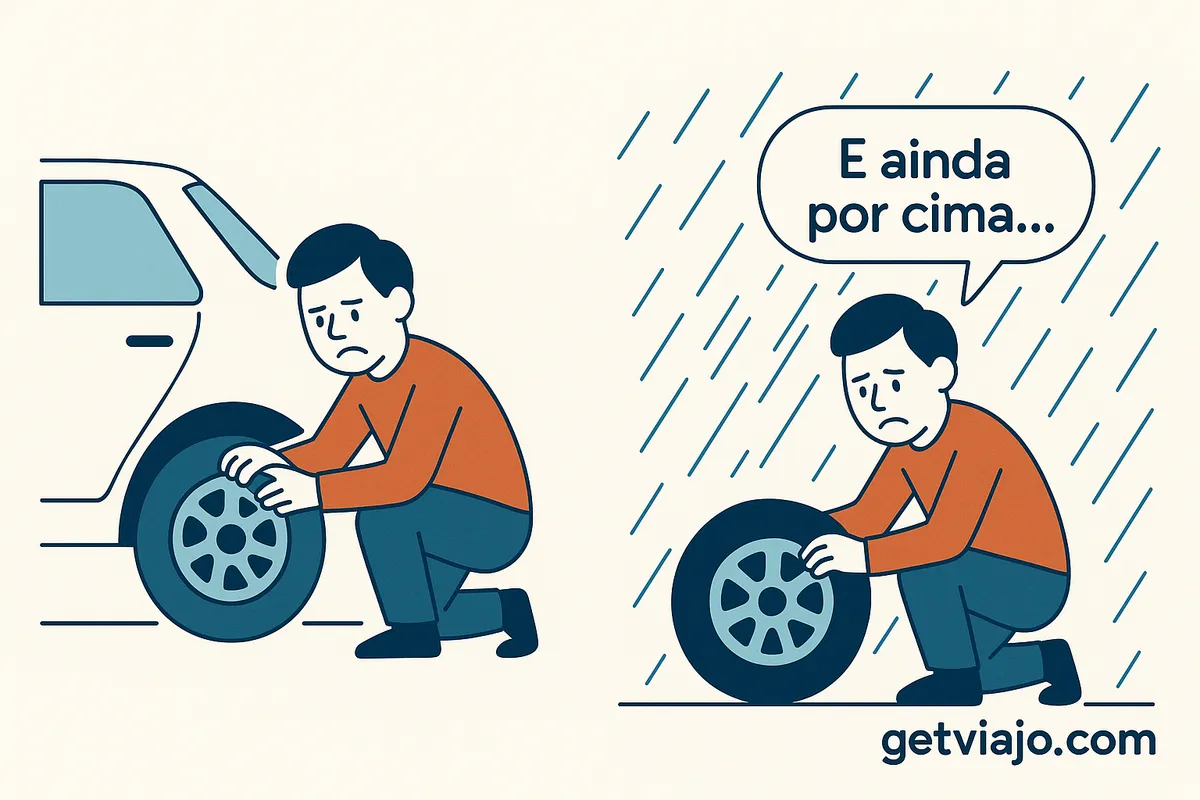 ‘Ainda por cima’ is the perfect phrase for when a bad situation gets even worse.
Audio lessons and PDF study guides to accompany every lesson
Get In on the Ground Floor!
This is a new website!
As such, I'm starting the price for premium at just $2.99/mo, increasing to $11.99/mo after my first 100 members.
How to Use Já
If ainda is about continuation, já is about completion or immediacy. It has a few uses that catch English speakers off guard.
Já for “Already”
The direct translation, and it behaves the way you would expect. Já confirms an action is done, just like “already” does in English.
| English | Portuguese |
|---|---|
| Have you already had lunch? | Já almoçaste? |
| Yes, I’ve already eaten. | Sim, já comi. |
Placement is simple. Já tends to sit right before the verb, and Portuguese people seemingly drop it in like it’s the most natural thing in the world (they really do seem to use it all the time).
For our purposes, just remember that placing já before the verb is the safe default for expressing “already.”
Já for “Right Now”
Já sometimes surprises English speakers in this meaning.
It does not always point to the past. It can also point to the immediate future, which is worth keeping in mind along with the future tense. In my experience, using já *after another word tends to signal urgency. This comes up often in shops and restaurants, for instance.
If you ask a server for the bill (a conta), you might hear:
| English | Portuguese |
|---|---|
| I’ll take care of that right now. | Vou já! |
| Right away! | É já! |
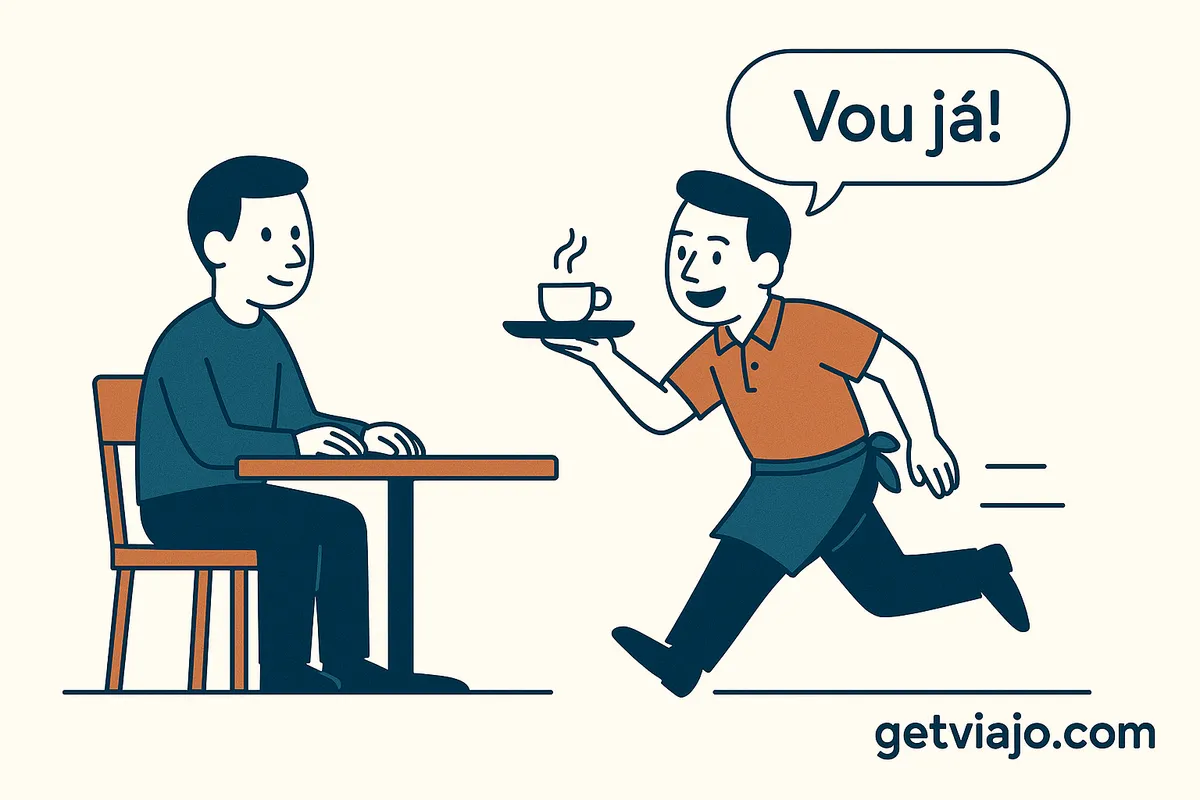 Hearing ‘Vou já’ or ‘É já’ means ‘right away,’ not ‘already.‘
Já for “Ever” in Questions
A já dropped into a question often shifts the meaning to “ever.”
| English | Portuguese |
|---|---|
| Have you ever been to the Azores? | Já foste aos Açores? |
| Have you ever seen this movie? | Já viste este filme? |
This “ever” sense only works in questions. In a statement, já snaps back to meaning “already.”
[!tip] Example “Já foste aos Açores?” with a question mark = Have you ever been to the Azores?
“Já foste aos Açores” without a question mark = You already went to the Azores.
Common Phrases with Já
Two phrases you will hear in casual conversation, which useful if you are working on improving your small talk:
| English | Portuguese |
|---|---|
| By the way / while we’re at it | Já agora |
| I’ll be right back | Volto já |
Já agora, sabes que horas são? translates to “By the way, do you know what time it is?”
Volto já is what someone says when they step out of a room for a moment with the intention of returning (be right back).
How Context Changes the Meaning
The pattern that ties this all together is intent. Is the speaker pointing to something that is finished, or to something that is about to happen?
| Phrase | What it actually means |
|---|---|
| Já comi. | I have already eaten. (Finished) |
| Vou já. | I’m coming right now. (Imminent) |
To be honest, these words tend to click a lot faster from hearing them in real situations than from memorizing rules. You will hear a friend say ainda bem after good news, a shopkeeper say vou já when you ask for help, a colleague ask já almoçaste? around one in the afternoon. The patterns tend to settle in.
You’ll likely mix them up at first, but don’t sweat it, that’s just part of the process. For how these small words fit into the bigger picture of fluency, my master guide on Portuguese sentence structure is a good next stop.
If you want to tackle another pair that trips learners up, try the guide on tão vs tanto next.
Frequently Asked Questions
[!faq]- What’s the difference between “já não” and “ainda não”? They are not interchangeable. Ainda não means “not yet” and implies you expect the action to happen at some point. (“Ainda não comi”, I haven’t eaten yet.) Já não means “not anymore” or “no longer,” and implies a change from a past state, which is often relevant when using the imperfect tense to talk about past habits. (“Já não moro em Lisboa”, I don’t live in Lisbon anymore.)
[!faq]- Can “ainda” and “já” appear in the same sentence? Yes. It usually shows up when someone is surprised or impatient that something hasn’t happened. For example, “Como é que tu ainda não acabaste já isso?” It’s an emphatic way of saying “How have you not finished that already?” This is informal and carries an impatient, slightly confrontational tone. It is the kind of thing you would say to a friend or a family member, not to a boss or someone you do not know well.
[!faq]- Does “já” always imply speed? Not always. It often signals immediacy (“vou já”), but in “já comi” it just means “already,” with no sense of urgency. The speed comes from specific phrasings common in service interactions. Think of já as marking a point in time, either completed, or happening right now.
[!faq]- Are there other common expressions with these words worth knowing? A useful one is agora já, which means something like “now it’s already…” and often carries the sense of “too late.” For example, “Queria ir à praia, mas agora já está a chover” (I wanted to go to the beach, but now it’s already raining). For ainda, there’s ainda assim, meaning “even so” or “nevertheless.” “Está frio, mas ainda assim vou sair”, which means “It’s cold, but even so, I’m going out.”
